Oyster 825 Buyer's Guide: What Bluewater Owners Should Know
The Oyster 825 is an 82-foot deck saloon sloop built for ocean passages with a small professional crew. Here is what it is, how it compares, what to inspect and what the used market suggests in 2026.
The Oyster 825 is an 82-foot, 6-inch (25.15 m) deck saloon sloop from Oyster Yachts of the United Kingdom, drawn by Humphreys Yacht Design with the Oyster Design Team, and built as a bluewater cruiser for an owner supported by a small professional crew. Public price evidence for second-hand examples is thin, and as of 2026 any figure should come from a current broker quotation rather than a guide. This guide covers what the model is, what to inspect, and how to buy one without paying for someone else's deferred maintenance.
What Is the Oyster 825 and Where Does It Fit in Oyster's Heritage?
Oyster describes the 825 as a heritage model: a yacht that sits just above the threshold of an 80-foot sailing yacht and brings superyacht-style comfort to a sailing hull. According to the builder's own model page, it was offered as a new-build between 2002 and 2017 under the Oyster 82 and 825 family, was offered in Deck Saloon and Raised Saloon versions through the Oyster Custom and Refit teams in Southampton, and is succeeded by the Oyster 885 Series 2.
The 825 was announced as an evolution of the Oyster 82, introduced in 2002. Trade press at the time reported that the 825 offered roughly 15 percent more internal volume than that predecessor, with the extra space devoted to the owner's stateroom and guest cabins aft and a clearer separation between guest and crew areas. The first delivery was then scheduled for summer 2013, and hulls delivered in the following years, such as Maegan (delivered in the mid-2010s; sources give 2014 or 2015), are the ones that appear in the brokerage conversation.
A note on provenance: Oyster has changed ownership more than once over its history, and corporate changes can affect parts supply, refit support and owner-community programs. We have not independently verified the details of those transitions for this article, so treat any ownership narrative you hear in a negotiation as something to confirm directly with the builder's after-sales team and your own advisers.
What Makes the Oyster 825 Different? The Design DNA
The 825 is a deck saloon: the main living space sits at deck level behind large windows rather than below, so the saloon is bright and the owner can see out while seated. Oyster's page highlights a full-width saloon, a side-sliding glass companionway, and large vertical windows that define the contemporary Oyster deck saloon look.
The hull lines come from Humphreys Yacht Design, the naval architecture practice behind much of Oyster's range, with styling and engineering from Oyster's in-house team. The builder says the yacht can achieve 250 miles per day on long passages (it states no conditions), which is a manufacturer claim and best treated as a ceiling in good conditions, not a planning figure.
The published specification gives a clear picture of the platform:
- Length overall: 25.15 m / 82 ft 6 in (including bowsprit)
- Length at waterline: 21.97 m / 72 ft 1 in
- Beam: 6.31 m / 20 ft 8 in
- Draft: 3.42 m / 11 ft 3 in (centerboard and shoal-draft arrangements were reported as options in 2011 trade press)
- Displacement: 56,000 kg / 123,460 lb
- Sail area: 3,993 sq ft / 371 sq m, as reported by trade press in 2011
- Accommodation: five cabins per the builder, including three double cabins aft, plus separate space for up to four professional crew
Two practical details matter to a buyer. First, air draft was reported at nearly 113 feet (34.4 m) excluding antennae, which rules out many fixed bridges. Second, the layout is built around a crew: the accommodation for four professional crew forward is a feature of the design, not an afterthought, and it shapes how the yacht is run and what it costs to run.
One documented example, Maegan, was reported by Boat International in 2018 with a single 305 hp Cummins diesel and a 12-knot top speed. Individual yachts differ in engine and equipment, so confirm the machinery fitted to any hull you are considering rather than assuming it matches another.
What Is the Oyster Community Like for 825 Owners?
One of the quieter advantages of buying an Oyster is the ecosystem around it. Oyster operates a brokerage team and an after-sales organization, and has historically run owner rallies and supported voyages; we have not verified what is currently on offer, so ask the builder directly.
For an owner, this matters for two reasons. It creates a peer group of people who have solved the same maintenance and logistics problems on the same hulls, and it supports resale, because a yacht with an engaged builder network behind it is easier for the next buyer to underwrite. It is not a guarantee of value, and the programs themselves can change, so verify what is currently offered.
How Does the Oyster 825 Compare With Its Peers?
Buyers considering an 80-foot-class sailing yacht tend to cross-shop a short list of builders, each with a distinct philosophy. The comparison below is qualitative by design: exact figures vary by hull, year and configuration, and should be taken from each yacht's own specification sheet during your search.
| Builder / model class | Character | Typical buyer logic |
|---|---|---|
| Oyster 825 (UK) | Deck saloon, 82 ft 6 in, crew-supported bluewater cruiser | Comfort and light below decks, strong builder and owner network, long-range cruising |
| Swan 80-class (Finland) | Performance-led cruiser-racer lineage | Owners who want sailing performance and racing heritage first, living space second |
| Wally (Italy / Monaco) | Avant-garde design, often carbon and highly bespoke | Design statement and speed, with a different cost and maintenance profile |
| Southern Wind (South Africa) | Custom, performance-oriented sailing yachts | Owners wanting a bespoke build with a performance bias |
| Baltic (Finland) | Custom composite yachts with an engineering focus | Owners commissioning a one-off or buying a well-regarded custom hull |
| Hallberg-Rassy (Sweden) | Traditional offshore cruisers, typically smaller than this class | Owner-operated passage-making, at a lower size and cost point |
| Contest (Netherlands) | Comfort-oriented bluewater cruisers, with larger models in the upper range | Owners prioritizing practicality and sea-keeping over spectacle |
The honest summary: the 825 is not the fastest or the most dramatic hull in this field. Its case rests on usable space, a mature support network and a design intended for long passages with crew. If racing results or a signature design statement matter most to you, the Swan, Wally and Southern Wind conversation is a different one. If you want a smaller, owner-operated passage-maker, the Hallberg-Rassy and Contest lines may suit better. For a broader market view, our guide to the most expensive yachts of 2026 shows where this class sits relative to the top of the market.
What Should You Inspect Before Buying a Pre-Owned Oyster 825?
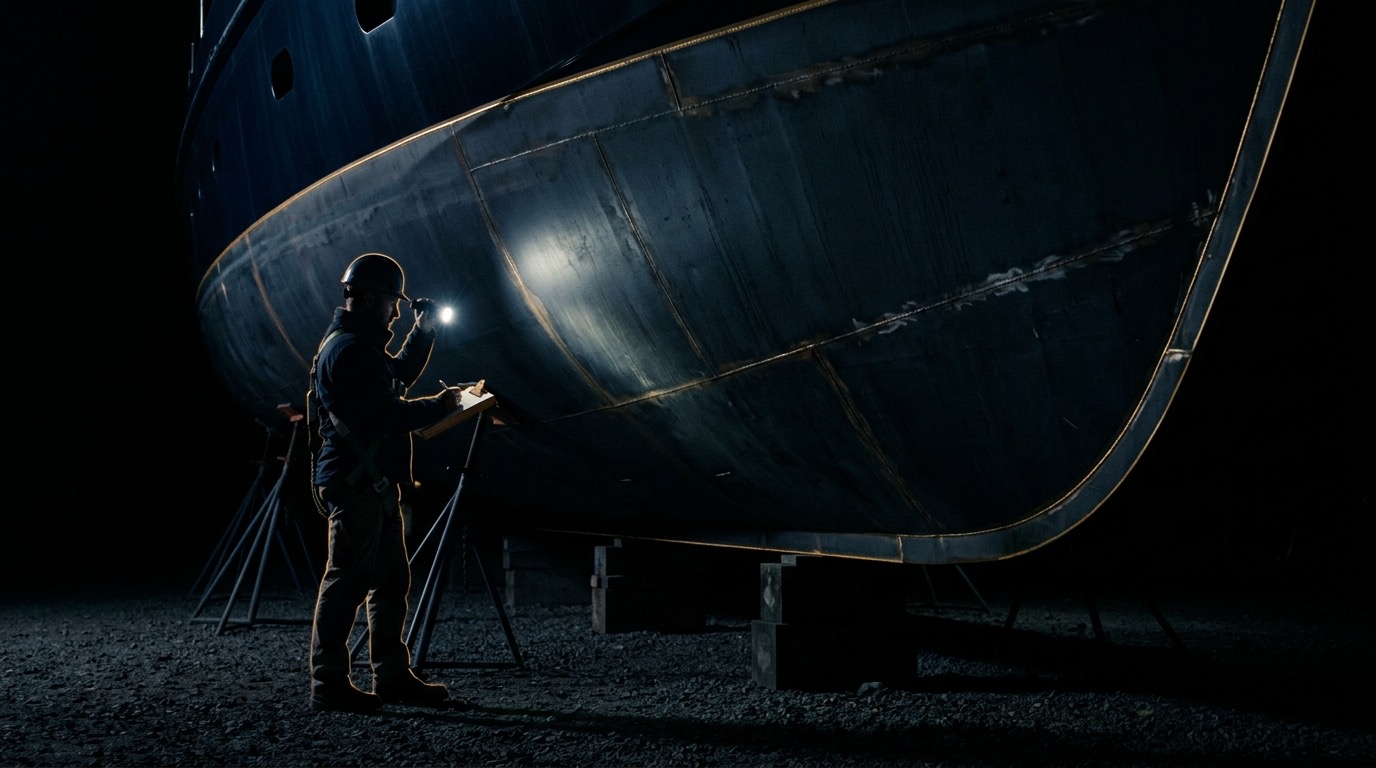
The 825 is a large composite sailing yacht, and every hull now has years of operating history. The list below reflects general good practice for yachts of this type and age; it is not a record of faults found on any particular 825. Your surveyor and a rig specialist should set the actual scope.
Hull, deck and structure
- Osmosis and hull moisture: a moisture-meter survey of the underwater hull, with a documented history of any treatment, is standard for composite yachts of this age. Ask for previous survey readings to see the trend.
- Teak decks: check thickness, caulking and fastenings, and ask whether the decks have been replaced or refastened. Deck replacement on a yacht this size is a major cost.
- Deck core and hardware bedding: moisture mapping around winches, tracks, deck gear and the mast step.
- Centerboard or shoal-draft arrangement, if fitted: examine the board, its lifting gear and the trunk, since these are model-specific wear points.
Rig and deck systems
- Standing and running rigging: confirm installation dates and have a qualified rigger inspect terminals, chainplates and spar fittings. Age and mileage both matter.
- Furling systems: in-mast or boom furling, headsail furlers and their electric or hydraulic drives should be tested under load, not simply operated at the dock.
- Hydraulics: check for leaks, pump and ram condition, and service records for winches, furlers, thrusters and any lifting systems.
- Davits and tender: inspect davit structure, fittings and the tender itself.
Machinery and electronics
- Main engine and gearbox: review hours, service history and oil analysis. Confirm the specific engine fitted to this hull.
- Generators: hours, cooling, sound shielding and maintenance records.
- Bow and stern thrusters: test operation, check seals and review any prior repairs.
- Electronics and networks: dated navigation, radar, autopilot and communications systems often need replacement before they fail. Ask for a full equipment list with install years, and treat the bridge as a likely refit item.
Documents, class and survey
Ask whether the yacht has been maintained to a classification or commercial-code standard, and request the full survey history, maintenance logs and build documents. Flag, VAT or duty status, and any charter history can change both value and insurability, so confirm them early. Our yacht insurance cost guide explains how age, survey condition and cruising area affect premiums, and the superyacht refit cost breakdown helps you size a post-purchase refit budget.
How Much Does a Used Oyster 825 Cost in 2026?
Public price evidence for the 825 is thin, because many Oyster transactions are handled directly through the builder's brokerage or between informed parties. The one named datapoint we could verify is dated:
- Boat International reported in September 2018 that Maegan, an Oyster 825 delivered in the mid-2010s, was offered at €4,100,000 with VAT paid. Oyster's brokerage page now marks Maegan as sold, with no price or date disclosed.
That is a single asking price from 2018, not a 2026 market range, and we do not extrapolate a range from it. Listings vary, asking prices are not selling prices, and the gap between the two depends on condition, equipment, location and the seller's position. Ask Oyster Brokerage or an independent broker for current comparable sales before setting a budget.
Three variables move value more than the build year alone:
- Refit currency: a hull with recent rigging, electronics, teak and machinery work is a different asset from a tired one at the same age.
- Charter and usage history: heavily used yachts carry more wear, and charter use affects insurance and value.
- Documentation: complete service records, class or survey history and a clean title support price, and gaps invite discounts.
Budget beyond the headline price. Annual running costs for a yacht of this size, covering crew, insurance, berthing, maintenance and a refit reserve, are substantial, and a first-year allowance for catching up deferred work is prudent. Our new versus used yacht buying guide sets out how to weigh a pre-owned purchase against a new build.
Who Is the Oyster 825 Right For?
The 825 suits an owner who wants to cross oceans in comfort, entertain guests who do not need to handle sails, and run the yacht with a small professional crew. The cockpit is arranged, in the builder's words, to separate guests from sail handling, and the flush decks forward and aft give guests places to relax while the yacht is sailing. Owners who enjoy being involved at the helm can still do so; the design accommodates both styles.
It is a weaker fit for three kinds of buyer. If you want an owner-only boat with no crew, the scale of an 82-foot yacht will work against you. If your priority is racing results, the performance-led builders in the comparison table are better matched. And if you want a turnkey asset with no refit exposure, a 10-year-old or older hull of this complexity will rarely deliver that without a budget for upgrades.
Why Buy an Oyster 825 Through a Curated Network?
Yachts in this class rarely trade like consumer goods. The best examples are often placed discreetly, sometimes before they reach public listings, and the information that matters most (true condition, true price, true motivation) is not on the listing page. A curated network helps in three ways: it widens access to hulls that are not widely advertised, it brings independent survey and technical coordination to the table so that the seller's view is not the only view, and it keeps negotiations confidential, which matters for principals who value privacy.
That is the role Obsidian Helm plays for its clients: advisory-led, by invitation, and independent of any single builder or broker. If you are building a shortlist, begin with the framework in our complete yacht buying guide, which covers survey sequencing, documentation and closing, then bring the shortlisted hulls to a private conversation before committing to surveys.
Sources and further reading
- Oyster Yachts: Oyster 825 heritage model page
- Megayacht News: Oyster 825 Sailing Yacht to Start Construction This Spring
- Boat International: Oyster sailing yacht Maegan for sale
Considering an Oyster or a peer in this class?
Obsidian Helm advises principals on sourcing, independent survey coordination and confidential negotiation for large sailing yachts. Request a private conversation before you commit to surveys.
Request Your InvitationFrequently asked
How long is the Oyster 825?
According to Oyster Yachts, the Oyster 825 measures 25.15 m (82 ft 6 in) overall including the bowsprit, with a waterline length of 21.97 m (72 ft 1 in), a beam of 6.31 m (20 ft 8 in) and a draft of 3.42 m (11 ft 3 in). Displacement is listed at 56,000 kg (123,460 lb).
Who designed the Oyster 825?
Hull lines are by Humphreys Yacht Design of the United Kingdom, with styling and engineering by the Oyster Design Team, according to Oyster. Trade press reported in 2011 that the 825 was an evolution of the Oyster 82, with roughly 15 percent more internal volume devoted to the owner's stateroom and guest cabins aft.
How much does a used Oyster 825 cost in 2026?
Public data is thin. The one named datapoint we verified is Boat International's September 2018 report of the Oyster 825 Maegan offered at 4,100,000 euros with VAT paid; it has since sold, price undisclosed. Asking prices are not selling prices, and refit history and location move value, so request current comparable sales from a broker.
What should I inspect on a pre-owned Oyster 825?
Typical priorities include hull moisture and osmosis history, teak deck condition, deck core around hardware, rig age and furling systems, hydraulics, generators, thrusters, davits, electronics age, and survey and class records. Engage an independent surveyor and a rig specialist, and confirm the machinery actually fitted to the hull. A pre-purchase survey should be commissioned independently of the seller.
Is the Oyster 825 suited to owner-only sailing?
The design supports owner involvement, but its size and systems are planned around a small professional crew, with separate space for up to four professional crew and a cockpit that separates guests from sail handling. Most owners of yachts this size run them with professional support. Confirm crew needs with your insurer early.
What are alternatives to the Oyster 825?
Buyers in this size class often also consider Swan 80-class yachts for performance, Wally and Southern Wind for bespoke design, Baltic for custom composite construction, and, at smaller scale, Hallberg-Rassy and Contest for practical offshore cruising. The right choice depends on whether comfort, speed or owner-operation matters most. Compare each yacht's own specification sheet.