
Superyacht Refit Cost Breakdown: What a Major Yard Period Really Costs
A superyacht must be substantially rebuilt every five to ten years. We break a major refit into its real components — paint, interior, engines, class survey, yard fees and downtime — and attach honest 2026 figures to each.
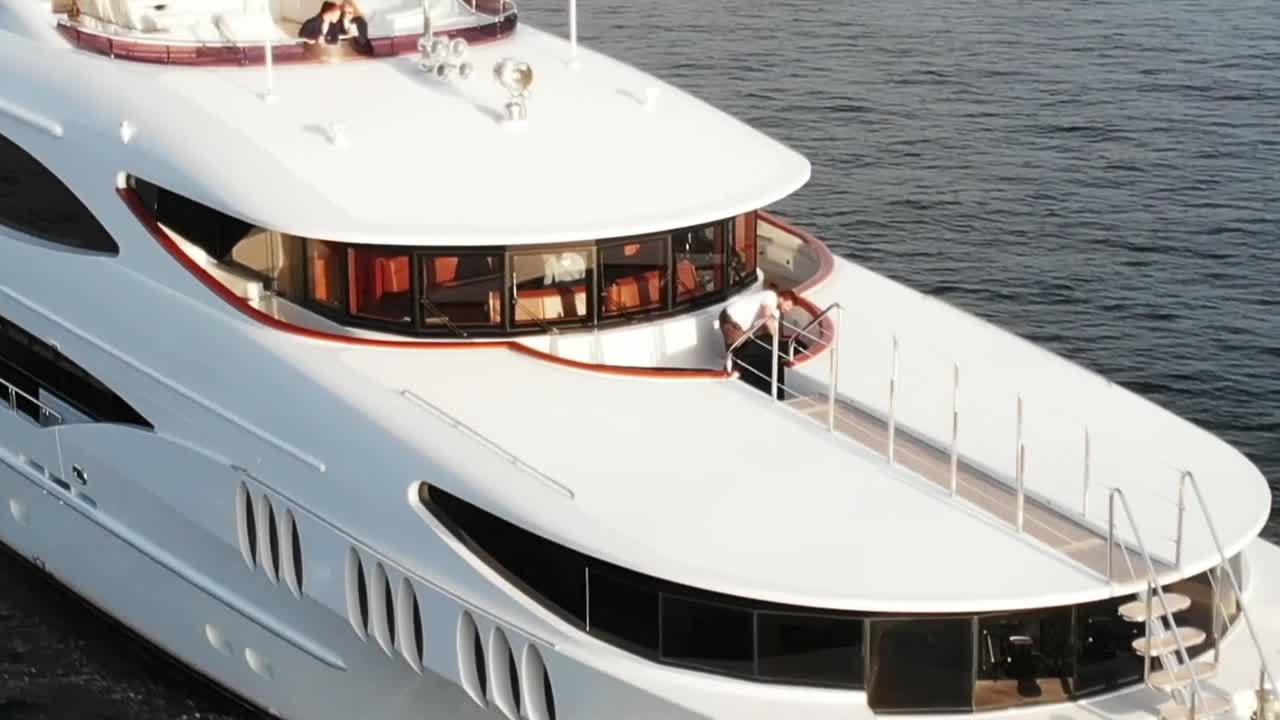
A superyacht is the only major asset its owner is asked to substantially rebuild every five to ten years. A jet is leased or traded before its first heavy check forces the question. A penthouse is renovated on the owner's whim, not on a classification society's calendar. A yacht is different: she is a complex industrial machine living in the most corrosive environment humans routinely operate in, and the rules of class and flag insist she be opened up, measured, and made good again at fixed intervals. The refit is not a luxury. It is the bill that keeps the asset legal, insurable, and saleable.
For owners coming to their first major yard period, the numbers can feel arbitrary. A quote of three million euros and a quote of twelve million euros can both be defensible for the same hull, depending on scope, condition, and ambition. The purpose of this analysis is to make those numbers legible — to break a refit into its real components, attach honest figures to each, and explain why the cheapest tender is rarely the one a sophisticated owner accepts. The guidance here reflects 2025–2026 pricing across the leading Mediterranean and Northern European refit yards.
The two questions that set the budget
Before any line item, two questions govern the entire exercise. The first is whether this is a class-driven refit or an owner-driven refit. The second is the yacht's length and condition. Everything else is detail.
A class-driven refit is mandatory. Every commercially registered superyacht, and most large private yachts, is held to a five-year survey cycle by its classification society — Lloyd's Register, DNV, RINA, ABS or Bureau Veritas. The five-year Special Survey is the heavy one. The vessel must be hauled out, tanks opened and cleaned, hull plating audio-gauged for thickness, sea valves stripped, and running gear — propeller shafts, rudders, stabiliser fins — withdrawn for inspection. The ten-year survey is more intensive still. These are not optional, and they cannot be deferred indefinitely without the yacht losing class, and with it her insurance and her charter income.
An owner-driven refit is discretionary: a new interior, a beach club where a garage used to be, a hull colour change, a glass bridge, a spa pool on the sun deck. Most real yard periods blend the two. The intelligent move is to align them — if the yacht is already in the dock for her Special Survey, the marginal cost of doing the discretionary work alongside it is far lower than mobilising a second yard period two years later.
The percentage-of-value rule of thumb
The industry's working shorthand is that an owner should anticipate spending 5 to 20 percent of the yacht's current market value on a major refit. A routine class-driven yard period sits at the lower end; a transformational rebuild that changes the yacht's character sits at the top, and a full restoration of an older hull can exceed it. For a yacht valued at fifty million euros, a significant ten-year refit can comfortably reach five to ten million. That range is wide because it has to be: the same dock, the same survey, and two different owners' ambitions produce wildly different invoices.
Cost per metre: the only metric that travels
Yacht people talk in cost per metre because it is the one figure that allows comparison across a fleet of different sizes. It is imperfect — a 60-metre yacht is not simply twice the work of a 30-metre one, because volume grows faster than length — but as a planning anchor it is indispensable. The working bands for 2025–2026 look like this.
| Scope of work | Indicative cost per metre (LOA) | What it covers |
|---|---|---|
| Annual maintenance | €2,000 – €8,000 | Servicing, minor cosmetics, no haul-out |
| Mid-life refit | €10,000 – €30,000 | Special Survey, antifouling, systems refresh, interior refresh |
| Major structural refit | €40,000 – €100,000+ | Full repaint, engine overhauls, layout changes |
| Full rebuild / restoration | €80,000 – €200,000+ | Hull extension, re-engining, new interior, near-new-build standard |
Read these as planning ranges, not quotes. A 50-metre yacht undergoing a mid-life refit might therefore budget somewhere between €500,000 and €1.5 million for the core work, before the discretionary wish-list is added. Once a wish-list arrives — a new interior, a repaint, a beach club — the same yacht can run to five or six million without anyone behaving irresponsibly.
Where the money actually goes
The single most useful thing an owner can internalise is that labour, not material, is the largest cost in almost every refit. Labour typically represents 30 to 40 percent of the total budget. The teak, the paint, the upholstery and the electronics are visible and easy to fixate on; the thousands of skilled hours that fit them are where the budget quietly disappears. Skilled labour at the level large, high-profile yachts demand has become harder to secure and more expensive, and finish expectations have only risen.
The other major envelopes are reasonably consistent across yards:
- Yard fees and facility costs: 15 to 25 percent of the total. This is the berth or dock rental, shore power, cranage, environmental containment, and the heating, lighting and extraction that a tented paint job consumes.
- Project management: 8 to 12 percent of the refit value for professional, independent oversight. This is not a cost to economise on — it is the discipline that keeps the other 90 percent honest.
- Classification and survey: 5 to 10 percent, covering class society fees, flag-state inspection, and the naval architects or engineers whose calculations and drawings the work depends on.
- Contingency: 15 to 25 percent on the tendered price, weighted higher for older yachts. A refit that does not over-run is a refit that did not look hard enough.
Paint: the line that surprises everyone
Repainting is the work owners most consistently under-budget, because the visible result — a flawless mirror hull — conceals the labour beneath it. The governing truth of yacht painting is that it is roughly 70 percent preparation: fairing, sanding, and treating corrosion before a drop of topcoat is sprayed. A high-quality paint system runs between €800 and €1,500 per square metre including preparation and containment.
On a specific hull, a full repaint of the topsides and superstructure on a 45-metre yacht — fairing, primer, topcoat and antifouling — lands between €200,000 and €500,000, depending on the paint system, the condition of the existing coating, and how much fairing is required. On a larger 60-metre yacht the full exterior repaint commonly runs from €300,000 to over €1 million. Darker hull colours, now fashionable, are unforgiving: they reveal every imperfection in the substrate and demand even more preparation, which is why they cost more to apply and more to maintain. Paint alone can represent 20 to 40 percent of a major refit's total.
Interior: the widest range in the building
Interior work has the broadest cost spread of any category, because it spans everything from re-upholstering existing furniture to gutting the volume to bare steel and starting again. Replacing wood, wall panels and ceilings runs from roughly €500 to €5,000 per square metre depending on the materials specified — the difference between a sensible refresh and a marble-and-shagreen statement. A mid-life interior refresh on a 30- to 50-metre yacht typically falls between €500,000 and €3 million.
Within that, the discrete projects owners ask for most have become reasonably predictable:
- Furniture replacement: €50,000 to €250,000 for a meaningful refresh of loose and fixed pieces.
- LED and lighting redesign: €150,000 to €500,000. Copying the existing lighting plan can be done in a couple of weeks; redesigning the whole scheme means opening ceilings and re-running circuits.
- Spa pool or jacuzzi installation: €50,000 to €150,000 — deceptively high, because the surrounding deck is torn apart to reposition filters and pumps.
- Teak decking: €1,500 to €2,500 per square metre installed, one of the most labour-intensive items on any deck list.
Mechanical and systems: the work nobody sees
The engine room is where a class-driven refit and an owner's comfort quietly converge, and where some of the largest single invoices live. A main engine overhaul runs from €50,000 to €500,000 per engine. Most fall between €150,000 and €300,000 each; smaller units in the 500–800 horsepower range sit at €50,000 to €150,000, while large engines above 2,500 horsepower reach €300,000 to €500,000 or more apiece. Because superyachts run twins, these figures double, and a major overhaul — a W5 service on a pair of large MTU 4000-series engines, for instance — can exceed half a million euros on its own.
Generators, switchboards and rewiring follow the same logic: copying the original layout is fast and relatively cheap, while redesigning the electrical architecture means the cost climbs with the age of the boat and the ambition of the plan. Electronics and navigation upgrades — replacing scattered displays with a modern glass bridge from Furuno or Kongsberg, fitting solid-state radar and new ECDIS, and adding low-earth-orbit connectivity alongside VSAT — are now near-standard items on any serious mid-life list.
The yards: where the work is done
For yachts above roughly 40 metres, the credible refit world is small. In the Mediterranean it is dominated by the MB92 Group, which operates the two reference facilities in Barcelona and La Ciotat. In Northern Europe, the German new-build houses — Lürssen, Blohm+Voss in Hamburg, and the Dutch yards Feadship and Amels/Damen — handle the largest and most complex projects, often on the yachts they built. Where a yacht refits matters as much as how much she spends, because the facility's lift capacity, covered sheds and labour pool determine what is even possible.
| Facility | Capability | Profile |
|---|---|---|
| MB92 La Ciotat | "La Grande Forme" dry dock 200m × 60m; hardstanding for six yachts to 115m; haul-out under three hours | Service, repair and refit for yachts from 30 to 220 metres |
| MB92 Barcelona | 4,800-tonne shiplift (largest dedicated superyacht lift in the world, 2019); berths up to nine yachts to 115m | High-volume Mediterranean refit hub |
| Lürssen / Blohm+Voss (Germany) | Covered build halls, deep heavy-engineering capacity | Largest and most complex rebuilds, often on home-built hulls |
| Dutch yards (Feadship, Amels/Damen) | Climate-controlled sheds, new-build-grade finishing | Near-new-build-standard refits and extensions |
Labour rate is part of the geography. Mediterranean skilled trades bill at roughly €45 to €75 an hour, with specialist technicians at €80 to €120; Northern European yards sit higher, commonly €80 to €120 for skilled work. A Northern yard is not simply more expensive for the sake of it — for a structural extension or a heavy re-engineering job, its engineering depth can be the difference between a clean project and a troubled one. For a cosmetic and survey-driven period, the Mediterranean is usually the rational choice.
Dock and lift: the meter that never stops
Independent of the work, the yacht pays to occupy the yard. A 40-metre berth runs roughly €400 to €800 a day in the Mediterranean and €600 to €1,200 in Northern Europe. The lift-and-launch itself — hauling the yacht out and putting her back — costs €8,000 to €20,000 for a 40-metre vessel. These figures sound modest beside a million-euro paint job, but they accrue every single day the yacht sits in the dock, which is precisely why downtime is a financial variable, not just a logistical one.
Downtime: the cost that does not appear on the invoice
The figure no yard quotes is the one a chartering owner feels most: the yacht earning nothing while she sits opened up. A meaningful refit takes a meaningful slice of the calendar. A straightforward Special Survey with antifouling and routine work might occupy the yacht for six to ten weeks. A mid-life refit with a repaint and interior refresh runs three to six months. A transformational project — one documented example involved new generators, switchboard, rigging, wiring, electronics and engine-room insulation — ran a full eighteen months. A serious refit needs at least six months of lead time simply to plan.
For a charter yacht, every week in the dock is a week off the market, and the prime Mediterranean and Caribbean seasons are short and unforgiving. This is why the experienced approach is to schedule the heavy yard period in the shoulder or off season, to consolidate class work and discretionary work into a single dock visit, and to book the yard slot twelve to eighteen months ahead — the leading facilities are now booked that far out as a matter of routine.
A worked example: the 50-metre mid-life refit
To make the abstractions concrete, consider a 50-metre, twelve-year-old yacht arriving for her Special Survey with a moderate owner's wish-list. The figures below are illustrative, built from the bands above, and assume a Mediterranean yard.
| Work package | Indicative cost |
|---|---|
| Class survey, haul-out, hull gauging, running gear withdrawal | €400,000 – €700,000 |
| Full exterior repaint (topsides, superstructure, antifouling) | €500,000 – €900,000 |
| Twin main engine top-end overhaul + generator service | €400,000 – €700,000 |
| Interior refresh (furniture, soft goods, lighting) | €700,000 – €2,000,000 |
| Glass bridge, radar, LEO/VSAT connectivity | €250,000 – €600,000 |
| Yard fees, dock and facility (4 months) | €200,000 – €400,000 |
| Project management (10%) | €250,000 – €550,000 |
| Contingency (20%) | €500,000 – €1,100,000 |
| Indicative total | €3.2m – €6.9m |
The spread between the low and high column is the whole story of a refit. The same yacht, the same survey, and the same dock can produce a three-million-euro invoice or a seven-million-euro one, and the difference is almost entirely the owner's ambition in the interior and the depth of the mechanical work. Neither figure is wrong. The discipline lies in deciding, before the yacht is hauled out, which yacht the owner is paying to recover.
How sophisticated owners control the number
The owners who emerge from a yard period without rancour tend to share a small set of habits. None of them involve squeezing the yard on price — the cheapest tender is the one most likely to discover “unforeseen” work halfway through.
- Survey before you tender. A thorough pre-refit condition survey turns unknowns into line items. The unknowns are what blow budgets; the line items are what you negotiate.
- Appoint independent project management. The 8 to 12 percent paid for an owner's representative, structurally separate from the yard, is the single highest-return line in the budget. They hold the schedule, the change-orders and the quality bar.
- Fix the scope before the haul-out. Change orders agreed once the yacht is opened up and the meter is running are where budgets quietly double. Decide the spa pool and the hull colour on paper, not in the dock.
- Consolidate class and discretionary work. If the yacht is out of the water for her Special Survey, the marginal cost of the repaint and the interior is far lower than a separate mobilisation later.
- Hold a real contingency. Twenty percent on an older yacht is not pessimism; it is arithmetic. The owners who budget for surprises are the only ones not surprised.
- Book the slot early. Twelve to eighteen months of lead time at a top yard is now the norm. The schedule, not the price, is usually the binding constraint.
The hidden costs owners forget to budget
The invoice from the yard is not the whole cost of a refit, and the experienced owner builds a budget that anticipates the items the headline figures omit. The most consistent omission is the cost of the yacht's own people. The crew rarely stands down during a yard period; the captain, chief engineer and senior officers remain aboard or nearby throughout, supervising trades, protecting the owner's interest, and learning the systems they will run for the next five years. Their salaries continue, and on a large yacht the monthly crew bill is substantial. Temporary accommodation ashore while the interior is uninhabitable adds to it.
There is also the matter of mobilisation. A yacht does not begin her refit at the yard gate; she must be delivered there, often a passage of several days with fuel, crew and insurance running, and delivered home again at the end. If she is moving from a Caribbean season to a Mediterranean yard, that repositioning is a project in itself. Owners who choose a Northern European yard for its engineering depth should price the delivery north and the colder, shorter working window into their thinking, not just the higher hourly rate.
Two further items reliably surprise first-time refit owners. The first is waste and environmental disposal — stripping antifouling, old paint and blasting media generates regulated waste that the yard charges to remove, and the figures are not trivial on a large hull. The second is warranty and re-commissioning: after months apart, every renewed system must be tested, balanced and signed off, and sea trials before re-delivery are billable yard time. A refit is not finished when the paint dries; it is finished when the yacht has proven herself at sea. Budgeting for that final fortnight is the mark of an owner who has done this before.
The refit as an ownership decision
There is a moment in every yacht's life when the refit question becomes a sale question. When a major class survey, a tired interior, and an out-of-date systems suite arrive in the same year, the bill to bring the yacht back to standard can approach the cost of moving up to a younger one. The honest analysis treats the refit not as maintenance but as a capital decision: is the owner investing in the yacht he has, or paying to defer a sale he should already be making? A good project manager and a clear-eyed broker will answer that before the dock is booked, not after.
For the owner who chooses to invest, the refit done well is one of the quiet privileges of the asset. A yacht that emerges from a proper yard period — surveyed, repainted, re-engined and renewed — is not merely legal and insurable. She is, for a few more years, exactly the vessel her owner intended, restored to a standard the open ocean spends every day trying to erode. That is what the number buys. Understood properly, it is not an expense to resent but the price of keeping a serious thing serious.
Plan your refit with a clear head and a clear budget
Obsidian Helm advises principals and family offices on superyacht yard periods — from condition surveys and yard selection to independent project oversight that keeps the budget honest. By invitation, in confidence.
Request Your InvitationFrequently asked
How much does a superyacht refit cost?
Expect to spend between 5 and 20 percent of the yacht's current market value on a major refit. As a cost-per-metre guide, a mid-life refit runs roughly €10,000–€30,000 per metre and a major structural refit €40,000–€100,000+ per metre. A 50-metre yacht's mid-life yard period commonly totals €3–€7 million once paint, interior and survey work are combined.
Why is repainting a superyacht so expensive?
Because yacht painting is roughly 70 percent preparation — fairing, sanding and treating corrosion before any topcoat is applied. A quality system costs €800–€1,500 per square metre including preparation and containment. A full exterior repaint runs €200,000–€500,000 on a 45-metre yacht and can exceed €1 million on a 60-metre one. Paint alone is often 20–40 percent of a refit total.
What is the five-year Special Survey and is it mandatory?
It is the heavy classification survey every commercially registered superyacht undergoes on a five-year cycle. The yacht is hauled out, tanks are opened and cleaned, hull plating is audio-gauged, and running gear is withdrawn for inspection. It is mandatory: without class certification a yacht loses its insurance and charter eligibility. The ten-year survey is more intensive still.
How long does a superyacht refit take?
A routine Special Survey with antifouling takes about six to ten weeks. A mid-life refit with a repaint and interior refresh runs three to six months. A transformational rebuild can take eighteen months or more. Plan at least six months of lead time, and book top yards twelve to eighteen months ahead.
Which yards handle large superyacht refits?
In the Mediterranean, the MB92 Group dominates with facilities in Barcelona (a 4,800-tonne shiplift) and La Ciotat (a 200m dry dock, yachts to 220m). In Northern Europe, German yards such as Lürssen and Blohm+Voss, and Dutch yards Feadship and Amels/Damen, handle the largest and most complex rebuilds, often on hulls they originally built.