Luxury Yacht Insurance Cost: What Actually Drives the Premium
The premium is never really the number that matters. What matters is whether the policy pays out the one time you need it to — and that comes down to survey compliance, crew paperwork and disclosure, decided long before any claim is filed.
Ask five brokers what luxury yacht insurance cost should look like for a given vessel and you will get five different figures, none of which mean much until you understand what actually sets the number. Premiums on yachts above roughly 30 metres are not priced off a rate card the way a car policy is; they are underwritten individually, against a file that includes the vessel's survey history, her cruising itinerary, her crew's certification, and — more than most owners expect — her owner's own claims record. A yacht insurance cost calculator can hand you a ballpark in minutes, but the number it produces is only as good as the inputs, and the inputs are exactly where most owners stay vague.
The more consequential number, in practice, is not the premium at all. It is the day a genuine loss happens — a grounding, an engine-room fire, a hurricane strike at anchor — and the underwriter finds a reason to decline the claim. A yacht insurance claim denied at the moment it matters is a far more expensive event than an elevated premium ever was, and the reasons claims get denied are almost always things that were fixable months or years earlier. This is what actually drives the premium, where agreed-value and actual-cash-value policies diverge, and the specific gaps that give insurers grounds to walk away.
What Actually Sets the Premium
Six variables do nearly all of the work in determining luxury yacht insurance cost, and they interact rather than simply stack.
- Hull value. The insured value is the base the premium rate is applied against, but it is also a negotiation: overstate it and you pay for cover you cannot collect on; understate it and a partial loss settles short of what repairs actually cost.
- Age and construction. Underwriters treat a 20-year-old hull differently from a five-year build regardless of condition, because mechanical and structural risk is assumed to compound with age unless a recent survey proves otherwise.
- Cruising ground. A policy warranted for the Western Mediterranean prices very differently from one that includes the Caribbean during hurricane season — insurers either load the premium heavily for named-storm exposure or exclude specific months and regions outright.
- Crew qualifications. A captain and crew holding current, flag-appropriate certification (STCW, appropriate CoC tonnage rating) is treated as a material risk reducer; gaps here are treated as a material risk multiplier.
- Claims history. Prior losses, even small ones, follow the vessel and the owner. A clean five-year history is worth a genuine discount most owners never ask for explicitly.
- Security and monitoring. AIS tracking, remote engine-room monitoring and documented anti-theft systems are increasingly rewarded, because they give the underwriter evidence a loss was not preventable rather than just a story after the fact.
Agreed Value vs Actual Cash Value
This single clause changes the entire economics of a claim, and it is the one most owners assume rather than read.
| Basis | Agreed Value | Actual Cash Value (ACV) |
|---|---|---|
| How a total loss pays | The pre-agreed figure in the policy, no depreciation deduction | Replacement cost minus depreciation — often materially less |
| Premium | Higher, reflecting certain payout | Lower, reflecting insurer's depreciation advantage |
| Dispute risk at claim time | Low — the number was fixed in advance | High — depreciation schedules are frequently contested |
| Best suited to | Newer builds, refit-heavy vessels, owners who want certainty | Older tonnage nearing charter retirement, cost-sensitive lay-up cover |
| Main drawback | Requires periodic revaluation as refits add value | Payout can fall well short of what a comparable replacement actually costs |
Why Claims Actually Get Denied
The accident is rarely the argument. The argument is almost always about what should have been on file before the accident happened.
- Undisclosed modifications. A repower, a lengthened swim platform, added tankage, or a refit that changes displacement — any material change not reported to the underwriter can void cover on the exact system that later fails, even if the modification itself was sound.
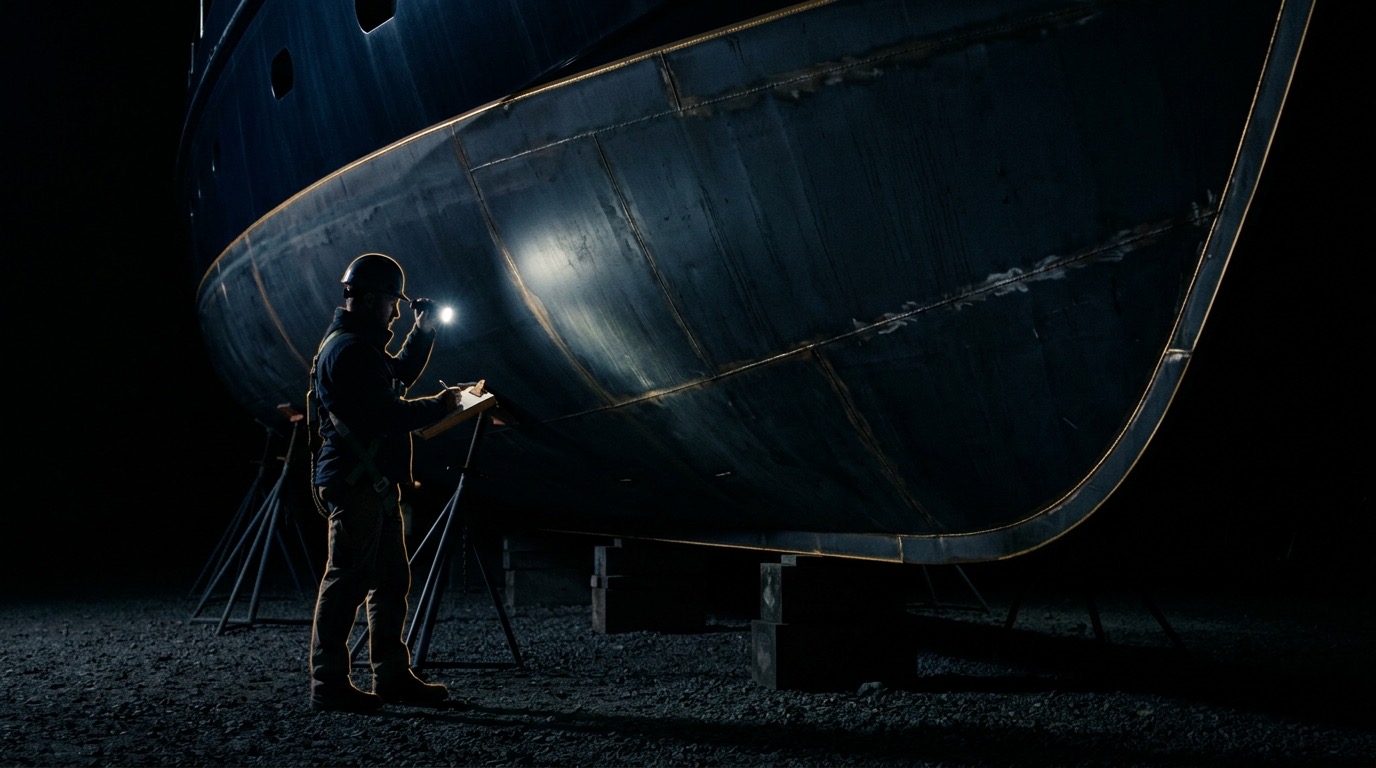
- Lapsed survey requirements. Most policies above a certain value carry an out-of-cycle survey clause — typically every three to five years. Missing it does not just risk a coverage gap; insurers frequently point to it as evidence the owner failed a basic duty of care, as detailed in our breakdown of superyacht refit costs where survey findings routinely drive the refit scope itself.
- Crew certification gaps. A captain running without a current certificate of competency for the vessel's tonnage, or crew without valid STCW, hands the underwriter a clean technical reason to decline — regardless of how the incident actually occurred.
- Cruising outside navigational limits. Policies define geographic and seasonal warranties precisely. A yacht caught in the Caribbean in September against a policy warranted clear of the hurricane box by June 1st is, in the insurer's file, in breach before the storm ever forms.
Insurers rarely deny a claim over the accident itself. They deny it over the paperwork that should have existed before the accident happened.
Reducing Claim-Denial Risk in Practice
None of the four gaps above are underwriting bad luck — they are administrative failures, and every one of them is preventable with the same discipline applied to any other owned asset of this value. A current survey on file, refit and modification disclosures sent to the underwriter as they happen rather than at renewal, an annual crew certification audit, and a documented, monitored cruising plan that proves compliance with navigational limits collectively close nearly every gap insurers use to decline a loss. Ownership structure matters here too — vessels moved between flags or held through entities with unclear title, an issue that surfaces constantly in our guide to the yacht VAT and EU import problem, can create the same kind of documentation ambiguity that stalls a claim exactly when speed matters most.
A yacht insurance cost calculator will always give you a premium estimate. It will never tell you whether your survey cycle, your crew's paperwork, or your last refit's disclosure trail would survive a loss adjuster's file review. Obsidian Helm builds that documentation and monitoring layer — survey tracking, crew certification audits, disclosure records, cruising-limit verification — as part of our Yacht & Jet practice, so the policy pays when it is actually tested.
Make Sure the Policy Pays When It's Tested
A $4,999 Private Strategy Session audits your survey cycle, crew certification, disclosure history and cruising-limit compliance against your actual policy wording — closing the gaps insurers use to deny claims, before there's ever a claim to file. Credited toward membership.
Request Your InvitationFrequently asked
What actually drives luxury yacht insurance cost?
Six factors do most of the work: hull value and the agreed-value figure, the vessel's age and construction, the cruising ground and any hurricane-season exposure, crew qualifications, claims history, and onboard security or monitoring systems. Underwriters weigh these individually rather than applying a flat rate, which is why a yacht insurance cost calculator only produces a starting estimate.
Why do yacht insurance claims get denied?
The most common reasons are undisclosed modifications or refits, a lapsed out-of-cycle survey requirement, crew certification gaps such as an expired certificate of competency or missing STCW documentation, and cruising outside the policy's stated navigational or seasonal limits. In practice, insurers deny claims over missing paperwork far more often than over the accident itself.
What is the difference between agreed value and actual cash value yacht insurance?
An agreed-value policy pays the pre-negotiated figure on a total loss with no depreciation deducted, at a higher premium. An actual cash value (ACV) policy pays replacement cost minus depreciation, at a lower premium, but the depreciation calculation is frequently disputed at claim time and can leave a real shortfall against a comparable replacement vessel.
Is a yacht insurance cost calculator accurate?
It gives a reasonable starting range, but it is only as good as the inputs an owner provides. It cannot account for undisclosed modifications, an out-of-date survey, crew certification gaps, or ambiguous ownership structure — all of which affect both the real premium an underwriter quotes and, more importantly, whether a future claim actually gets paid.
Does yacht insurance cover hurricane season in the Caribbean?
Only if the policy is specifically warranted for it, usually at a significant premium loading, or the vessel is relocated outside the named hurricane box by a stated date. A yacht caught inside the excluded zone after the policy's stated haul-out or relocation date is typically treated as in breach of warranty regardless of the storm's actual track.