New-Build vs Used Yacht: The Real Buyer's Calculation
The brokerage market looks like the value play until you run the numbers properly — and there's a cost category sitting inside every used hull that a marine survey was never built to catch.
Search "used boats for sale" and the brokerage market looks straightforward: listings priced well under new-build quotes, hulls already in the water, no waiting list. The actual decision is considerably less simple than the asking price suggests, and it turns on four things a listing page won't show you — the depreciation curve you're buying into, what a survey does and doesn't catch, the deferred-maintenance risk sitting inside almost every used hull, and a cost category essentially no used-yacht buyer checks for at all: the vessel's prior technology and network setup.
The depreciation curve you're actually buying into
Yachts depreciate fastest in the first five years of ownership, and the shape of that curve matters more to the buying decision than most brokerage conversations acknowledge.
| Age at purchase | Typical value retained vs. original new price | What's driving it |
|---|---|---|
| Year 1 (ex-demo / broker stock) | ~75–85% | Steepest single-year drop; the first owner absorbs most of the "new boat" premium loss |
| Years 2–5 | ~55–70% | The depreciation curve is steepest across this window for nearly every builder and size class |
| Years 6–10 | ~40–55% | Curve begins flattening; refit condition starts mattering more than age |
| 10+ years | ~25–40%, wide variance | Value driven almost entirely by refit history and system condition, not age alone |
The practical read: a yacht in the two-to-five-year window is usually the sharpest buy on paper, since the steepest depreciation has already happened but the boat hasn't yet accumulated a decade of deferred maintenance. Older tonnage can still be excellent value — but only once refit history is priced in honestly, which is precisely where most first-time used-boat buyers get the calculation wrong.
What a marine survey actually catches — and what it doesn't
- What it reliably catches: hull moisture and osmosis readings, engine compression and hour-based wear, keel and rudder structural integrity, corrosion in through-hulls and sea chests, and out-of-date safety or class-compliance items.
- What it catches inconsistently: wiring harness age and condition behind finished joinery, generator and watermaker service history beyond logbook entries, and the true state of stabilizer and hydraulic systems under load.
- What it essentially never checks: the onboard IT network, the firmware and patch status of navigation and control systems, the age and end-of-life status of satcom hardware, or who still holds remote administrative access to the vessel's systems after the sale closes.
That last category is the blind spot this article exists to cover, and we come back to it below — but the hull and mechanical risk deserves equal respect first, since it's the more familiar way a used-boat purchase goes wrong.
The refit cost hiding inside the purchase price
Industry rule of thumb puts annual maintenance reserve at roughly 10% of a yacht's value, spent consistently. Used boats rarely arrive with that discipline intact. It's common for a used-yacht buyer to discover, within the first 24 months of ownership, deferred maintenance and refit items totalling 15–25% of the purchase price — running gear, HVAC, tender and toys, interior refresh, and system upgrades a seller deferred rather than disclosed as urgent. None of it is necessarily dishonest; sellers routinely defer non-safety items right up to a sale. It just means the “cheaper” used boat can close the price gap to new-build fast once the real refit bill lands. We break down exactly where that money goes in our superyacht refit cost breakdown.
New-build: the wait, the warranty, and what it doesn't solve
The new-build case is straightforward on paper — full builder's warranty, current systems throughout, no unknown history — but it comes with a real-world constraint brokerage buyers don't face: build-slot availability. Larger yards are commonly quoting 24 to 48 months from contract to delivery for vessels above roughly 45 metres, and semi-custom slots at popular yards book out further still. Warranty coverage typically runs two to five years across structure and major systems, which is real protection — but it says nothing about resale value in year six, and a new build bought purely as an investment still rides the same depreciation curve as everyone else once the warranty period ends.
The survey tells you what's wrong with the hull. It was never designed to tell you who else can still log into the boat.
The hidden cost category no survey covers: the boat's prior digital life
Every used yacht is sold with more than its hull and engines — it's sold with its previous owner's entire technology footprint intact, and almost nobody surveys for it. In practice this means outdated firmware on navigation, control and entertainment systems that hasn't been patched in years; satellite communications hardware nearing end-of-life or already unsupported by its manufacturer; and network architecture that was never segmented properly in the first place, let alone reconfigured for a new owner. None of this shows up on a hull survey, a sea trial, or a standard pre-purchase inspection checklist — it requires someone to actually go looking.
Ownership transfer rarely means access transfer
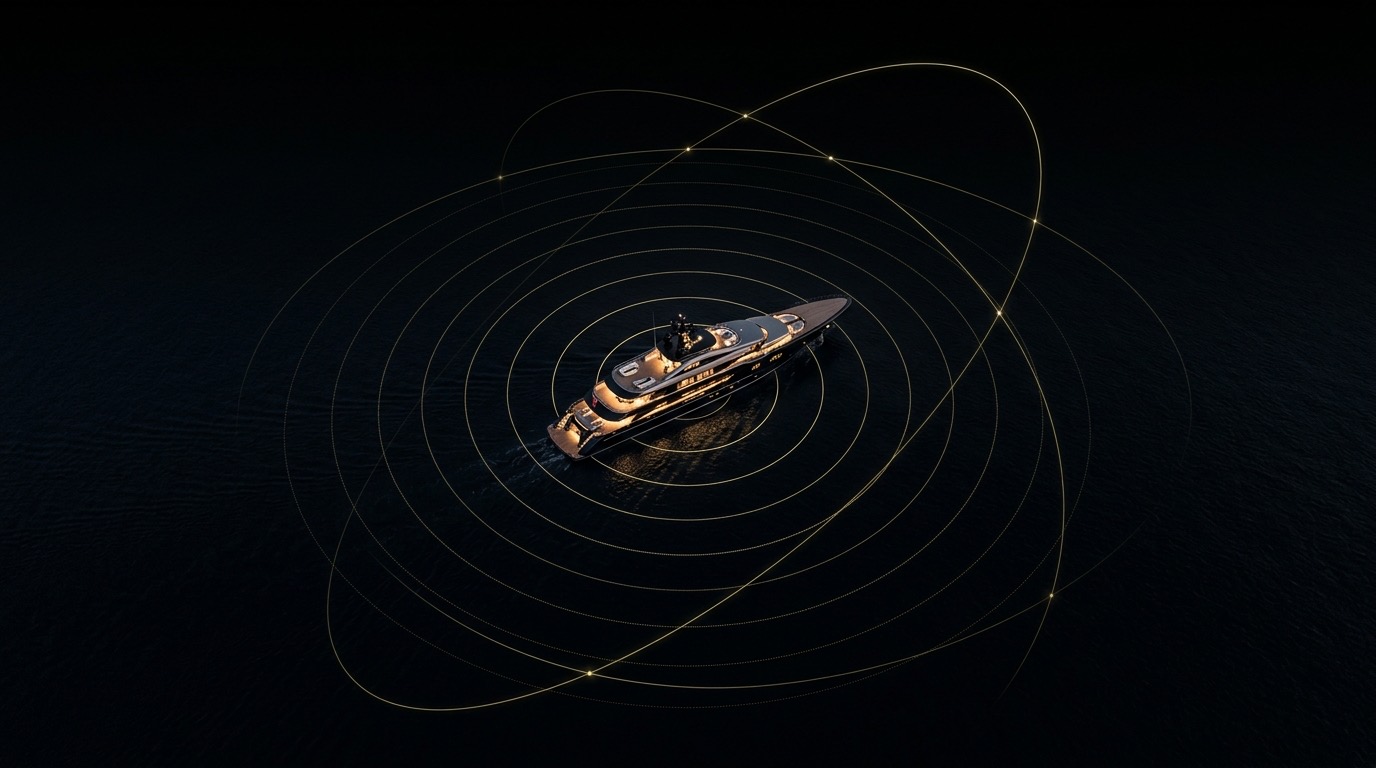
The more serious version of this problem is access, not hardware. Crew, prior management companies, and former captains routinely retain remote administrative access to a vessel's network, cameras, and systems long after the sale closes, simply because nobody explicitly revoked it as part of the transaction. Combined with legacy AIS and tracking configurations that can still expose a new owner's movements and habits under a previous privacy setup, a used yacht can hand its new owner a genuine security and privacy problem before the champagne on delivery day is finished — a risk we detail separately in yacht tracking, privacy and AIS exposure.
This is the specific gap Obsidian Helm exists to close: a pre-purchase technology and cybersecurity audit that treats the vessel's digital systems with the same scrutiny a marine surveyor gives the hull — auditing firmware currency, satcom hardware condition, network segmentation, and every point of remote access, then closing off what shouldn't survive the change of ownership, before closing rather than after.
Buying used across borders adds another layer
A used yacht purchased in a different jurisdiction than it will be based in often carries an unresolved VAT or import status that a brokerage listing won't flag prominently, and that can turn into a six- or seven-figure liability if it surfaces after closing rather than before. This is a separate due-diligence track from the survey entirely, and worth reading in full via our yacht VAT and EU import problem guide before any offer is made on a vessel that has changed flags or cruising grounds.
None of this replaces the fundamentals covered in our complete guide to buying a yacht — this article is the depreciation-and-hidden-risk layer that sits underneath that broader process, not a substitute for it.
Obsidian Helm audits the technology, network and cybersecurity posture of used vessels before closing as part of our Yacht & Jet practice, working alongside your surveyor and broker rather than instead of them, with findings that feed directly into our broader cybersecurity work once the vessel is yours.
Have the Boat's Technology Audited Before You Close
A $4,999 Private Strategy Session includes a pre-purchase technology and cybersecurity audit for used-yacht buyers — firmware currency, satcom hardware condition, and lingering remote access all reviewed before you sign — credited toward membership.
Request Your InvitationFrequently asked
Is a used yacht actually cheaper than new once refit costs are included?
Often by less than the sticker price suggests. Deferred maintenance and refit items commonly total 15–25% of the purchase price within the first 24 months of used ownership, which can close much of the apparent gap to a new-build price once real costs land.
How much should I budget for deferred maintenance on a used yacht?
Beyond the standard 10%-of-value annual maintenance reserve, budget for a first-year lump sum covering whatever the previous owner deferred — running gear, HVAC, tenders and toys, and system upgrades are the most common categories that surface after closing.
How long is the wait for a new-build superyacht in 2026?
Major yards are commonly quoting 24 to 48 months from signed contract to delivery for vessels over roughly 45 metres, with popular semi-custom slots often booked out further still.
Does a marine survey check the boat's network and cybersecurity systems?
No. A standard pre-purchase marine survey covers hull, structure, engines and safety systems, but does not assess firmware currency, satcom hardware condition, network segmentation, or who retains remote access to onboard systems — that requires a separate technology audit.
Can a previous owner or their crew still access a yacht's systems after sale?
Yes, and it happens more often than buyers assume. Remote administrative access set up by prior crew, captains or management companies frequently isn't revoked as part of the sale process unless someone explicitly audits and closes it out.