Tiara Yachts Buying Guide: Is the 48 LE Worth It in 2026?
Before you shortlist a Tiara, it helps to know what you're actually paying for. A close look at the brand's construction, propulsion, and where the 48 LE sits against its closest competitors.
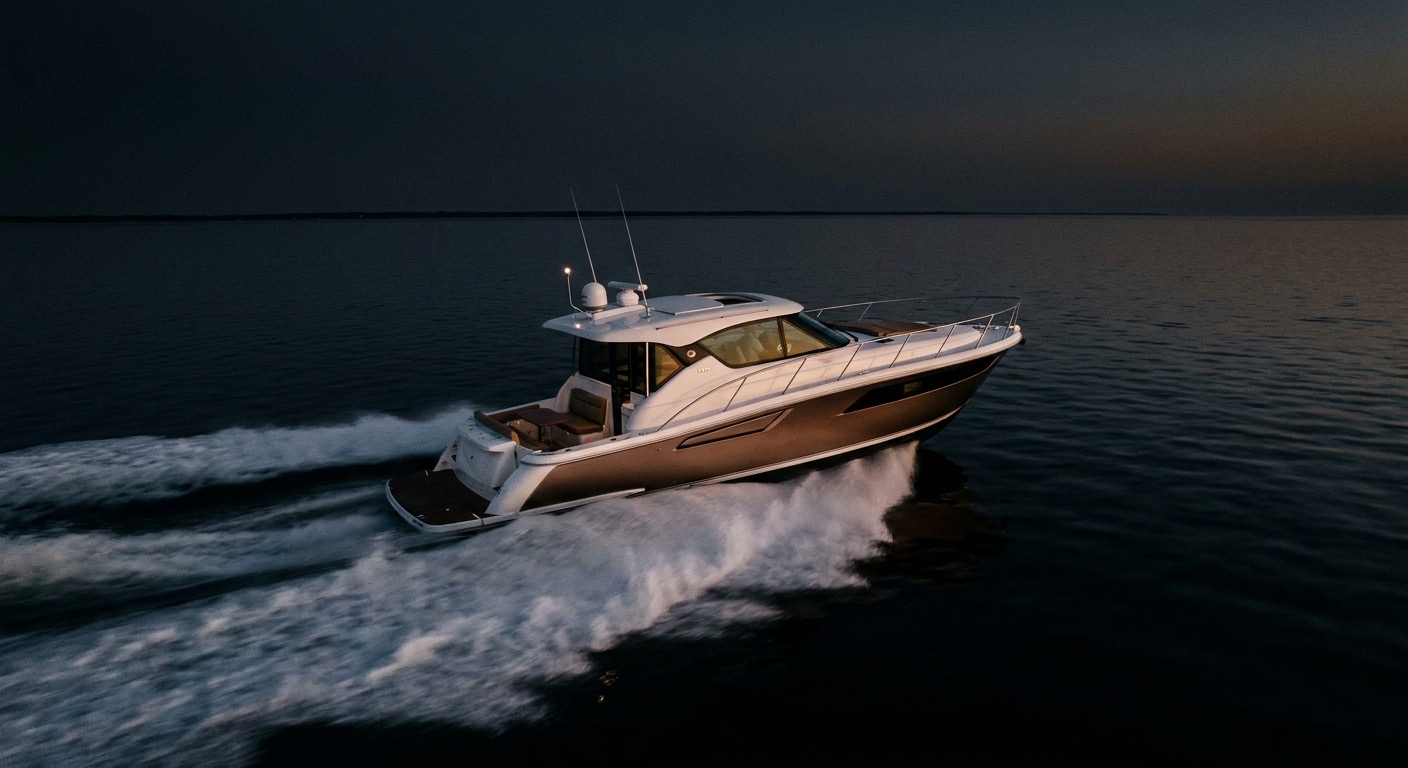
Every Tiara that leaves the Holland, Michigan yard carries the same lineage: a family-owned builder, now in its second generation of Slikkers family leadership, that has spent five decades treating fiberglass boatbuilding as a craft rather than a commodity. If the 48 LE has made your shortlist, the reason is probably less about horsepower on a spec sheet and more about a reputation that's held for decades in a category where builders come and go.
Where Tiara Fits in the Market
Tiara Yachts occupies a specific lane: premium, US-built performance cruisers between roughly 34 and 53 feet, sold through a curated dealer network rather than mass production. The brand sits under S2 Yachts, the same Holland, Michigan group behind Pursuit Boats, and it has resisted the industry pull toward outsourced hulls and offshore labor. That matters for resale — Tiara hulls tend to hold value better than comparably sized production boats from conglomerate-owned brands, largely because supply has always been deliberately constrained.
The current lineup splits into three families. The Sport and Coupe ranges (34–39 LS, 39/43/48 LE) lean toward day-boating and weekend cruising with a protected helm and a convertible cockpit. The Flite series (34, 38, 44 Flite) is the newer, more aggressive design language — lower freeboard, sportier lines, and a younger buyer profile. Above that sits the flagship LE Coupe territory, where the 48 LE we've profiled in the Obsidian Helm network lives: three staterooms, IPS pod propulsion, and enough range to make a genuine coastal passage rather than a marina hop.
Construction: What You're Actually Paying For
Tiara hand-laminates and resin-infuses hulls rather than chopper-gunning them, which produces a stiffer, lighter, more consistent laminate than spray-up construction — the same process high-end Italian and Scandinavian builders use, at a US price point. Stringer systems are composite rather than wood, which matters over a 15–20 year ownership horizon in humid climates. The build quality shows up less in the showroom and more at the 10-year survey, which is where Tiara resale numbers consistently outperform peers.
Propulsion and Performance
Volvo Penta IPS pod drives are now standard across most of the range, including the 48 LE, replacing traditional shaft drives. The practical upshot for an owner: roughly 20–30% better fuel efficiency at cruise, joystick docking that turns a 50-foot boat into something a shorthanded couple can dock confidently, and a shallower draft than an equivalent shaft-driven hull. The tradeoff is service network dependency — IPS maintenance needs a Volvo Penta-certified yard, which is rarely an issue near major boating markets but worth confirming in your home port before you buy.
How Tiara Compares
| Builder / Model | LOA | Construction | Propulsion | Typical Price Band (USD) |
|---|---|---|---|---|
| Tiara Yachts 48 LE | 52'11" | Hand-laid, resin-infused | Twin IPS pod | $3.5M–$4.3M |
| Cruisers Yachts 42 GLS | 45'6" | Vacuum-infused, production | Twin IPS pod | $2.1M–$2.6M |
| Sea Ray L650 Fly | 68'6" | Production infusion | Triple shaft/IPS options | $5.8M–$6.9M |
The honest takeaway: Tiara sits in a value pocket above mainstream production builders like Cruisers and below full-flybridge motoryachts like the Sea Ray L-Class, trading raw size for build quality and a lower total-ownership curve.
What to Check Before You Buy
On a used Tiara, the diligence list is short but non-negotiable: IPS pod service history and any drive-seal replacements, gelcoat condition below the waterline versus topside (infused hulls age well but osmosis still happens), and confirmation of factory-original electronics versus aftermarket refits that can complicate warranty claims on newer models. On a new build, lead times through the dealer network run longer than mass-production brands — factor that into any seasonal delivery target.
Next Steps
A representative example of this class — specification and pricing typical of the current 48 LE — is available to review through the Obsidian Helm network: Tiara Yachts 48 LE listing. For the broader framework on structuring a purchase, financing, survey, and sea trial before you commit capital, see our complete yacht buying guide. If you're comparing Tiara against other builders in this size and price class, Obsidian Helm's Yacht & Jet practice runs a $4,999 Private Strategy Session that benchmarks the full field against your actual use case — cruising grounds, crew plans, and resale horizon — before you make an offer on anything.
Get the Right Brand and Systems Specified Before You Buy
A $4,999 Private Strategy Session covers intended use, cruising ground and brand shortlist, and delivers a vessel and technology specification that fits the boat you actually choose — credited toward membership.
Request Your InvitationFrequently asked
Who makes Tiara Yachts and where are they built?
Tiara Yachts is a privately held, family-owned builder based in Holland, Michigan, operating under the S2 Yachts group alongside Pursuit Boats. Founded in 1972, it remains one of the few US premium yacht brands still building hulls domestically rather than outsourcing production overseas.
What makes Tiara Yachts construction different from other builders?
Tiara hulls are hand-laminated and resin-infused rather than chopper-gun sprayed, using composite stringers instead of wood. This produces a stiffer, more consistent laminate that tends to hold up better structurally over a 15–20 year ownership window than typical mass-production construction.
Does the Tiara 48 LE use pod drives or shaft drives?
Most current Tiara models, including the LE Coupe series, use twin Volvo Penta IPS pod drives rather than traditional shaft propulsion. IPS delivers better fuel efficiency, shallower draft, and joystick docking, at the cost of needing a Volvo Penta-certified service yard for maintenance.
Do Tiara Yachts hold their resale value well?
Yes, generally. Because Tiara deliberately limits production volume and maintains strong build quality, used hulls in this size class tend to depreciate more slowly than comparable production boats from larger conglomerate-owned brands, particularly with documented maintenance history.
What does it cost to own a Tiara Yachts flagship annually?
A well-maintained 40–53 foot Tiara typically runs $45,000–$90,000 per year in dockage, insurance, IPS servicing, detailing, and haul-out, before crew costs if the owner isn't running the boat themselves. IPS-equipped models generally cost less to fuel than shaft-driven equivalents of the same size.