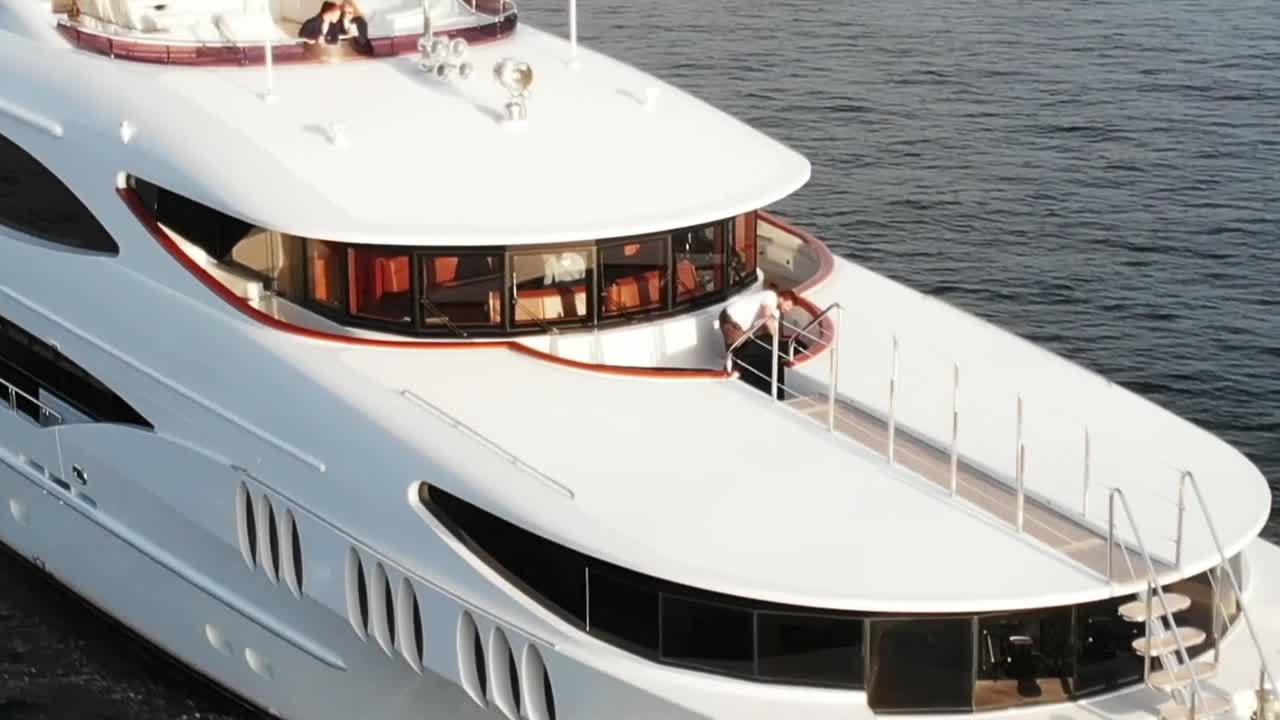
Superyacht vs Megayacht: Where the Line Actually Is
Brokers, builders and owners all use these words slightly differently, and no maritime authority has ever legislated a hard boundary. That doesn't mean the categories are meaningless — it means the real line is drawn by what actually changes onboard, not by a number on a spec sheet.
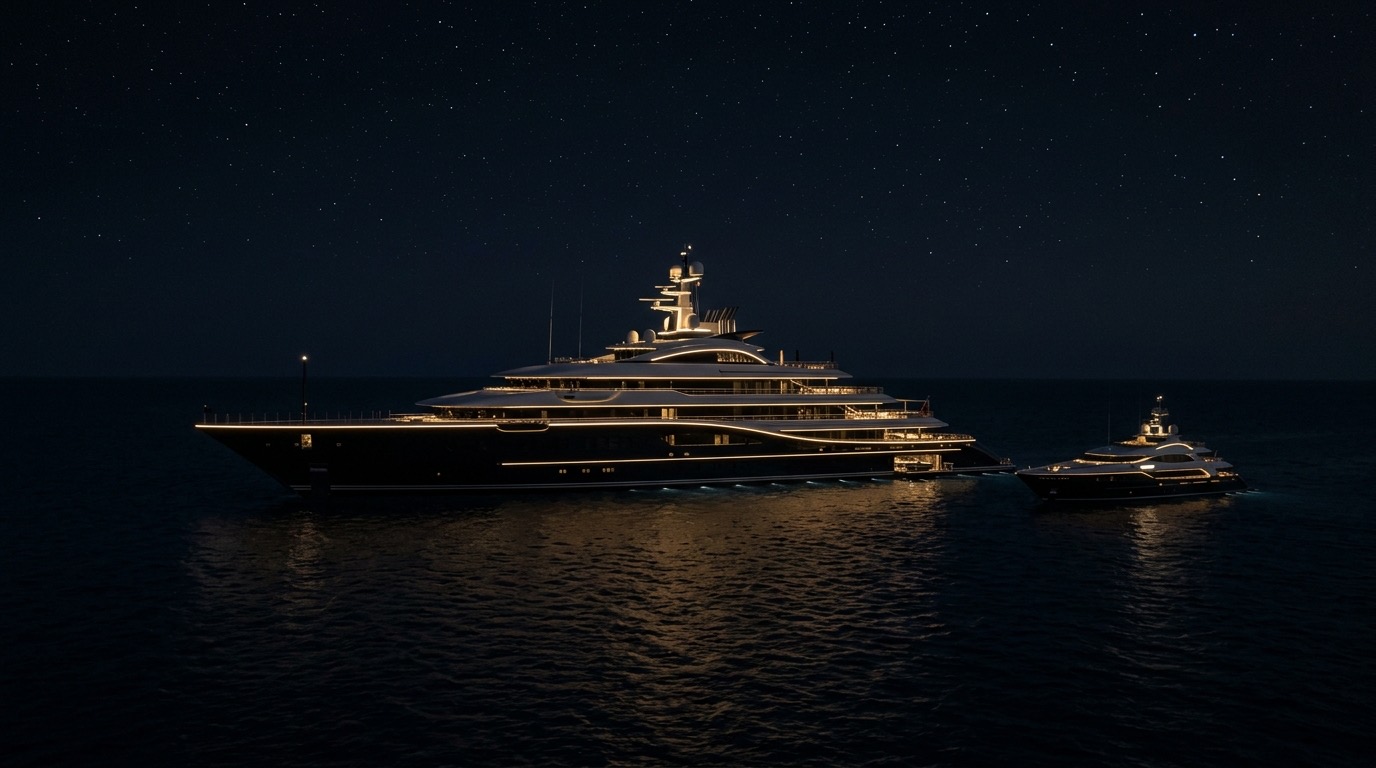
Ask five people in the yachting industry where a superyacht ends and a megayacht begins, and you'll get five different answers — not because the terms are meaningless, but because no maritime authority, classification society or flag state has ever legislated a hard boundary between them. What exists instead is a set of industry conventions that most builders, brokers and charter agents converge on in practice, even if the marketing copy on any given 45-metre listing calls it whatever sounds most impressive that week.
The size conventions that actually hold up
The most widely used convention starts superyacht at roughly 24 metres (about 79 feet) — not an arbitrary round number, but the length above which most flag states and classification societies (MCA, REG, Lloyd's Register) begin applying large-yacht codes with more rigorous crew certification, safety equipment and survey requirements. Below that line, a vessel is generally just a large yacht; above it, the regulatory and operational profile changes meaningfully regardless of what marketing calls it.
Megayacht has no equivalent regulatory anchor, which is exactly why it's used more loosely. In practice, most of the industry — brokerage houses, charter fleets, boat show categorizations — reserves it for vessels somewhere in the 60–100 metre range, where the scale of the build starts requiring genuinely different naval architecture, propulsion and shipyard capability than a 30 or 40-metre superyacht. Above roughly 100 metres, some in the industry start reaching for gigayacht, though that term is used even more inconsistently and mostly shows up in press coverage of the handful of vessels large enough to qualify.
None of this is codified law. A 58-metre yacht and a 62-metre yacht sit on opposite sides of most people's informal megayacht line, and nothing prevents either owner's broker from using whichever term markets better. But the conventions aren't arbitrary either — they roughly track real inflection points in what a vessel requires to operate, which is a more useful way to think about the categories than memorizing a length in metres.
What actually changes as vessels cross these thresholds
| Size class | Typical crew | Typical systems complexity | Typical refit cost band |
|---|---|---|---|
| Large yacht (below ~24m) | 2–5 | Single network, basic AV, one Wi-Fi zone | $50,000–$300,000 |
| Superyacht (24–60m) | 6–15 | Segmented networks, multi-zone AV, redundant connectivity, basic automation | $500,000–$5M |
| Megayacht (60–100m) | 20–45 | Enterprise-grade shipboard IT, full automation (climate, lighting, access, shading), layered cybersecurity segmentation, multiple redundant satellite links | $5M–$25M+ |
| Gigayacht (100m+) | 50–100+ | Data-center-class onboard infrastructure, hospital-grade medical systems, dedicated IT/security crew, full network segmentation across guest/crew/operational domains | $25M–$100M+ |
The crew numbers scale roughly with length, but not linearly — a megayacht doesn't just need more stewards and deckhands than a superyacht, it needs entirely new departments. Dedicated IT officers, cybersecurity-aware network administrators and sometimes a full AV/automation engineer are common on 70m+ builds and essentially nonexistent on a 30m superyacht, where the captain or a generalist engineer typically absorbs whatever technology the boat carries.
Why systems complexity scales non-linearly
This is the part owners crossing from a superyacht into megayacht territory tend to underestimate. Doubling a vessel's length doesn't double its network complexity — it multiplies it, because the things that scale with size aren't just cabin count and tender garage volume. They're the number of discrete systems that need to talk to each other without being allowed to talk to each other insecurely.
A 35-metre superyacht might run one segmented guest Wi-Fi network, one crew network, and a single Starlink Maritime terminal handling both with reasonable headroom. An 80-metre megayacht typically runs guest, crew, operational/navigation, and security-camera networks as fully separate segments, often with multiple redundant satellite terminals load-balanced across them, because a single point of failure at that scale isn't an inconvenience — it's an owner losing connectivity mid-charter with dozens of guests and crew depending on it. We cover the vessel-agnostic version of this build-out in superyacht technology systems.
Refit costs follow the same curve
Refit budgets scale non-linearly for a related reason: it isn't just more square footage of teak and upholstery, it's exponentially more systems that need to be pulled apart, upgraded and recommissioned together without conflicts. A superyacht refit might touch AV, connectivity and a handful of automation zones as a single contained project. A megayacht refit at 70m+ often means recommissioning dozens of interdependent systems — navigation, safety, hotel automation, cybersecurity segmentation, medical suite equipment on the larger builds — where a change to one network segment has to be validated against every other segment it touches. We go deeper on how those costs actually break down in superyacht refit cost breakdown.
Nobody gets surprised by the extra cabins. They get surprised by how many more systems have to be right at once before any of them can go live.
A quick way to place your own vessel
- Under 24 metres: a large yacht in most conventions — simpler regulatory profile, single-network technology footprint.
- 24 to roughly 60 metres: squarely a superyacht by every convention that matters, with crew, AV and connectivity complexity that's real but still manageable as one integrated project.
- 60 to 100 metres: where most of the industry starts saying megayacht, and where systems complexity, crew size and refit cost all step up non-linearly rather than gradually.
- 100 metres and above: gigayacht territory for the handful of vessels this large, with data-center-class infrastructure and dedicated technology crew as the norm rather than the exception.
Chartering one of these vessels rather than owning it doesn't remove the size-class questions — it just changes who's answering them; our superyacht charter guide covers what to ask a charter fleet about a given vessel's systems before you book.
Obsidian Helm specifies network architecture, cybersecurity segmentation and automation systems matched to a vessel's actual size class — not a generic build sheet borrowed from a boat two categories smaller or larger — as part of our Yacht & Jet practice.
Get Systems Architecture Specified for Your Vessel's Real Size Class
A $4,999 Private Strategy Session covers your vessel's actual length, crew size and use case, and delivers a network and automation architecture that fits the boat you own or are buying — not the category two steps down — credited toward membership.
Request Your InvitationFrequently asked
Is there an official legal definition of superyacht vs megayacht?
No. Superyacht has a rough regulatory anchor around 24 metres, above which large-yacht codes from flag states and classification societies typically apply. Megayacht and gigayacht are industry-convention terms with no legislated boundary, generally used for vessels in the 60-100m and 100m+ ranges respectively.
At what size does a yacht typically need a dedicated IT or cybersecurity crew member?
Most vessels in the 60-70 metre range and above start carrying a dedicated IT officer or network administrator, because the number of segmented networks and connected systems exceeds what a captain or generalist engineer can safely manage alongside their other duties.
Why do refit costs jump so much between superyacht and megayacht size classes?
It isn't a simple square-footage multiplier. A megayacht refit involves recommissioning many more interdependent systems at once — network segmentation, automation, safety and navigation systems — where changes to one segment have to be validated against every other segment it touches, which drives cost up non-linearly.
Does a bigger yacht always mean more complex technology systems?
Almost always, and disproportionately so. A vessel roughly twice the length of another typically carries four to six times the networked endpoints — cameras, sensors, AV zones, crew and guest devices, automation nodes — because complexity scales with the number of systems that need to interoperate securely, not just with hull length.
Should I plan network architecture differently if I'm buying near the superyacht/megayacht line?
Yes. Vessels near that 60-metre threshold often get built or refit with a superyacht-scale network that's outgrown within a few seasons of heavier charter use or crew growth. Specifying for the vessel's actual trajectory, not just its current length, avoids a second disruptive refit.