Sunseeker Predator Yachts: A Buyer's Guide to the Flagship Sports Range
The Predator name has stood for deep-V performance since Poole first put a planing hull under a Sunseeker badge in the 1990s. Here's what shortlisting one for purchase actually involves — beyond the brochure numbers.
Where the Predator Line Comes From
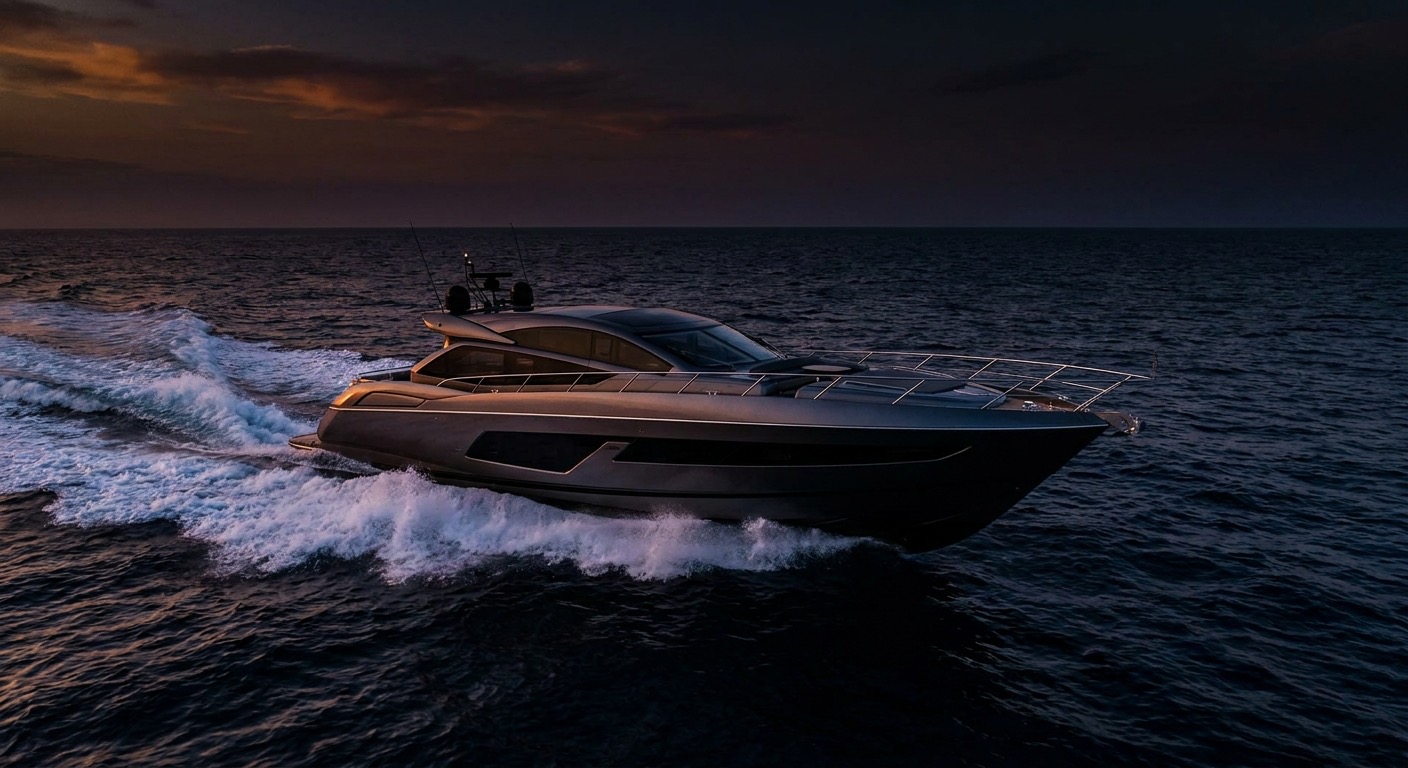
Sunseeker International has built yachts in Poole, Dorset since 1969, and for most of that history the yard's identity has been performance first, luxury second — not the other way round. The Predator range, introduced in the 1990s, is the clearest expression of that order of priorities. Where a flybridge motor yacht is designed around volume and vertical living space, a Predator is designed around a deep-vee hull, a low center of gravity, and the ability to hold 30-plus knots in a sea state that would have a displacement hull's owners reaching for the stabilizer controls. The line has run from the compact Predator 50 up through the 55, 57, 60, 68, 74, and the 108 flagship, with the mid-size hulls — the 60 through 74 — representing the sweet spot most buyers actually shortlist.
That heritage matters when you're comparing a Predator against a flybridge cruiser from a builder like Princess or Azimut's Flybridge series. You are not buying the same category of boat with a different badge. You are buying a sports yacht that trades some interior volume and flybridge entertaining space for hull speed, sea-keeping, and a lower, more aggressive stance at rest.
What You're Actually Buying: Specs in Context
A representative Predator in the 74-foot class — the size band most commonly searched and shortlisted — runs roughly as follows. Numbers vary by model year, engine option, and refit history, which is exactly why a spec sheet alone should never be the last word before survey.
| Model | LOA | Top Speed | Cabins | Indicative Used Price (USD) |
|---|---|---|---|---|
| Predator 60 | 61'6" | ~32 kn | 3 | $1.4M – $2.1M |
| Predator 68 | 69'9" | ~33 kn | 3–4 | $2.0M – $2.9M |
| Predator 74 | 75'9" | ~34 kn | 4 | $2.95M – $3.85M |
Engine choice is the single biggest lever on both performance and price within a given hull. Later Predator 74s were offered with twin MAN V12 diesels around 1,900hp per side, with an MTU option pushing closer to 2,000hp — the difference shows up less in top speed than in mid-range acceleration and how the boat sits on plane in a following sea.
Performance and Handling: Why the Hull Is the Point
The deep-V running surface is the reason to buy a Predator over a comparably sized flybridge cruiser, and it's also the reason to be precise about condition during survey. A hull that's been driven hard offshore for a decade behaves very differently than one that's spent its life at dock in a marina berth — and a good surveyor with genuine performance-hull experience will check the running gear, strut alignment, and shaft seals with that history in mind, not just the gelcoat.
What to Inspect Before You Shortlist a Specific Hull
- Engine hours and service record — twin diesels in the 1,900–2,000hp range are a serious ongoing maintenance commitment; get the full service history, not a summary.
- Running gear and shaft alignment — a performance hull that's seen real sea time needs this checked by someone who surveys sports yachts specifically, not generalist motor yachts.
- Electronics and refit currency — navigation, stabilization, and entertainment systems age faster than the hull; factor a refit budget into any offer on a boat more than five years from build.
- Warranty and build documentation — Sunseeker's factory paperwork trail matters at resale; incomplete documentation is a negotiating point, not a dealbreaker, but it should be priced in.
What Drives the Price Range
Within any single Predator model, the spread between the low and high end of an indicative price range typically comes down to four things: model year, engine hours, refit and electronics currency, and whether the boat has a clean single-owner history versus multiple changes of hands. A well-maintained hull with low hours and current electronics can command a meaningful premium over a tired example of the same model year — which is exactly why pricing guidance should be treated as a starting range for negotiation, not a fixed number.
Buying Through a Network, Not a Dealer's Own Book
Most Sunseeker inventory moves through dealer networks that are, understandably, incentivized to sell what's on their own docks. A concierge approach works differently: sourcing against the criteria a buyer actually cares about — hull condition, engine hours, specific cabin layout, home port — across a wider pool of vetted listings, then coordinating survey, sea trial, and closing without a house inventory pulling the recommendation in one direction.
If a Predator 74 is on your shortlist, our current representative listing is a useful starting reference point: Sunseeker Predator 74. For the fundamentals that apply whatever builder you land on — financing structure, survey timing, flagging and registration — our yacht buying guide covers the process end to end. And if you'd rather have someone run the search, verification, and negotiation on your behalf, ObsidianHelm's Yacht & Jet practice starts with a $4,999 Private Strategy Session to scope exactly what you need before a single hull gets shortlisted.
Get the Right Brand and Systems Specified Before You Buy
A $4,999 Private Strategy Session covers intended use, cruising ground and brand shortlist, and delivers a vessel and technology specification that fits the boat you actually choose — credited toward membership.
Request Your InvitationFrequently asked
How fast is a Sunseeker Predator yacht?
Top speed depends on hull size and engine option, but most mid-size Predators (60–74 feet) reach roughly 32–35 knots on twin diesels, with a comfortable cruise around 25–28 knots. Larger engine packages narrow the gap between top speed and cruise, improving mid-range acceleration in a seaway.
What is the difference between a Sunseeker Predator and a Sunseeker Manhattan?
The Predator is a sports yacht built around a deep-vee planing hull for speed and sea-keeping, with a lower profile and open cockpit emphasis. The Manhattan is Sunseeker's flybridge motor yacht range, prioritizing interior volume, flybridge living space, and slower, more relaxed cruising.
How much does a used Sunseeker Predator cost?
Indicative used pricing runs roughly $1.4M for a Predator 60 up to $3.5M-plus for a well-specified Predator 74, depending heavily on model year, engine hours, and refit currency. Larger flagship Predators, such as the 108, command significantly more.
What should I check before buying a Sunseeker Predator?
Prioritize engine hours and full service history, running gear and shaft alignment given the boat's performance use, currency of electronics and stabilization systems, and complete factory build documentation. A surveyor experienced with performance hulls specifically, not just generalist motor yachts, is essential.
Is a Sunseeker Predator a good offshore yacht?
Yes — the deep-vee hull is engineered specifically for sea-keeping at speed, which is the line's core differentiator from flybridge cruisers. It handles a chop more comfortably at pace, though buyers should still weigh range and fuel burn against their typical cruising grounds.