Little Harbor 59 Buyer's Guide: What Serious Offshore Cruisers Should Know
The Little Harbor 58/59 remains one of the most respected shoal-draft bluewater cruisers ever built, but buying one 20-plus years on requires knowing exactly where Ted Hood's design choices demand extra diligence. Here is what a serious buyer needs to verify before making an offer.
The Ted Hood Legacy Behind the Little Harbor Name
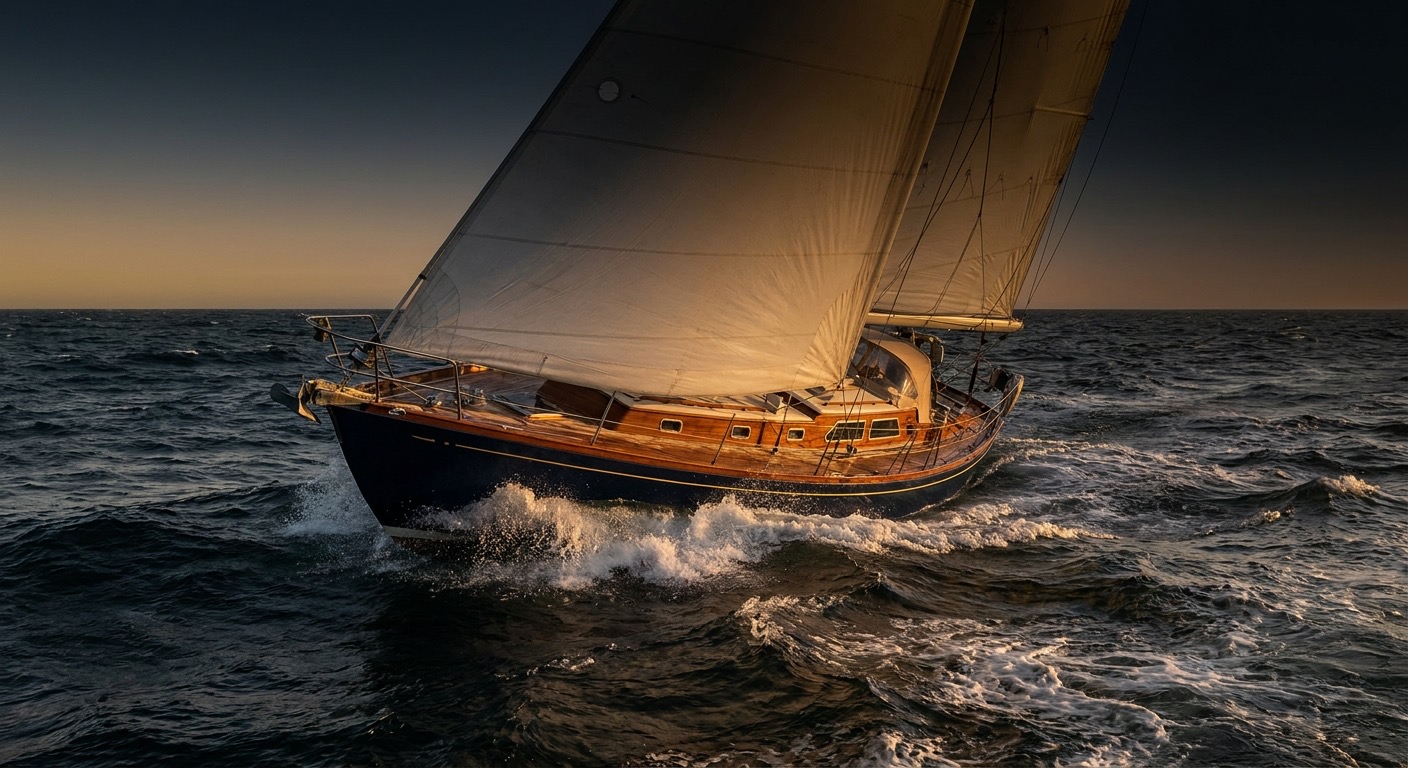
Few names in American sailing carry the weight of Ted Hood's. An America's Cup winner, founder of Hood Sailmakers, and designer of hundreds of production and custom yachts, Hood built Little Harbor Yachts in Portsmouth, Rhode Island as the vehicle for his own vision of what a serious offshore cruising sailboat should be. The 58/59-foot range — often referenced by buyers simply as the "Little Harbor 59" once bowsprit length is included in overall measurements — became the marque's signature flagship size: large enough for genuine ocean passages and full-time liveaboard cruising, small enough to be handled by an owner and a mate rather than a full paid crew.
Design DNA: What Actually Makes a Little Harbor Different
The defining feature of the range is the centerboard. Where most 58-to-60-foot performance cruisers commit to a fixed fin keel drawing 7 to 9 feet, Little Harbor's shoal-draft centerboard configuration lets an owner draw roughly 6.5 feet with the board up — opening thin-water anchorages in the Bahamas, the Chesapeake, and countless Mediterranean coves that deeper-draft peers simply cannot enter — while dropping the board for genuine windward performance offshore. Combine that with Hood's own rigging and sail engineering, a deep structural hull grid built for real seaway loads, and interior joinery finished to furniture-grade standards, and the result is a yacht built for passages, not just marina season.
Little Harbor 59 vs. Its Peers
Buyers shortlisting a Little Harbor 59 are typically cross-shopping a narrow set of semi-custom offshore cruisers in the same size and era. The comparison usually comes down to draft flexibility, build philosophy, and total cost of ownership:
| Model | Typical LOA | Draft | Positioning |
|---|---|---|---|
| Little Harbor 59 | 58–59 ft | 6.5 ft (board up) | Shoal-draft bluewater cruiser, Hood pedigree, semi-custom interiors |
| Hylas 60/63 | 60–63 ft | 7–9 ft (fixed keel) | Production-semi-custom offshore cruiser, strong owner community |
| Oyster 62 | 62 ft | 8–9.5 ft | British-built, deep-draft, higher-volume brokerage market |
| Swan 60 | 60 ft | 9–10 ft | Performance-oriented, less interior volume, deeper draft |
The Little Harbor's shoal-draft advantage is real, but it comes with a trade-off buyers should weigh carefully: centerboard trunks and their hardware are a maintenance item unique to this design, and surveys should always include a hands-on inspection of the board, pennant, and trunk seal.
What to Inspect Before You Buy a Little Harbor of This Era
- Centerboard and trunk: confirm free operation, pennant condition, and no trunk-to-hull seepage — this is the single most model-specific inspection point.
- Standing and running rigging age: most hulls from this era are now 20+ years from build; rod or wire rigging typically needs replacement on a 10–15 year cycle regardless of apparent condition.
- Deck core moisture: balsa or foam-cored decks common to the era should be moisture-mapped, particularly around hardware penetrations and the mast step.
- Engine hours and maintenance logs: a single diesel with 150–165 hp is expected to show 2,000–4,000+ hours by now; verify logs against a compression and oil-analysis check.
- Refit history and systems currency: electronics, watermakers, generators, and canvas typically need updating on any 20+ year-old hull — price and negotiate accordingly rather than assuming original spec.
Current Market Pricing
Well-maintained examples of the Little Harbor 58/59 range typically trade between roughly $1.65 million and $2.25 million USD, with the spread driven almost entirely by refit currency — rigging age, engine hours, electronics, and interior condition move a given hull up or down within that band far more than hull number or original build year alone. Because these yachts rarely appear on open brokerage sites and instead move through direct relationships, published "asking price" data is thin; real market pricing is best benchmarked against recently concluded private sales rather than public listings.
Budget beyond the purchase price itself. A rigging replacement on a 59-footer commonly runs into six figures once labor, hardware, and rigging-out time are included; a full electronics and navigation refresh, a generator overhaul, and updated safety gear can each add meaningfully to a first-year ownership budget. Buyers who go in expecting a turnkey handover on a 20-plus-year-old semi-custom hull are almost always surprised — buyers who budget for a proper post-purchase refit from day one tend to end up with the boat, and the ownership experience, they actually wanted.
Who the Little Harbor 59 Is Actually Right For
This is not a yacht for owners who want a turnkey, zero-maintenance experience or a boat optimized for round-the-buoys club racing. It rewards owners planning genuine passages — Atlantic crossings, extended Caribbean or Mediterranean seasons, or full-time liveaboard cruising — who value the ability to tuck into a five-foot anchorage on Monday and stand up to open-ocean weather on Tuesday. Owners coming from production 55-to-60-footers are often struck by how much more substantially built these hulls feel underway, and by how much more involved the maintenance program needs to be to keep a 20-plus-year-old semi-custom yacht performing to that standard.
Buying Through a Curated Network
A yacht of this caliber and scarcity is not well served by scrolling public listing sites — most Little Harbor 58/59 transactions happen quietly, between owners, brokers, and buyers who already know what they're looking for. That is the gap the Obsidian Helm Network is built to close: a curated channel to vetted, representative Little Harbor tonnage, paired with independent survey coordination and negotiation support rather than a dealer's incentive to move inventory. You can review a representative Little Harbor 59 specification and indicative pricing here, and for a broader framework on structuring a purchase of this size — survey sequencing, escrow, documentation, and closing — see our companion resource, the complete yacht buying guide. For buyers ready to move from research to a structured acquisition process, Obsidian Helm's Yacht & Jet practice runs a paid $4,999 Private Strategy Session to scope requirements, budget, and sourcing timeline before a single hull is inspected.
Get the Right Brand and Systems Specified Before You Buy
A $4,999 Private Strategy Session covers intended use, cruising ground and brand shortlist, and delivers a vessel and technology specification that fits the boat you actually choose — credited toward membership.
Request Your InvitationFrequently asked
What is a Little Harbor 59?
The Little Harbor 59 refers to the 58-foot-hull, semi-custom offshore cruising sloop from Little Harbor Yachts, designed by Ted Hood in Portsmouth, Rhode Island. The "59" reflects overall length once the bowsprit is included. It is known for its shoal-draft centerboard, bluewater build quality, and furniture-grade interior joinery.
How much does a Little Harbor 58/59 cost today?
Well-maintained examples typically trade between roughly $1.65 million and $2.25 million USD. Price within that range depends heavily on rigging age, engine hours, electronics currency, and refit history rather than build year alone, since most hulls date from the late 1990s to mid-2000s.
Who built Little Harbor yachts?
Little Harbor Yachts was founded by Ted Hood, an America's Cup sailor, sailmaker, and yacht designer, and built its boats in Portsmouth, Rhode Island. Hood also engineered the rigging and sail plans in-house through Hood Sailmakers, giving the range a distinctive integrated design pedigree.
Is the Little Harbor 59 suitable for ocean passages?
Yes. The range was purpose-built for offshore cruising, with a deep structural hull grid, solid fiberglass construction, and rigging engineered for sustained bluewater loads. Many hulls have documented ocean-crossing histories, though buyers should verify individual passage and maintenance records during survey.
What should I check before buying a used Little Harbor?
Prioritize the centerboard and trunk seal, standing rigging age, deck core moisture, and engine hours against maintenance logs. Because most hulls are now 20+ years old, budget for rigging and systems refresh regardless of how well the boat presents cosmetically.