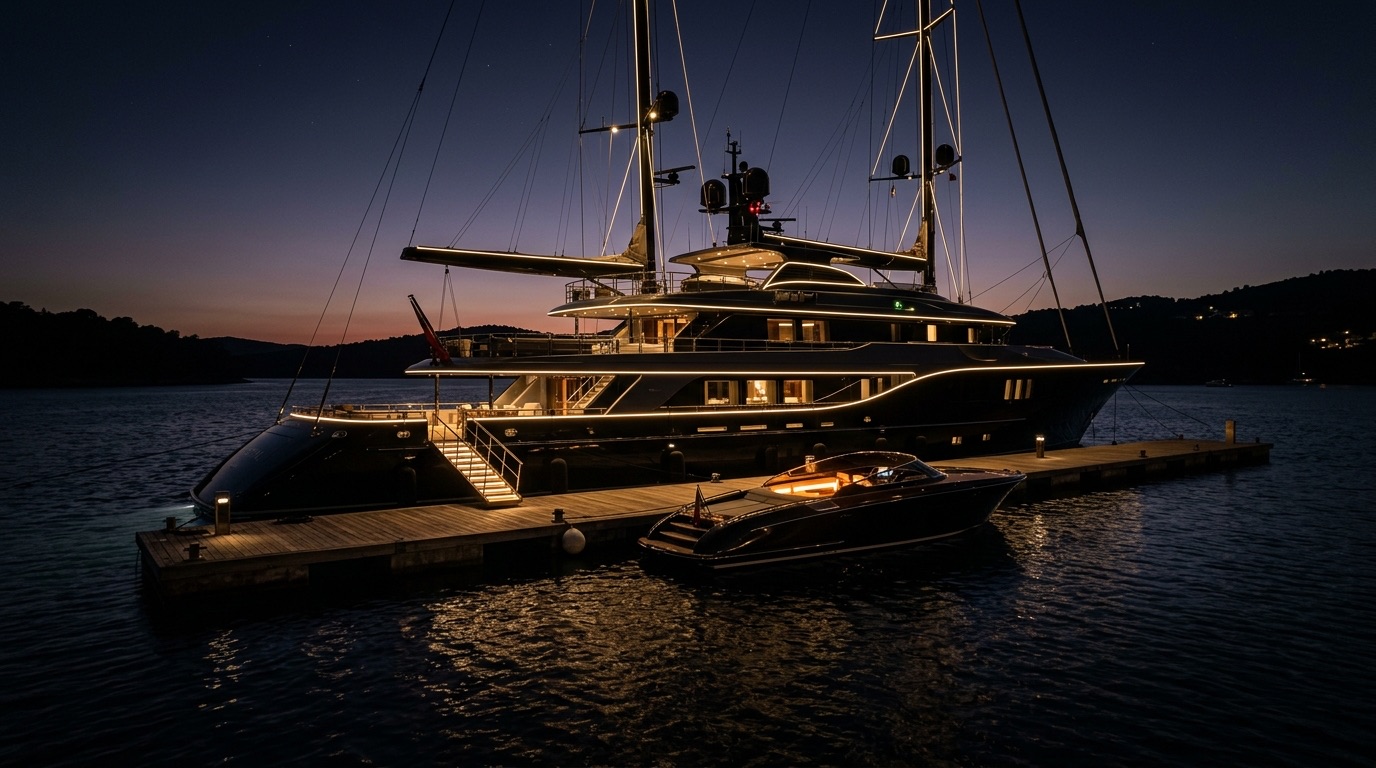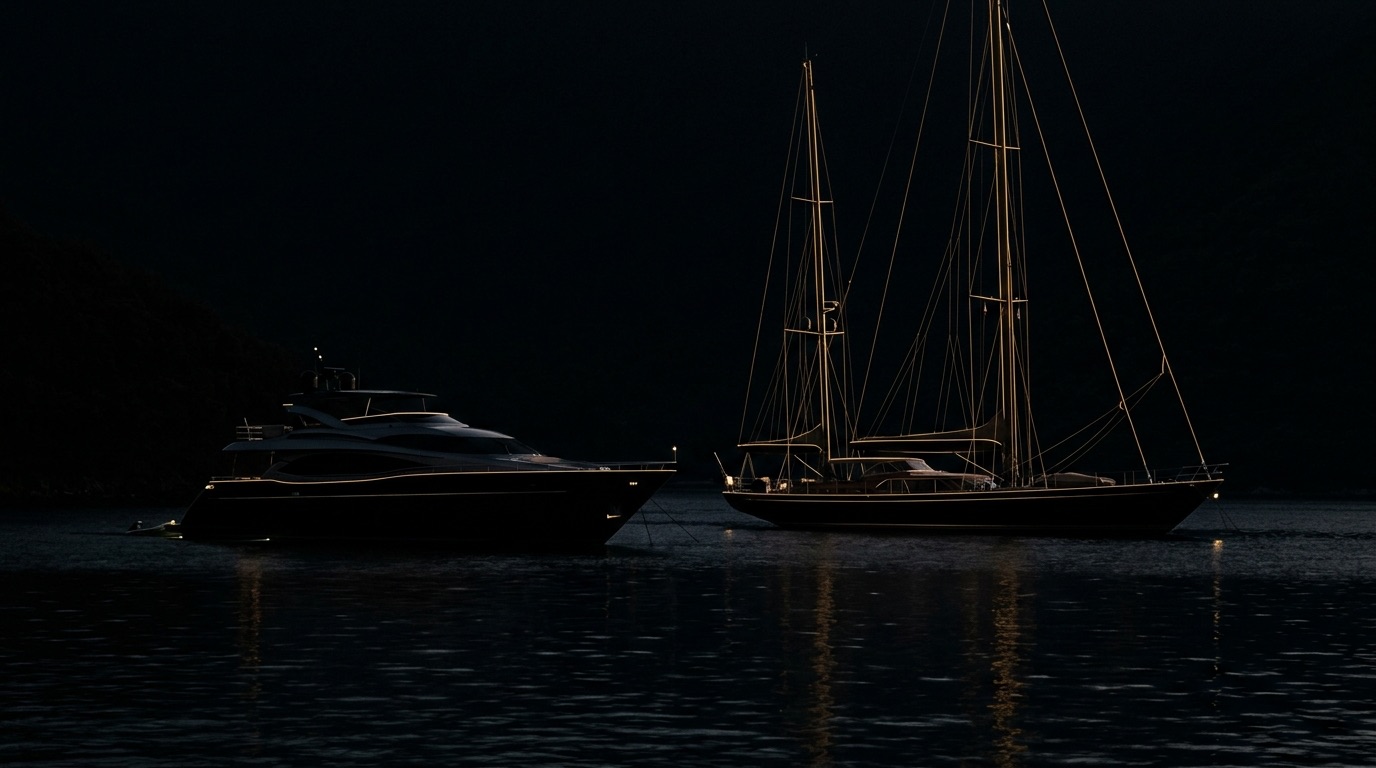
Grand Banks Yachts: The Buyer's Guide to a Storied Trawler Brand Gone Carbon-Fiber
Grand Banks built its name on slow, seaworthy trawlers that could cross oceans without drama. The current shipyard builds something different — carbon-fiber motor yachts that hold a trawler's range and add real speed. Here is what separates the two eras, and what to check before you buy either one.
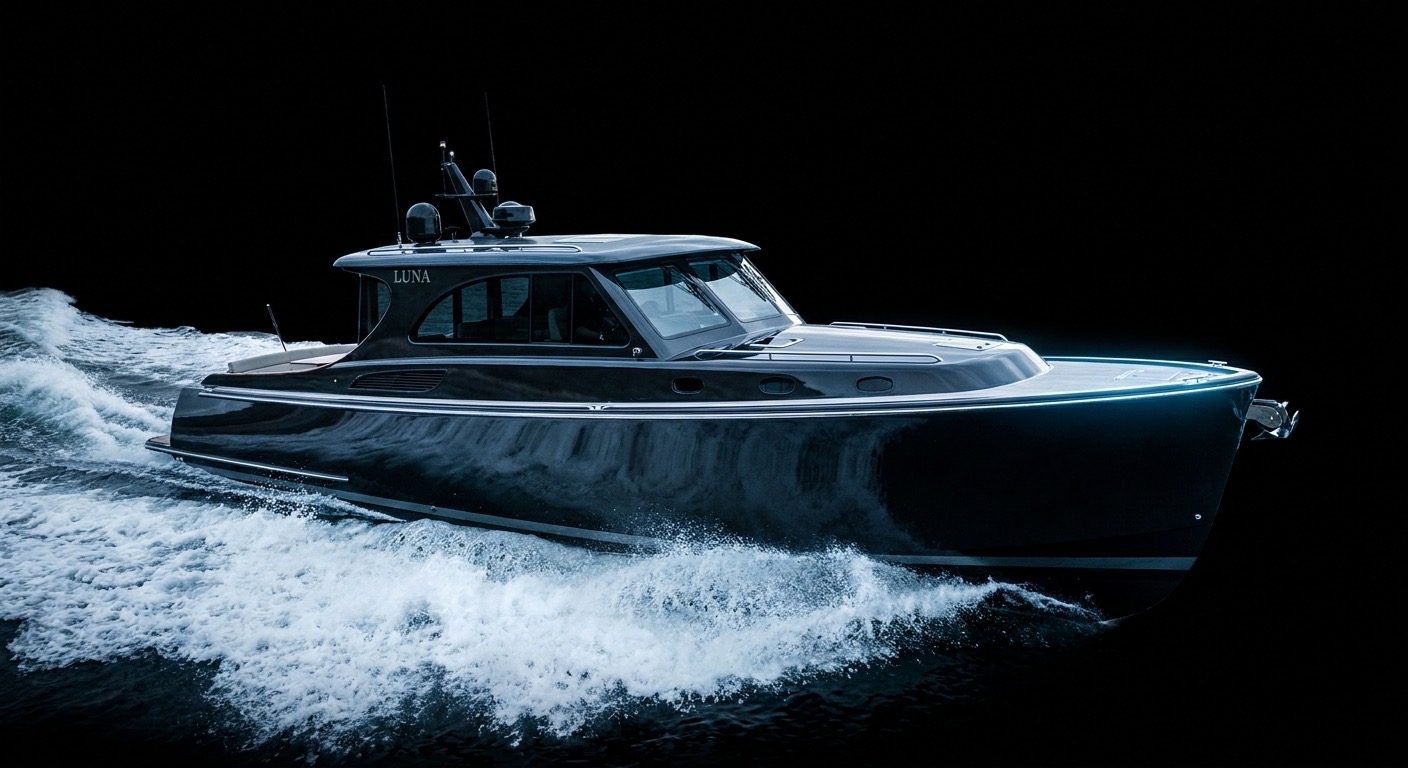
Few builder names carry as much water in blue-water cruising circles as Grand Banks. For decades the brand was shorthand for a specific kind of yacht: a full-displacement, round-bilge trawler with teak decks, a single low-revving diesel, and the range to cross an ocean at nine knots without complaint. That reputation still opens doors at brokers and marinas from Fort Lauderdale to Hong Kong. It is also, for a buyer shortlisting a current-production Grand Banks, slightly misleading — the shipyard that builds the brand today is not building that boat anymore.
A Brand That Rebuilt Itself Twice
Grand Banks was founded in 1956, first producing wooden trawler yachts before shifting to fiberglass construction in the 1970s — a move that became the template for the entire cruising-trawler category. The yard operated for decades out of Singapore and later Malaysia, building the classic 32', 42', 46', and 49' trawlers that still command loyal followings and strong resale values on the used market. Those hulls were designed for one job: get an owner-operator across open water safely, efficiently, and predictably, with a semi-displacement or full-displacement hull that prioritized fuel range over speed.
The second reinvention came after Grand Banks Yachts Limited, listed on the Singapore Exchange, brought in new leadership with a composite-boatbuilding background rooted in high-performance sailing yacht construction. The result was a deliberate break from the old formula: hulls built in vacuum-infused carbon fiber and epoxy rather than hand-laid fiberglass, construction techniques borrowed from racing yachts, and a performance target that had never applied to the brand before — boats capable of running at 25 to 30-plus knots on plane while still offering genuine long-range displacement-speed cruising when owners want efficiency instead of speed. The current range — built around models generally referred to by length, in the mid-50s through mid-80s foot range — keeps the brand's Down East styling cues (flared bow, walkaround side decks, sheer line) while asking a fundamentally different question of the hull underneath.
What Actually Changed: Hull and Build
The practical distinction a buyer needs to understand is hull form and construction, not just styling. Legacy Grand Banks trawlers are heavy, full-displacement fiberglass boats designed to be efficient at a single speed and forgiving in a seaway at that speed. Current-production Grand Banks yachts use a lighter carbon-fiber composite structure paired with a hull designed for a wide speed range — efficient at low RPM, but genuinely capable on plane, which is a different engineering problem entirely. Weight savings from the composite build translate into either more range per gallon or more speed per horsepower, depending on how the owner runs the boat, and a shallower draft than a comparably sized planing hull built in conventional fiberglass.
Model Range at a Glance
Current flagship-tier Grand Banks yachts are generally offered across three broad size classes. Specifications below are indicative of each class as typically configured — always confirm exact figures against the specific hull and build year under consideration.
| Class | LOA | Typical Power | Top Speed | Cabins |
|---|---|---|---|---|
| Mid-50s ft | ~54-56' | Twin diesel, IPS pods | ~28-30kn | 2-3 |
| Low-60s ft (Skylounge) | ~60-64' | Twin diesel, shaft or IPS | ~28kn | 3 |
| Mid-80s ft flagship | ~85'+ | Triple/quad diesel | ~30kn+ | 4-5 |
What to Verify Before You Buy
Three things matter more on a Grand Banks than on most flagship motor yachts of comparable size. First, propulsion configuration — pod drives (IPS-style) versus conventional shafts change maintenance profile, low-speed maneuverability, and resale expectations, and the yard has offered both depending on model and year. Second, build year relative to the composite transition — a legacy fiberglass trawler and a current carbon-fiber yacht are not comparable assets for insurance, survey, or resale purposes even if both carry the Grand Banks name, so confirm which era a specific hull belongs to before comparing price. Third, running-hour history against actual use pattern — a hull run hard on plane for years wears differently than one operated at displacement speed, and a proper pre-purchase survey should account for that operating history, not just hours logged.
Where Grand Banks Sits Against the Field
Buyers cross-shopping a current Grand Banks typically also look at Fleming for a more conservative full-displacement approach, Ocean Alexander for a larger flybridge-focused range, and Nordhavn for maximum passage-making range at the cost of speed. Grand Banks' current pitch is the middle ground few builders occupy convincingly: a hull that can still cross an ocean efficiently but does not require owners to sacrifice the option of running at speed when conditions and schedule allow it. That flexibility is the brand's real current differentiator, more than any single spec figure.
Sourcing a Grand Banks — new-build allocation or a well-documented used hull — benefits from a broker relationship that understands which build era, propulsion configuration, and survey history actually matter for the specific model in question. A representative flagship configuration sourced through the network is profiled on our Grand Banks 60 Skylounge listing, and for a broader framework on structuring a superyacht-class purchase — survey timing, sea trial protocol, ownership structuring — see our full yacht buying guide. Buyers ready to move from research to a structured acquisition process can start with ObsidianHelm's Yacht & Jet practice through a $4,999 Private Strategy Session, where we scope hull era, propulsion configuration, and total cost of ownership against your actual use case before a single boat is viewed.
Get the Right Brand and Systems Specified Before You Buy
A $4,999 Private Strategy Session covers intended use, cruising ground and brand shortlist, and delivers a vessel and technology specification that fits the boat you actually choose — credited toward membership.
Request Your InvitationFrequently asked
What is the difference between an older Grand Banks trawler and a current Grand Banks yacht?
Older Grand Banks trawlers (pre-transition) are full-displacement fiberglass hulls built for efficient single-speed ocean crossing. Current-production Grand Banks yachts use carbon-fiber composite construction and a hull designed for both efficient long-range cruising and genuine planing-speed performance, roughly 25-30+ knots.
Are Grand Banks yachts good for long-range ocean passages?
Yes, when run at displacement or semi-displacement speed. The carbon-fiber composite build reduces weight versus a comparably sized conventional-fiberglass hull, which can extend range per gallon even though the hull is also engineered for high-speed planing capability when desired.
How much does a current-model Grand Banks flagship cost?
Indicative pricing for a mid-50s to low-60s foot current-production Grand Banks flagship typically runs from roughly $3 million to $4.5 million depending on model, propulsion configuration, and equipment level; larger flagship models run considerably higher. Always confirm current pricing against the specific hull.
What propulsion options does Grand Banks offer?
Current models have been offered with both pod-drive systems (such as IPS-style joystick propulsion) and conventional shaft drives, depending on model and build year. Pod drives generally ease low-speed maneuvering; shaft drives are often preferred for long-range efficiency and simpler at-sea maintenance.
How does Grand Banks compare to Fleming or Nordhavn?
Nordhavn prioritizes maximum passage-making range over speed, and Fleming favors a conservative full-displacement approach. Grand Banks' current range is positioned as a middle ground, offering genuine planing-speed performance alongside efficient long-range cruising capability in the same hull.