Electric Yachts in 2026: What Actually Works Today
The marketing has run well ahead of the battery chemistry. Here is the honest 2026 state of electric propulsion at sea — what genuinely works, what's a hybrid compromise worth making, and what still requires a diesel range you can't wish away.
Every boat show since 2023 has had at least one electric boat on the dock promising a quiet, emissions-free future, and every year the claims get a little more expansive. The honest answer for 2026 is narrower and more useful than the marketing suggests: electric propulsion genuinely works today on a specific category of vessel, hybrid systems make real sense on a second category, and long-range cruising yachts remain diesel-dependent for reasons that aren't going away on any near-term timeline. Knowing which category your next vessel actually falls into is the whole decision.
Where electric already works
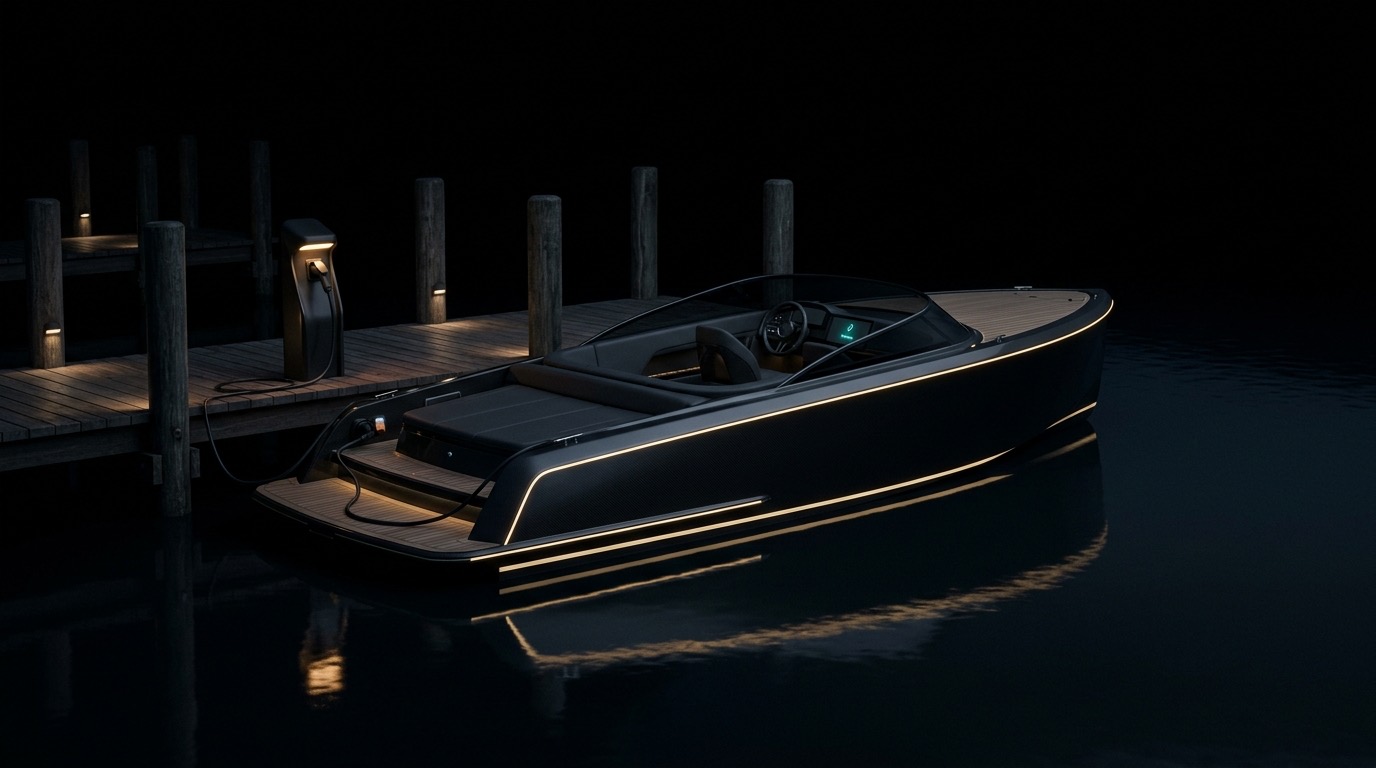
The clearest 2026 success story is the electric day boat — Duffy electric boats have quietly proven this category for decades on flat inland water, and a wave of newer builders (Vision Marine, X Shore, Candela among them) has extended it into sleeker, faster tenders and short-hop launches. These boats share a profile: short trips, predictable charging access back at the dock, and moderate speed requirements. An electric tender doing marina-to-yacht shuttle runs, or a Duffy-style launch cruising a calm harbor for a few hours, is running well within what current lithium battery packs and electric motors handle comfortably — near-silent operation, instant torque, and zero exhaust smell at the swim platform, which owners notice immediately.
Candela's hydrofoiling electric launches have pushed the category further, using foils to cut hull drag and stretch range meaningfully beyond what a displacement electric hull can manage at similar speed. That's a real 2026 advance, not a marketing claim — but it's still a day-boat solution, not an answer for crossing an ocean.
Electric vs hybrid vs diesel: the honest comparison
| System | Typical range | Refuel / recharge time | Realistic use case in 2026 |
|---|---|---|---|
| Full electric | 20–60 nm at moderate speed | 1–4 hours shore power, faster with DC fast-charge docks | Tenders, launches, day boats, short harbor and coastal hops |
| Diesel-electric hybrid | 150–400+ nm, extended in electric-only mode at anchor or slow cruise | Diesel refuel in minutes; battery bank recharges from generator or shore power | Mid-size to large yachts wanting silent-running at anchor plus real cruising range |
| Diesel | 500–3,000+ nm depending on tankage | Minutes at any fuel dock | Long-range cruising, ocean passages, remote itineraries with no charging infrastructure |
The pattern that jumps out is refuel versus recharge time, and it's the constraint that decides almost every real-world buying decision. A diesel tank fills in minutes anywhere fuel is sold. A depleted battery bank needs hours on shore power, and DC fast-charging infrastructure for yacht-scale packs barely exists outside a handful of marinas in Europe and North America — nonexistent across most of the cruising grounds owners actually visit.
Why hybrid is where the real 2026 progress is
Diesel-electric hybrid systems on 80–150 ft yachts are where genuine engineering progress has landed this year, and for good reason: they don't ask an owner to trade range for silence. A hybrid system lets a yacht run on battery power alone at anchor or in a harbor — no generator hum, no exhaust, hours of genuinely silent house power — then switch to diesel-electric or direct diesel propulsion for passages where range and reliability matter more than ambiance. Builders like Sanlorenzo, Feadship and Damen have shipped hybrid platforms that make this trade-off practical rather than aspirational, and several are already in service logging real hours, not just boat-show demos.
The honest caveat: hybrid systems add weight, complexity and a second maintenance discipline (battery management alongside conventional diesel service) that a pure diesel yacht doesn't carry. That's a real cost, and it needs to be weighed against what silent-running at anchor is actually worth to how you use the boat.
Where long-range cruising still needs diesel
This is the part the marketing skips, and it's the part that actually matters if your itinerary involves ocean crossings or remote anchorages. Battery energy density, even with 2026's best marine lithium chemistry, still stores a fraction of the usable energy per pound that diesel does. Stretch that gap across the hundreds or thousands of nautical miles a genuine long-range cruise requires, and the battery bank needed to match diesel range becomes physically too large and too heavy to carry on anything but a dedicated, purpose-built hull — before even accounting for charging infrastructure that doesn't exist at most of the world's remote anchorages.
None of this is a permanent ceiling. Battery chemistry keeps improving, and marina charging infrastructure is expanding faster than it was even two years ago. But it's not solved for 2026, and buyers planning genuine long-range cruising should treat any full-electric pitch at that size class with real skepticism rather than optimism.
The question isn't whether electric propulsion works. It's whether it works for the specific miles you actually intend to run.
What buyers should actually expect in 2026
- If you want a quiet, efficient tender or day boat for short hops and marina life, electric is a mature, low-risk choice today — Duffy-style launches and newer hydrofoiling tenders both deliver on the promise.
- If you want silent-running at anchor without giving up real cruising range on a mid-size to large yacht, a diesel-electric hybrid is the honest 2026 answer, with real platforms in service to evaluate.
- If your itinerary includes ocean passages or remote cruising grounds, diesel remains the only propulsion architecture that doesn't force a compromise on range or reliability.
- Don't buy on the marketing timeline. Ask any builder claiming full-electric long-range capability for real sea-trial range data at cruising speed, not lab or dockside figures.
The systems-integration angle
Propulsion architecture and onboard technology are more connected than most buyers realize. A hybrid or electric platform's battery management, charge scheduling and power draw need the same kind of intelligent, monitored systems integration we build into smart yacht automation — smart energy management isn't a separate project bolted onto propulsion, it's part of the same onboard systems architecture that governs climate, lighting, connectivity and security. Specifying that architecture correctly, whether the yacht is diesel, hybrid or electric, is exactly the kind of decision that belongs in the broader technology plan covered in superyacht technology systems, not an afterthought handled by whichever yard happens to be doing the refit.
Obsidian Helm specifies the right propulsion and onboard systems architecture before you commit to a build, refit or purchase, as part of our Yacht & Jet practice.
Specify the Right Propulsion Architecture Before You Buy or Refit
A $4,999 Private Strategy Session covers your cruising pattern, itinerary and power needs, and delivers a propulsion and systems plan grounded in what actually works in 2026 — credited toward membership.
Request Your InvitationFrequently asked
Are full electric yachts realistic for long-range cruising in 2026?
Not yet. Battery energy density can't match diesel's range per pound of weight at the distances real long-range cruising requires, and charging infrastructure is absent from most remote anchorages. Full electric works well for day boats and short hops, not ocean passages.
What's the difference between a Duffy-style electric boat and a hybrid superyacht?
A Duffy-style electric boat is a small day launch built for short, predictable trips with dock charging access. A hybrid superyacht runs diesel-electric propulsion at cruising range but can switch to silent battery-only power at anchor — a completely different scale and use case.
Is hybrid propulsion worth the added complexity on a mid-size yacht?
If silent-running at anchor genuinely matters to how you use the boat, yes — real hybrid platforms are shipping in 2026 and logging service hours. It does add a second maintenance discipline around battery management alongside conventional diesel service, which owners should budget for honestly.
How far can an electric boat actually go on a single charge?
Realistically 20 to 60 nautical miles at moderate speed for most current electric launches and tenders, with hydrofoiling designs like Candela's stretching toward the upper end by cutting hull drag. Treat any marketing claim well above that range with skepticism until you see real sea-trial data.
Does electric propulsion connect to a yacht's other onboard technology?
Yes — battery management and charge scheduling are part of the same smart energy management layer that governs climate, lighting and connectivity systems onboard, which is why propulsion architecture belongs in the broader technology plan rather than being treated as a standalone mechanical decision.