Cigarette Boats: History, Cost and Why They're Still a Status Symbol
The name carries fifty years of outlaw glamour and Miami mythology. The spreadsheet behind owning one is a lot less romantic — and worth seeing clearly before you sign for a high performance boat instead of a yacht.
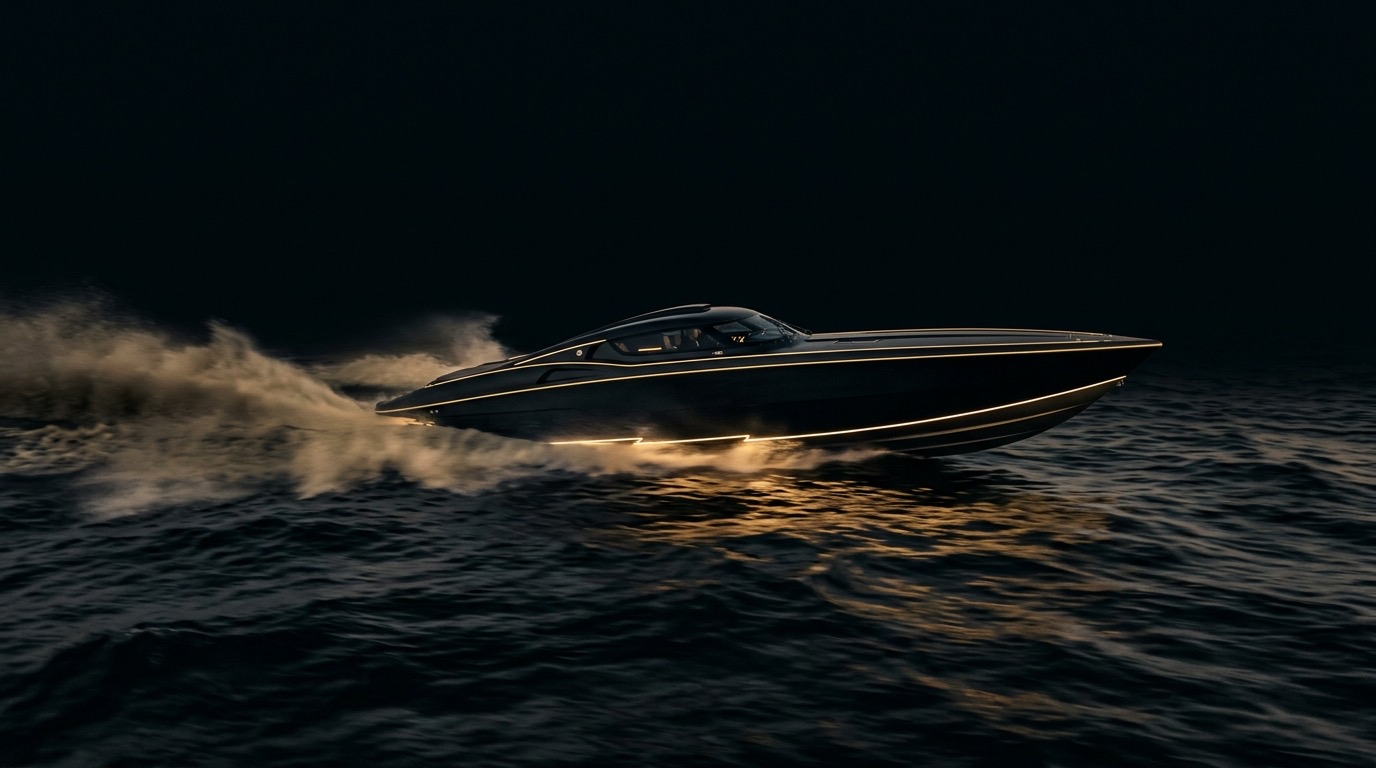
Ask someone to picture a "cigarette boat" and they'll describe something specific: a long, narrow, deep-vee hull sitting low in the water, triple outboards howling at wide-open throttle, painted in a colorway that belongs on a race car rather than a boat. That image isn't accidental. It's the product of a very specific origin story, a specific era of Miami, and fifty years of pop culture doing the marketing for free.
Where the Name Actually Comes From
The name traces to Cigarette Racing Team, founded in 1969 by Don Aronow, a New Jersey builder who moved to Miami and effectively invented offshore powerboat racing as a spectator sport. Aronow named his boats after a Prohibition-era rum-runner famous for outrunning the Coast Guard — the branding was deliberate from day one, built on speed, defiance and a little outlaw glamour. Cigarette hulls won offshore world championships through the 1970s, and by the 1980s the boats had become genuinely infamous for a different reason: they were fast enough to outrun law enforcement along the Florida coast and through the Caribbean during the cocaine-trafficking years, which is where "cigarette boat" picked up its lasting shorthand as the smuggler's vessel of choice. Miami Vice put that reputation on television for five seasons, and the association never really left. What's actually true today is narrower and less dramatic: "cigarette boat" is now used loosely for any high performance boat with a deep-vee or stepped hull built for sustained speed over comfort. Cigarette Racing itself, relaunched under new ownership with Mercedes-AMG design collaborations in recent years, is one builder among several, alongside Nor-Tech, Marine Technology Inc and Fountain. The through-line across all of them is the same design brief Aronow set in 1969: a narrow deep-vee hull, minimal freeboard, and a power-to-weight ratio built for straight-line speed rather than interior volume — which is exactly the trade-off that matters when you get to the ownership numbers.
What a High Performance Boat Actually Costs
The Ownership Math That Doesn't Make the Brochure
The purchase price is the smallest number in this relationship. A 40-something-foot performance hull running triple 400-plus horsepower outboards will burn well over 100 gallons an hour at speed — push it hard for an afternoon and the fuel bill alone can run into four figures before you've docked. Insurance underwriters treat these hulls differently from a comparable-length cruising yacht: high-horsepower, high-speed craft carry meaningfully higher premiums, and some carriers won't write a policy at all without a documented high-performance-boat operating course on file. Maintenance follows the same logic. Engines built to run at or near redline are engineered to tighter tolerances and need more frequent attention — impellers, gear lube, prop and drive work, and periodic engine rebuilds on higher-hour boats aren't occasional costs, they're scheduled ones. Add a marina berth priced for a boat that's mostly beam and length with almost no livable interior, and the annual carrying cost on a $1.5M performance boat can rival that of a considerably larger cruising yacht that actually sleeps a family overnight. None of this shows up in a dealer's spec sheet, which tends to lead with top speed and engine count and leave the annual carrying cost as a conversation for after the deposit clears.
A cigarette boat is the fastest way to spend a Saturday afternoon on the water. It is rarely the best way to spend a summer on it.
Who Actually Buys These, and Who Shouldn't
The honest answer: people who want to drive, not people who want to be driven. A performance hull rewards an owner who wants to be personally at the wheel, values raw acceleration and handling over cabin space, and is usually adding it as a second or third boat alongside a proper cruising yacht rather than as the only vessel in the fleet. For that specific buyer, at that specific price point, these boats are genuinely excellent — very little else affords that particular feeling for the money. They also tend to make more sense in markets with calm, protected water and short runs — a fast trip across a bay or a sound — rather than as an offshore passage-maker, since the same hull that delivers the speed also delivers a punishing ride the moment the water turns.
For a buyer weighing a first serious vessel purchase, or one who actually wants to entertain guests, cruise overnight, or use the boat for more than a fast lap around the bay, a performance hull is usually the wrong category regardless of budget. The trade you're making — little to no cabin, minimal storage, a hull tuned for speed rather than seakeeping in a chop — deserves to be clear-eyed before signing, not after. Our guides to new vs used yacht buying and the broader yacht buying guide both cover how to weigh that decision against your actual use case rather than the boat show version of it.
Obsidian Helm's Yacht & Jet practice exists for exactly this stage of the decision — modeling real running costs, matching hull type to how you'll actually use the boat, and keeping the paperwork and provisioning sane once you've decided. See our Yacht & Jet practice for how that works end to end.
Get the Real Cost-of-Ownership Picture Before You Buy
A $4,999 Private Strategy Session models the true running cost of any vessel you're considering — fuel, insurance, maintenance and berthing — against how you'll actually use it, before you commit. Credited toward membership.
Request Your InvitationFrequently asked
Is "cigarette boat" a specific brand or a general term?
Both, depending on context. Cigarette Racing Team is a real, currently operating builder founded in 1969. But "cigarette boat" is also used colloquially for any deep-vee, high performance boat built for top-end speed, regardless of manufacturer — Nor-Tech, MTI and Fountain all build boats that get called cigarette boats even though they aren't Cigarette-branded.
Why do cigarette boats have a reputation for smuggling?
During the 1970s and 1980s, their combination of speed and range made them genuinely useful for outrunning Coast Guard and law enforcement vessels along the Florida coast and through the Caribbean during the cocaine-trafficking era. Miami Vice cemented that association in popular culture, and it's stuck to the category ever since, well past its factual accuracy today.
How much does a new high performance boat actually cost to run per year?
For a 40-50ft triple-outboard hull used moderately, expect fuel, insurance, dockage, and scheduled engine maintenance to run into six figures annually even before a major service or rebuild. Heavy use or larger engine packages push that higher.
Is a cigarette boat a good first yacht purchase?
Usually not. These hulls are optimized for speed and handling, not overnight comfort, storage or seakeeping in rough water. Most owners who genuinely love the category own one alongside a cruising yacht rather than instead of one.
Do cigarette boats hold their value?
Well-maintained examples from established builders hold value reasonably well, but depreciation is steep on high-hour engines specifically, since replacement or rebuild costs on high-performance powerplants are substantial and buyers discount heavily for uncertain engine history.