Chris Craft: A Buyer's Guide to America's Original Luxury Runabout Brand
Chris-Craft invented the look every heritage-styled runabout still borrows from. Before you shortlist the current flagship Catalina, here's what the brand actually is today, how it stacks up against Hinckley and Riva, and what to check before you commit.
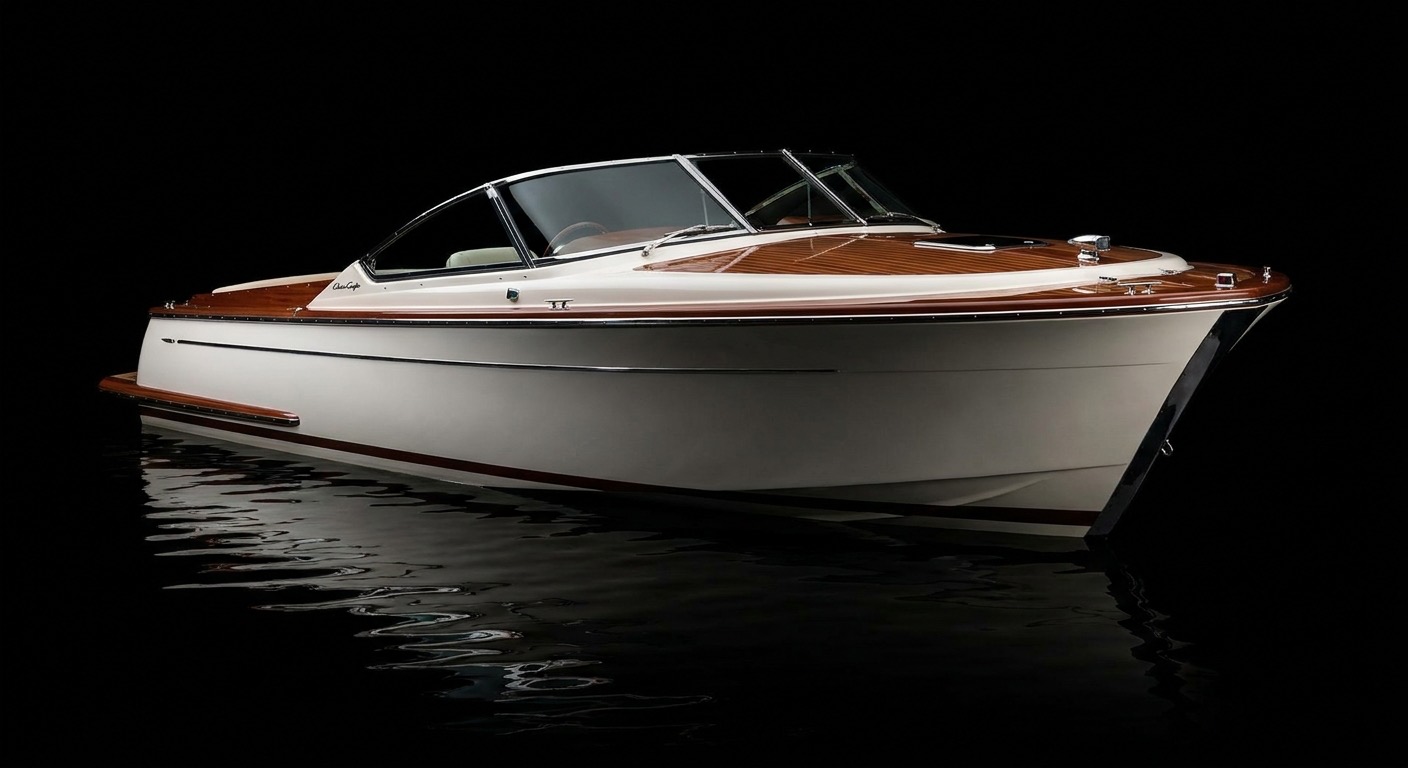
Chris-Craft shows up on more shortlists than its production numbers suggest, and it's rarely for a rational, spec-sheet reason. Buyers who've owned modern flybridge cruisers, center consoles, or even other flagship day boats come back to Chris-Craft because no other current builder owns quite the same slice of American boating history — and because the current lineup, led by the Catalina, is genuinely well built rather than a nostalgia exercise wrapped around a mediocre hull. This guide covers what the brand actually is today, where the flagship Catalina sits against comparable heritage-styled builders, and what to check before you write a deposit.
The Legacy Behind the Chrome
Chris-Craft is arguably the single brand most responsible for what "American runabout" means as a visual language: varnished mahogany, polished chrome hardware, a low tumblehome stern, and a hull shape built to plane fast and turn tight. The company traces back to 1874 and the wooden boat shops of Christopher Columbus Smith on the St. Clair River in Algonac, Michigan, and by the 1920s and '30s Chris-Craft runabouts were the boat of record for anyone who wanted to be seen on a lake with money. Production wooden Chris-Crafts stopped in the late 1960s as fiberglass took over the industry, and the brand has changed ownership several times since, but the styling cues it invented in the wood era — the "Chris-Craft nose," the varnished-look deck accents, the chrome bow rail — never left the product line. What buyers get today is a fiberglass hull with modern power and electronics wearing a deliberate, well-executed homage to that heritage, not a reproduction antique.
Where the Catalina Sits in the Lineup
The current Chris-Craft range runs from small day boats in the Calypso and Sportsman series up through the Launch GT models and the Corsair and Catalina lines, which are the closest things the brand builds to a flagship express cruiser. The Catalina 34 is the model most often shortlisted by buyers who want the classic Chris-Craft look in a boat large enough for real weekending — a genuine cabin with a convertible berth, a head, and enough beam to carry twin engines without feeling cramped at the helm. It sits above the smaller Catalina 32 and below the brand's larger custom and semi-custom work, and it's the size where the retro styling and modern performance both get room to show off. Options typically shape final price more than the base configuration does: engine package, electronics suite, upholstery grade, and trailer or lift compatibility all move the number meaningfully.
| Model | Heritage Styling | Typical LOA | Positioning |
|---|---|---|---|
| Chris-Craft Catalina 34 | Full retro cues, chrome, wood-tone helm | 34 ft | Weekend cruiser, brand flagship feel |
| Hinckley Picnic Boat | Downeast, understated | 37 ft | Jet-drive daycruiser, New England pedigree |
| Riva Aquarama-inspired builds | Italian wood runabout revival | 27–33 ft | Collector-grade, limited production |
| Grand-Craft custom runabouts | Bespoke wood construction | 28–36 ft | True wood hulls, built-to-order |
What Ownership Actually Feels Like
Buyers coming from modern flybridge or center-console yachts sometimes underestimate how different a Chris-Craft is to run day to day. The Catalina 34's typical configuration — twin sterndrive gas V8s pushing roughly 850–900 combined horsepower — gets the boat into the low-40-knot range, which is fast for the category and plenty for coastal cruising, sandbar-hopping, or a lake-house dock queen that actually gets used. The cabin is real but modest by superyacht-tender standards: one convertible berth, a head, enough for two people overnight or four for an afternoon out of the sun. What owners are actually buying is the helm experience and the way the boat looks tied up — the varnished-look surfaces, the analog-style gauges wrapped around modern digital displays, the sound of a big gas V8 at idle. It rewards owners who want a boat as an object as much as a tool, and it draws attention at the dock in a way few current 34-footers can match.
What to Vet Before You Commit
Because Chris-Craft's current builds are fiberglass with cosmetic wood-tone treatments rather than structural wood, the maintenance profile is closer to a standard fiberglass sterndrive cruiser than to a true antique — gelcoat and clear-coat condition, sterndrive service history, and hour counts on the engines matter far more than they would on an actual 1950s wood hull. Buyers should also confirm which engine package is fitted (Chris-Craft has offered both Volvo Penta and Ilmor-based options across model years), whether the boat has joystick docking assist, and the condition of the upholstery and helm electronics, which age faster than the hull. Because these are lower-production boats built in comparatively small numbers relative to mass-market cruisers, resale liquidity is thinner — a pre-purchase survey and a broker who actually knows the model's service and options history are worth more here than on a high-volume production boat.
Sourcing One the Right Way
Chris-Craft doesn't sell direct to retail buyers at this level, and dealer inventory for the Catalina and Corsair lines turns over slowly, which is exactly the kind of search where a broker network earns its fee — surfacing builder-direct order slots, recently-delivered boats, and off-market examples before they hit public listing sites. Obsidian Helm's current Chris-Craft Catalina 34 listing, sourced through the network, is a representative example of what a well-specified flagship configuration looks like and a starting point for a real conversation about availability: view the Catalina 34 listing. For a broader framework on vetting any yacht purchase — surveys, sea trials, financing structure, and the questions that actually protect you — see our companion guide, Buying a Yacht: The Complete Guide. If you're shortlisting a Chris-Craft alongside other builders and want an advisor working your side of the table rather than the seller's, Obsidian Helm's Yacht & Jet practice runs a $4,999 Private Strategy Session to map the search, budget, and timeline before you make an offer.
Get the Right Brand and Systems Specified Before You Buy
A $4,999 Private Strategy Session covers intended use, cruising ground and brand shortlist, and delivers a vessel and technology specification that fits the boat you actually choose — credited toward membership.
Request Your InvitationFrequently asked
How much does a new Chris-Craft cost?
Entry models like the Calypso start well under $200,000, while the flagship Catalina 34 typically runs $650,000–$850,000 depending on engine package, electronics, and upholstery. Fully optioned Corsair and semi-custom configurations can run higher. Pricing varies by model year, dealer allocation, and equipment.
Is Chris-Craft still American-made?
Yes. Chris-Craft builds its current fiberglass lineup, including the Catalina and Corsair lines, at its Sarasota, Florida facility. The brand has changed ownership multiple times since its wooden-boat era in Algonac, Michigan, but production has remained U.S.-based throughout its modern fiberglass history.
How does Chris-Craft compare to Riva or Hinckley?
Riva's revival models lean into true wood construction and collector pricing; Hinckley favors understated Downeast styling with jet-drive handling. Chris-Craft sits between them — fiberglass hulls with the most overtly retro American styling of the three, at a lower entry price than either Riva or bespoke Grand-Craft builds.
Are Chris-Craft engines reliable?
Current models use proven Volvo Penta or Ilmor sterndrive gas V8s, both widely serviced platforms with strong parts availability across North America. Reliability tracks normal maintenance discipline — routine impeller, oil, and drive service — rather than any unusual mechanical risk tied to the brand itself.
Do Chris-Craft boats hold their value?
Well-maintained Chris-Crafts hold value better than generic fiberglass cruisers because of brand recognition and limited production, but liquidity is thinner than mass-market builders. Documented service history, original equipment, and clean gelcoat matter more to resale than on higher-volume competing brands.