Buying a Blohm & Voss Yacht: What Serious Buyers Should Know
Blohm & Voss is not a boat brand you can walk onto a stand and order. It is a 19th-century Hamburg shipyard whose yacht-building chapter produced some of the biggest private vessels ever launched, and understanding that history is the first step to evaluating a hull built to its standard. Here is what buyers actually need to check before they get serious.
A Shipyard Before It Was a Yacht Builder
Blohm & Voss was founded in 1877 on the Elbe in Hamburg by Hermann Blohm and Ernst Voss, and for its first century it built exactly what you would expect from a major German yard: cargo ships, tankers, and warships, including some of the most heavily documented vessels of the 20th century. That commercial and naval engineering base — steel fabrication at scale, deep-water hull design, systems integration for vessels meant to cross oceans without stopping — is the entire reason the yard's name still carries weight in the superyacht world decades later.
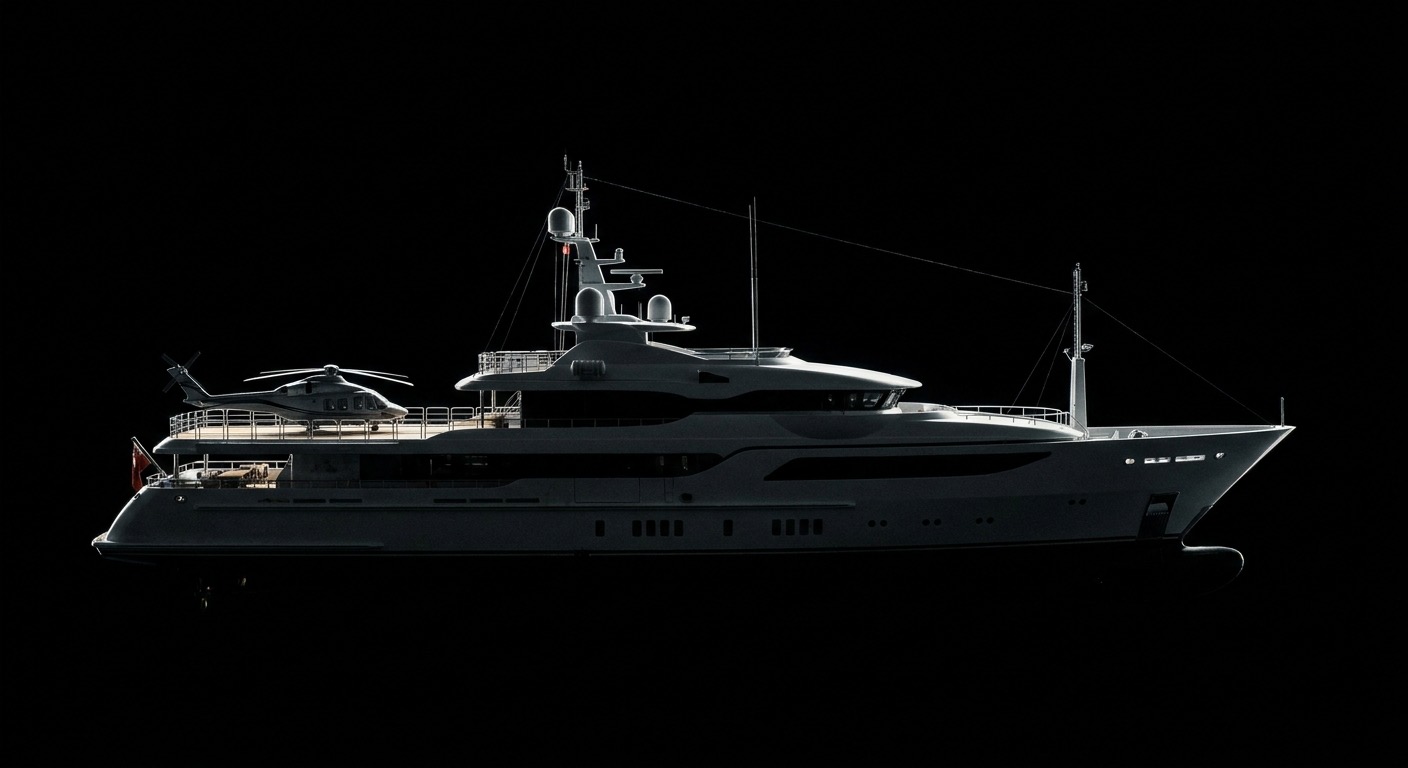
The pivot to private yachts came later than most buyers assume, largely from the 1980s onward, when a handful of owners wanting genuinely large, ocean-capable vessels went to Blohm & Voss because no yacht-only builder had the yard's steel-construction pedigree. The result was a run of yachts that, at the time of their delivery, were among the largest privately owned vessels afloat — a 139-metre motor yacht delivered in 1999, and, most famously, a 162.5-metre flagship delivered in 2010 that held the title of the world's largest private yacht for years afterward. These builds established the register buyers still reference today: Blohm & Voss means scale, steel, and naval-grade engineering, not composite construction and production-line delivery.
What Actually Changed in 2011
The detail that trips up a lot of first-time shortlist conversations: Blohm & Voss's new-build yacht division was absorbed into Lürssen in 2011. The Hamburg yard itself continued — and continues today — as Blohm+Voss Repair, part of the same ownership group, focused on refit, repowering, drydock, and repair work for large yachts and commercial vessels rather than new private construction. In practical terms, this means a buyer today is choosing between two different paths: acquiring an existing yacht that carries the Blohm & Voss build plate from the 1980s–2010s era, secondhand, or commissioning a new build at the equivalent scale through Lürssen, which now carries the engineering lineage forward. Both paths lead back to the same Hamburg expertise; only the entity issuing the build contract has changed.
Blohm & Voss vs. the Other Large-Yacht Yards
For a buyer comparing yards at the 90-metre-plus tier, the honest positioning looks like this:
| Yard | Home Base | Signature Scale | Known For |
|---|---|---|---|
| Blohm & Voss (legacy builds) / Lürssen (current) | Hamburg / Bremen-Lemwerder | 90m – 160m+ | Steel-hull scale, naval engineering heritage, discreet exterior lines |
| Feadship | Aalsmeer / Kaag, Netherlands | 50m – 110m | Owner co-design process, refined interiors, resale value |
| Oceanco | Alblasserdam, Netherlands | 70m – 115m | Sculptural exteriors, sustainability-forward propulsion |
| Nobiskrug / other German steel yards | Rendsburg, Germany | 80m – 135m | Explorer and expedition-capable steel builds |
What to Actually Inspect Before You Shortlist a Hull
Because you are almost always evaluating an existing vessel rather than an off-the-shelf order, the diligence list is different from a standard yacht purchase:
- Classification and steel survey — full hull thickness gauging and classification society records (DNV or Lloyd's), not just a hull inspection at haul-out.
- Engine hours and propulsion type — many yard-era builds used diesel-electric or CODAD arrangements that require yard-specific parts and expertise to service.
- Refit history and where it was done — a vessel refitted at the Hamburg yard or another tier-one facility carries very different resale confidence than one refitted piecemeal.
- Crew-to-guest ratio against your actual itinerary — these are vessels built for 24/7 ocean operation with 30-plus crew; running costs scale accordingly.
- Flag state and charter eligibility — if any commercial use is planned, confirm the vessel's certification supports it before you get attached to a hull.
Market Pricing and Ownership Costs
Acquisition price for a Blohm & Voss-class vessel — whether a legacy resale or a new build carrying the same engineering standard — realistically spans from the low hundreds of millions into the $400M-plus range depending on scale, age, and refit condition. Annual operating costs for a yacht at this tier typically run 8–12% of build or acquisition value once crew, insurance, berthing, fuel, and maintenance are accounted for, which is a materially different ownership calculation than a 50–70m composite yacht and should be modeled before any letter of intent is signed.
If a vessel at this scale is genuinely on your shortlist, the sourcing conversation matters as much as the specification sheet. Obsidian Helm's network includes a representative Blohm & Voss-built explorer-class yacht sourced through our private yacht desk, and our broader guide to buying a superyacht covers the acquisition process end to end for buyers newer to vessels at this tier. For a structured evaluation of a specific hull, ownership-cost modeling, and introductions through vetted channels, Obsidian Helm's Yacht & Jet practice runs a $4,999 Private Strategy Session designed exactly for this stage of a search.
Get the Right Brand and Systems Specified Before You Buy
A $4,999 Private Strategy Session covers intended use, cruising ground and brand shortlist, and delivers a vessel and technology specification that fits the boat you actually choose — credited toward membership.
Request Your InvitationFrequently asked
Is Blohm & Voss still building new yachts today?
No. The Hamburg yard's new-build yacht division was absorbed into Lürssen in the early 2010s, following a period of ownership and restructuring at the yard. Blohm+Voss continues today as a refit, repair, and repowering facility for large yachts and commercial vessels, while new construction at that scale is now delivered under the Lürssen name.
How big are Blohm & Voss-built yachts?
The yard's yacht-era output generally ran from roughly 90 metres up to its largest delivery of 162.5 metres in 2010, which held the title of the world's largest private yacht for several years. Most surviving vessels sit in the 90–140 metre range.
What does a yacht of this scale cost to buy and run?
Acquisition can range from the low hundreds of millions of dollars into the $400M-plus range depending on age, scale, and refit condition. Annual operating costs typically run 8–12% of that value once crew, insurance, berthing, and maintenance are included.
What should I check before shortlisting a specific hull?
Prioritize a full classification-society steel survey, documented engine hours, refit history and where it was performed, crew-to-guest ratio against your intended itinerary, and flag-state certification if any charter use is planned.
How does Obsidian Helm source a yacht at this scale?
Obsidian Helm works through a private network of brokers, owners, and yard contacts to identify vessels that are not necessarily on open market listings, then vets structural and mechanical condition before presenting a shortlist to the client.