
Private Jet IT & Cybersecurity for Sydney
Point Piper, Vaucluse, Double Bay and Rose Bay hold an estimated 6,800 UHNW residents and 18 billionaires, the leading concentration of private wealth in the Southern Hemisphere. Larger aircraft use Sydney Kingsford Smith's (SYD) general aviation terminal, while smaller jets and turboprops often route through Bankstown Airport (BWU), a distinction that matters for how a fleet is tracked and secured.
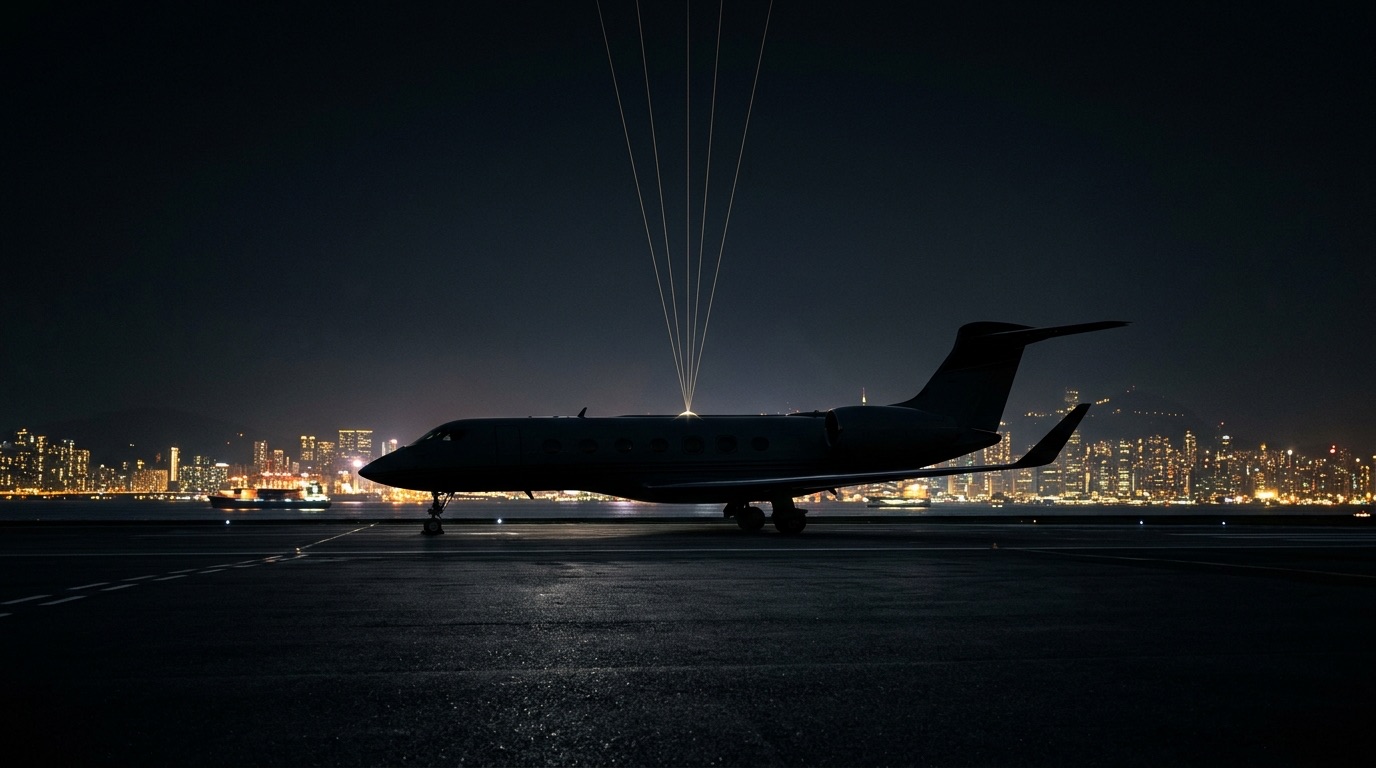
Sydney's private wealth sits almost entirely on the harbor. Point Piper, Vaucluse, Double Bay and Rose Bay together hold an estimated 6,800 ultra-high-net-worth residents and 18 billionaires, a concentration that makes Sydney the leading wealth hub of the Southern Hemisphere by most measures. Aviation for this group splits across two airports: larger long-range aircraft typically use Sydney Kingsford Smith's (SYD) general aviation terminal, while smaller jets and turboprops more often route through Bankstown Airport (BWU), roughly 25 kilometres inland.
That two-airport split is a genuine operational feature of the Sydney market, not an inconvenience, and it has security implications worth naming. SYD's general aviation terminal sits inside one of the busiest, most tightly regulated commercial airports in the Southern Hemisphere, with correspondingly dense ADS-B coverage and slot management. Bankstown, by contrast, is a quieter general aviation field with a different risk profile — less commercial-airport-grade physical security infrastructure, and an FBO ecosystem sized for a smaller, more specialized fleet. A family whose aircraft moves between the two, or whose fleet is split across both, needs a security plan that accounts for both operating environments rather than assuming one covers the other.
Where the actual exposure sits
As with most fleets in this market, the cabin network is the weakest point, not the airframe or the ground handling at either field. Aircraft based at or regularly through SYD or BWU typically carry satellite connectivity installed once at delivery or during a refit and rarely revisited. Principal, family, guest and crew devices commonly share a single flat network behind consumer-grade routing hardware, meaning a compromised guest laptop or a targeted phishing attempt against a known associate can reach the principal's own systems mid-flight.
- Segmented cabin networking — isolated VLANs for principal, family, guest and crew traffic, replacing whatever stock router the connectivity installer left behind.
- ADS-B and flight-plan exposure audit — a technical review of what each tail broadcasts publicly, covering both SYD and BWU operations where a fleet uses both.
- Executive device hardening — travel-mode configuration for phones, laptops and tablets, sized for principals whose business and family travel often spans the wider Asia-Pacific region.
- Named incident response team — a defined SLA reachable before wheels-up at either SYD or BWU and throughout the flight, not a generic support ticket.
Typical cost ranges
The ranges below reflect what is typical for aircraft based at or regularly transiting SYD and BWU, presented as industry-representative figures rather than fixed quotes:
| Service | Typical annual range (US$) | Notes |
|---|---|---|
| Satellite connectivity (Ka-band, high-allowance plan) | 45,000 – 180,000 | Aircraft flying long trans-Pacific or Asia legs trend to the top end |
| Cabin network segmentation & firewall rebuild | 20,000 – 48,000 | Higher where legacy connectivity hardware requires full replacement |
| ADS-B / flight-plan exposure audit | 7,000 – 16,000 | Covers both SYD and BWU operations where a fleet uses both fields |
| Executive device & travel-mode program | 13,000 – 30,000 | Covers principal, family and senior staff devices across Asia-Pacific travel |
| 24/7 incident response retainer | 17,000 – 50,000 | Response SLA typically 15–25 minutes given the two-airport spread |
Many Sydney principals also maintain a vessel berthed in the harbor or seasonally further afield, and the two assets are best secured as one design rather than two separate contracts — a compromised device carried between aircraft and yacht defeats hardening done on only one of them. Our yacht, jet and estate technology & security page covers this integrated approach in full.
The trans-Pacific distance factor
Sydney's geographic isolation from North America and Europe shapes both its aviation costs and its risk profile in ways worth naming plainly. Long-range legs to Los Angeles, London or the Middle East run 14 to 17 hours, meaning connectivity uptime and bandwidth allocation matter more here than in a shorter-haul market — a connectivity outage over open ocean is a longer, more consequential gap than the same outage on a two-hour European hop. Flight departments serving Sydney-based ultra-long-range aircraft should weight connectivity reliability and redundancy more heavily in vendor selection than cost alone.
The SYD/BWU split also matters for crew and handling continuity. A family whose primary long-range aircraft is based at SYD but whose smaller jet or helicopter operates from BWU needs device and access policy applied consistently across both flight departments, which in practice often means two separate ground teams rather than one. Treating the fleet as a single security program, with one named incident response contact regardless of which field a given aircraft departs from, closes a gap that a split-airport operation otherwise creates by default.
One system, not three vendors
Our private jet hub covers aviation cost and charter structures across the Asia-Pacific region in depth, while yacht, jet and estate technology & security sets out how we design the aircraft, any vessel, and the residence together under one incident response team. The personal cybersecurity discipline underlying every engagement is described on our cybersecurity page. For Sydney's two-airport fleets, that integrated approach is what keeps a split operation from becoming a split security posture.
A confidential assessment before your next departure
Obsidian Helm advises a limited number of Sydney principals and family offices on aircraft, vessel, estate and personal cybersecurity, entirely under NDA. Engagements begin with a $4,999 Private Strategy Session.
Request Your InvitationFrequently asked
Why does Sydney have two relevant airports?
Larger long-range aircraft typically use Sydney Kingsford Smith's general aviation terminal, while smaller jets and turboprops more often route through Bankstown Airport, roughly 25 kilometres inland. Families whose fleet spans both need a security plan covering both operating environments.
What does a private jet cybersecurity assessment cost for a Sydney-based aircraft?
A full assessment covering cabin network segmentation, ADS-B exposure review and executive device hardening typically runs $7,000 to $48,000 depending on aircraft size and existing hardware. Ongoing connectivity management and incident response retainers are priced separately, usually $17,000 to $50,000 a year. Exact scope is set during the initial Private Strategy Session.
Does the trans-Pacific distance change connectivity requirements?
Yes. Long-range legs to North America, Europe or the Middle East from Sydney run 14 to 17 hours, so connectivity reliability and redundancy matter more here than in shorter-haul markets, where a temporary outage is a smaller practical problem.
How long does implementation take?
A technical audit and hardening plan typically takes 10 to 15 business days once we have access to the tail. Full network rebuild and device program rollout usually takes four to six weeks, scheduled around SYD or BWU slot availability and any planned maintenance downtime.
Should the jet and any yacht be secured together or separately?
Together, wherever practical. Many Sydney principals move devices, staff and habits between an aircraft and a vessel berthed in the harbor or seasonally elsewhere, and hardening only one asset leaves the other as the entry point.