
Private Jet IT & Cybersecurity for St. Moritz
Suvretta, Via Chasellas, Celerina and Pontresina hold an estimated 2,400 UHNW residents and 6 billionaires in Switzerland's legendary winter alpine enclave. The gateway is Samedan Airport (SMV), Europe's highest-altitude commercial airfield, where thin-air performance limits and demanding winter operations shape every arrival.
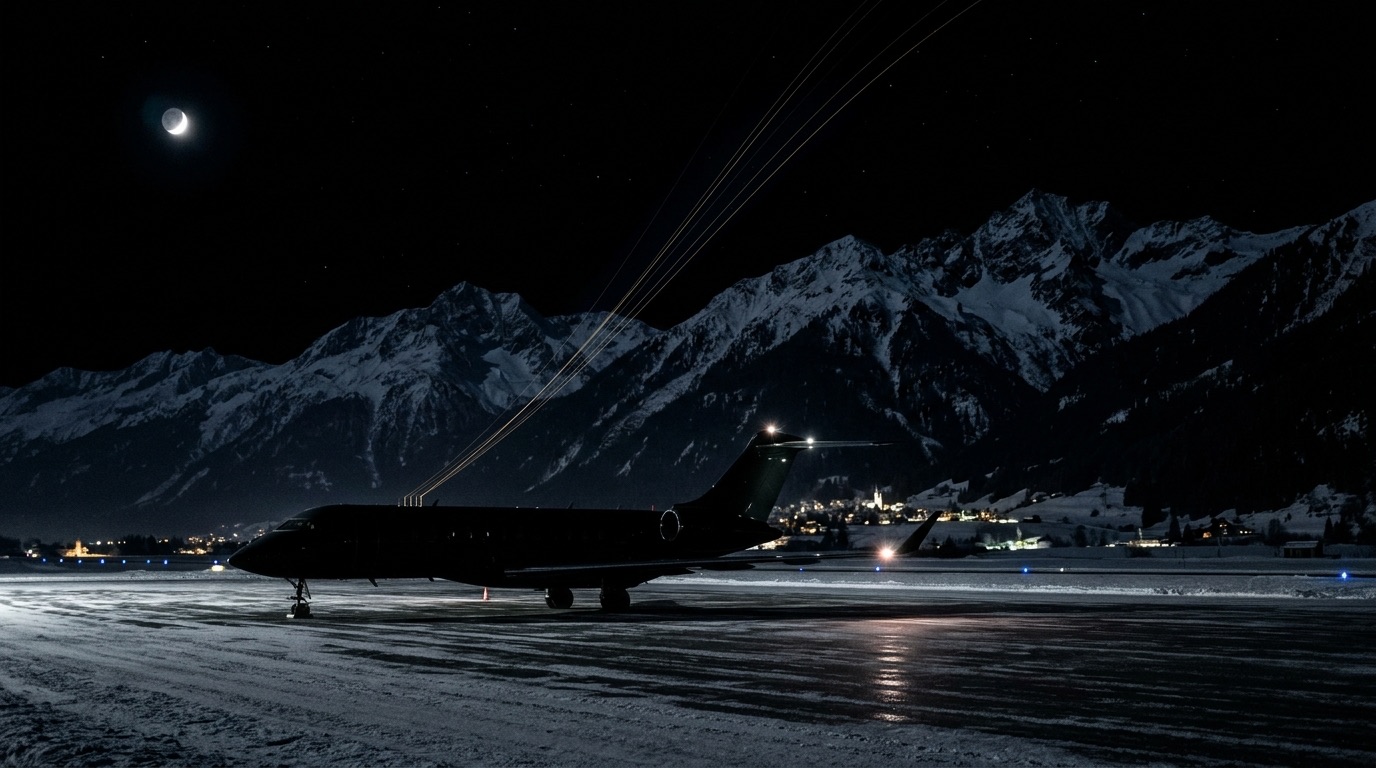
St. Moritz has drawn European and international wealth to its winter season for more than a century, and the modern figures reflect that legacy: Suvretta, Via Chasellas, Celerina and Pontresina together hold an estimated 2,400 ultra-high-net-worth residents and 6 billionaires, a small but extremely concentrated market. The gateway for nearly all of this traffic is Samedan Airport (SMV), sitting at 5,600 feet above sea level and holding the distinction of Europe's highest-altitude commercial airport — a fact that shapes aircraft selection, flight planning, and, less obviously, the security conversation around every arrival.
Samedan's altitude is not a trivia point. Thin air at this elevation reduces engine thrust and wing lift, which in practice restricts payload, range and which aircraft types can operate into SMV safely, particularly during the warmer shoulder-season days when density altitude climbs further. Winter operations bring their own complexity: snow and ice management on a single runway surrounded by mountainous terrain, frequent weather-driven schedule disruption, and a tightly compressed peak season around the Christmas and New Year holidays and major winter sporting events that concentrates demand into a narrow window each year.
Where the actual exposure sits
As with most seasonal, single-airport alpine markets, the cabin network is the weakest point, not the airframe or the ground handling. Aircraft based at or regularly through SMV typically carry satellite connectivity installed once at delivery or during a refit and rarely revisited. Principal, family, guest and crew devices commonly share a single flat network behind consumer-grade routing hardware, meaning a compromised guest laptop or a targeted phishing attempt against a known associate can reach the principal's own systems mid-flight.
- Segmented cabin networking — isolated VLANs for principal, family, guest and crew traffic, replacing whatever stock router the connectivity installer left behind.
- ADS-B and flight-plan exposure audit — a technical review of what each tail broadcasts publicly, particularly relevant given how predictable SMV's compressed winter-season traffic pattern is to anyone watching.
- Weather-diversion contingency planning — SMV's altitude and winter-weather profile mean aircraft need a defined fallback (commonly Zurich or Innsbruck, with a road or helicopter transfer) with the same security posture applied automatically.
- Named incident response team — a defined SLA reachable before wheels-up at SMV and throughout the flight, not a generic support ticket.
Typical cost ranges
The ranges below reflect what is typical for aircraft capable of SMV's high-altitude operations, presented as industry-representative figures rather than fixed quotes:
| Service | Typical annual range (US$) | Notes |
|---|---|---|
| Satellite connectivity (Ka-band, high-allowance plan) | 50,000 – 190,000 | Aircraft flying frequent transatlantic legs into the wider Zurich/Milan corridor trend to the top end |
| Cabin network segmentation & firewall rebuild | 22,000 – 52,000 | Higher where legacy connectivity hardware requires full replacement |
| ADS-B / flight-plan exposure audit | 7,500 – 17,000 | Calibrated to SMV's tightly compressed, highly predictable winter-season pattern |
| Weather-diversion contingency & alternate-field security plan | 6,000 – 13,500 | Covers Zurich and Innsbruck as pre-vetted alternates with onward transfer planning |
| 24/7 incident response retainer | 18,500 – 54,000 | Response SLA typically 15–25 minutes given SMV's altitude and weather constraints |
St. Moritz's peak weeks — Christmas, New Year, and the winter sporting calendar — concentrate a recognizable fleet into a short window, making ADS-B correlation against who is in residence unusually easy for anyone tracking the season. Our private jet hub covers SMV's operational and slot constraints in further depth.
Why altitude and winter ops matter to security planning
SMV's performance limits mean not every long-range aircraft can operate into St. Moritz at all, which pushes some principals toward a two-leg journey — landing at Zurich or Milan on a larger aircraft, then transferring by smaller aircraft, helicopter, or road into the Engadin valley. As with any multi-leg journey, each transfer point is a natural pinch point for device handling and physical security, and a security plan that only covers the final SMV leg leaves the earlier transfer unaddressed. We build the full journey into scope from the outset rather than treating the alternate-airport leg as someone else's responsibility.
Winter weather closures at SMV follow a genuinely unpredictable pattern tied to alpine storm systems, and a diverted aircraft landing at an unplanned alternate field may lack the family's usual FBO relationship and ground-handling verification. A pre-vetted alternate-field protocol, covering both physical security and network continuity, closes a gap that becomes especially acute during the compressed, high-demand holiday weeks when alternate airports are themselves at their busiest.
One system, not three vendors
Our private jet hub covers aviation cost, altitude and seasonal-access planning for St. Moritz in depth, while yacht, jet and estate technology & security sets out how we design the aircraft and residence together under one incident response team for families who also maintain a vessel elsewhere in Europe. The personal cybersecurity discipline underlying every engagement is described on our cybersecurity page. For St. Moritz's altitude-constrained, weather-exposed market, contingency planning and cybersecurity planning are the same conversation.
A confidential assessment before your next departure
Obsidian Helm advises a limited number of St. Moritz principals and family offices on aircraft, contingency, estate and personal cybersecurity, entirely under NDA. Engagements begin with a $4,999 Private Strategy Session.
Request Your InvitationFrequently asked
Why is Samedan (SMV) considered operationally demanding?
Samedan is Europe's highest-altitude commercial airport at 5,600 feet, where thin air reduces engine thrust and wing lift, restricting payload, range and which aircraft types can operate safely, particularly on warmer shoulder-season days. Winter snow and ice management on a single runway add further complexity.
What happens if my aircraft can't land at SMV due to altitude or weather limits?
Some aircraft transfer via Zurich or Milan, landing on a larger jet and continuing to the Engadin valley by smaller aircraft, helicopter, or road. We build the full multi-leg journey into scope, since each transfer point is a pinch point for device handling and physical security that a single-leg security plan would miss.
What does a private jet cybersecurity assessment cost for an SMV-bound aircraft?
A full assessment covering cabin network segmentation, ADS-B exposure review, weather-diversion contingency planning and executive device hardening typically runs $7,500 to $52,000 depending on aircraft size and existing hardware. Ongoing incident response retainers run $18,500 to $54,000 a year. Exact scope is set during the initial Private Strategy Session.
How long does implementation take?
A technical audit and hardening plan typically takes 10 to 15 business days once we have access to the tail. Full network rebuild, device program rollout and alternate-field contingency planning usually takes four to six weeks, scheduled around SMV slot and weather windows.
Is the holiday season a higher-risk period in St. Moritz?
Yes. Christmas, New Year and the winter sporting calendar concentrate a small, recognizable fleet into a short window each year, which makes ADS-B correlation against who is in residence unusually easy, and simultaneously puts more pressure on alternate airports if SMV closes for weather.