
Private Jet IT & Cybersecurity for Singapore
Sentosa Cove, Bukit Timah, Orchard, District 10 and Marina Bay hold an estimated 12,600 UHNW residents and 48 billionaires, anchored by Asia's largest concentration of single- and multi-family offices. Nearly all private aviation for this group departs Seletar Airport (XSP), Singapore's dedicated business-aviation field, separate from Changi's commercial operations.
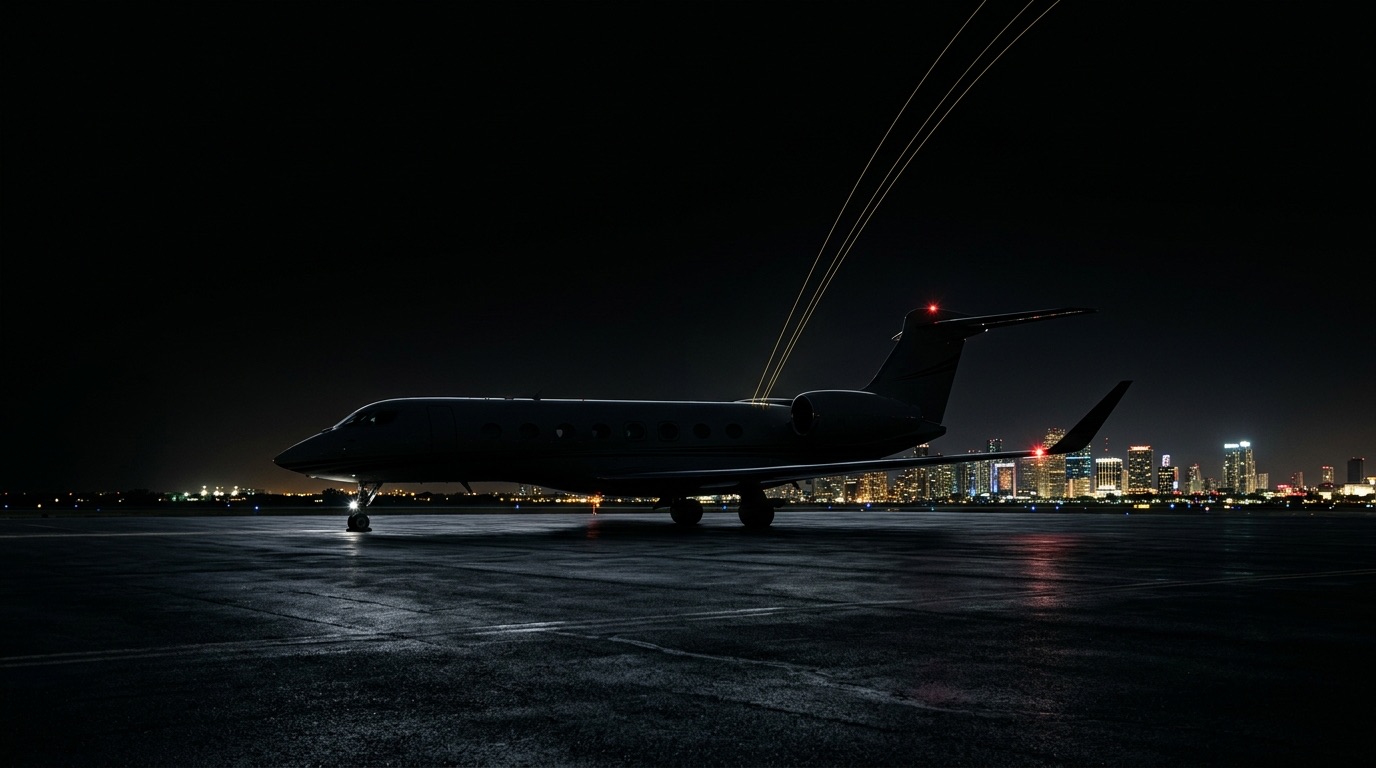
Singapore's private wealth is unusually structured. Sentosa Cove's waterfront villas, Bukit Timah and District 10's landed estates, Orchard's vertical wealth and Marina Bay's newer capital together hold an estimated 12,600 ultra-high-net-worth residents and 48 billionaires, but the more revealing figure is institutional: Singapore now hosts Asia's largest concentration of single- and multi-family offices, drawing capital from across the region into a jurisdiction prized for its regulatory stability and confidentiality norms. Nearly all of the private aviation serving this community departs Seletar Airport (XSP), a dedicated business-aviation field entirely separate from Changi's commercial terminals.
That separation is deliberate and valuable — XSP was purpose-built to keep UHNW and corporate aviation traffic away from commercial congestion — but it does not reduce the tracking exposure that matters most. A tail number based at or regularly through Seletar is exactly as visible on public ADS-B feeds as one departing any commercial airport, and Singapore's role as a family-office hub means the audience with a commercial reason to watch that traffic — competing family offices, wealth managers, financial journalists tracking capital flows into the jurisdiction — is unusually well informed about what a given pattern means.
Where the actual exposure sits
As with most fleets based at dedicated business-aviation fields, the cabin network is the weakest point, not the airframe or the ground security around it. Aircraft operating through XSP typically carry satellite connectivity installed once at delivery or a regional completion refit and rarely revisited. Principal, family, guest and crew devices commonly share a single flat network behind consumer-grade routing hardware, meaning a compromised guest device or a targeted phishing attempt against a known associate can reach the principal's own systems mid-flight.
- Segmented cabin networking — isolated VLANs for principal, family, guest and crew traffic, replacing whatever stock router the connectivity installer left behind.
- ADS-B and flight-plan exposure audit — a technical review of what each tail broadcasts publicly, relevant given how closely Singapore's family-office community tracks each other's regional movements.
- Executive device hardening — travel-mode configuration for phones, laptops and tablets, sized for principals who typically hold structures and staff across multiple Asian jurisdictions.
- Named incident response team — a defined SLA reachable before wheels-up at XSP and throughout the flight, not a generic support ticket.
Typical cost ranges
The ranges below reflect what is typical for large-cabin, long-range aircraft based at or regularly transiting XSP, presented as industry-representative figures rather than fixed quotes:
| Service | Typical annual range (US$) | Notes |
|---|---|---|
| Satellite connectivity (Ka-band, high-allowance plan) | 58,000 – 215,000 | Aircraft flying frequent Europe or North America legs trend to the top end |
| Cabin network segmentation & firewall rebuild | 24,000 – 56,000 | Higher where legacy regional-completion connectivity hardware requires full replacement |
| ADS-B / flight-plan exposure audit | 8,000 – 18,500 | Calibrated to the closely networked nature of Singapore's family-office community |
| Executive device & travel-mode program | 15,500 – 35,000 | Covers principal, family and senior staff devices across multiple jurisdictions |
| 24/7 incident response retainer | 21,000 – 60,000 | Response SLA typically 10–20 minutes given XSP's single-field concentration |
A substantial share of Singapore-based principals also maintain a vessel berthed regionally or seasonally in the Mediterranean, and the two assets are best secured as one design rather than two separate contracts — a compromised device carried between aircraft and yacht defeats hardening done on only one of them. Our yacht, jet and estate technology & security page covers this integrated approach in full.
The family-office confidentiality layer
Singapore's appeal as a wealth jurisdiction rests substantially on confidentiality, and that reputation creates its own pressure: family offices here are often more conscious of information leakage through corporate and legal channels than through the aircraft itself, which means aviation cybersecurity sometimes gets treated as a lesser priority than structuring confidentiality. That is a mistake. A tail number's movements are a matter of public record regardless of how carefully the underlying trust or holding structure is kept private, and a well-resourced observer can often infer more about a family office's activity from six months of flight patterns than from any leaked document.
Seletar's role as a dedicated field also means the FBO and ground-handling ecosystem serving XSP is smaller and more specialized than at a major commercial hub, which cuts both ways: less anonymity in who is watching ground movements, but also a more consistent, higher-trust handler relationship once established. Flight departments should still verify fuel-release and invoice communications independently rather than assuming familiarity with a handler removes the need for the check — spoofed-sender fraud attempts do not require the attacker to know the relationship is close, only that it exists.
One system, not three vendors
Our private jet hub covers aviation cost and charter structures across Asia-Pacific in depth, while yacht, jet and estate technology & security sets out how we design the aircraft, any vessel, and the residence together under one incident response team. The personal cybersecurity discipline underlying every engagement is described on our cybersecurity page. For Singapore-based family offices whose entire value proposition rests on discretion, that integrated approach is the logical extension of a confidentiality standard already applied everywhere else.
A confidential assessment before your next departure
Obsidian Helm advises a limited number of Singapore principals and family offices on aircraft, vessel, estate and personal cybersecurity, entirely under NDA. Engagements begin with a $4,999 Private Strategy Session.
Request Your InvitationFrequently asked
What does a private jet cybersecurity assessment cost for a Seletar-based aircraft?
A full assessment covering cabin network segmentation, ADS-B exposure review and executive device hardening typically runs $8,000 to $56,000 depending on aircraft size and existing hardware. Ongoing connectivity management and incident response retainers are priced separately, usually $21,000 to $60,000 a year. Exact scope is set during the initial Private Strategy Session.
Why does Seletar (XSP) matter instead of Changi?
Nearly all private and business aviation serving Singapore's UHNW community departs Seletar, a dedicated field entirely separate from Changi's commercial terminals. Security and connectivity planning has to be built around XSP's specific operating pattern and FBO ecosystem, not Changi's.
How long does implementation take?
A technical audit and hardening plan typically takes 10 to 15 business days once we have access to the tail. Full network rebuild and device program rollout usually takes four to six weeks, scheduled around XSP slot availability and any planned maintenance downtime.
Does Singapore's confidentiality reputation reduce the need for aircraft cybersecurity?
No. Corporate and trust structuring confidentiality has no bearing on what a tail number broadcasts publicly through ADS-B. A well-resourced observer can infer a great deal about a family office's activity from flight patterns alone, regardless of how private the underlying legal structure is kept.
Should the jet and any yacht be secured together or separately?
Together, wherever practical. Many Singapore-based principals move devices, staff and habits between an aircraft and a vessel berthed regionally or seasonally elsewhere, and hardening only one asset leaves the other as the entry point.