
Private Jet IT & Cybersecurity for Hong Kong
The Peak, Mid-Levels, Repulse Bay and Deep Water Bay hold an estimated 17,215 UHNW residents and 74 billionaires — the second-largest concentration of private wealth of any city on earth. Nearly all of it moves through Hong Kong International Airport's business aviation terminal, one of the busiest and most closely watched general aviation facilities in Asia.
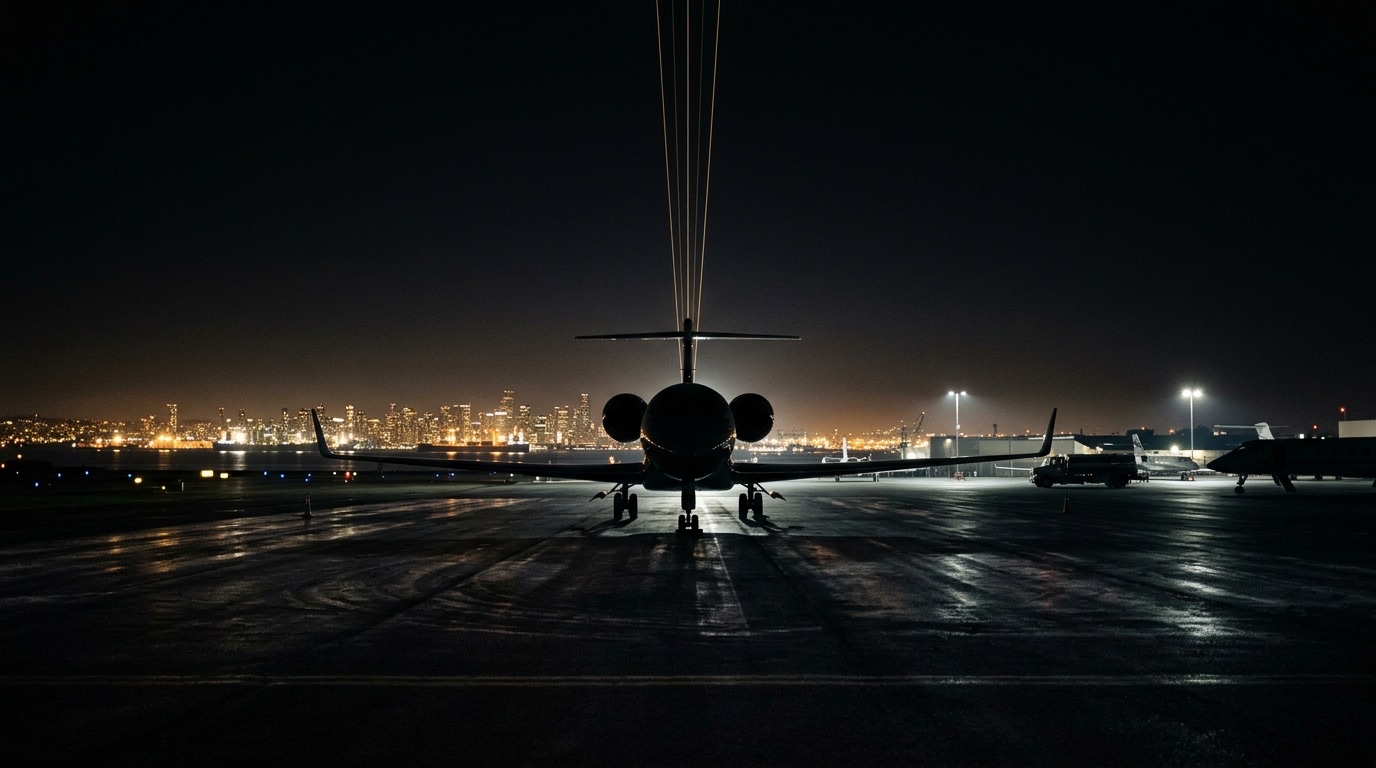
Hong Kong's private wealth is dense, old, and unusually visible. The Peak, Mid-Levels, Repulse Bay, Deep Water Bay and Central together hold an estimated 17,215 ultra-high-net-worth residents and 74 billionaires — a concentration exceeded by only one other city worldwide. Property, trading houses, and diversified family holding companies built over three or four generations sit alongside newer capital, and nearly all of it moves internationally through Hong Kong International Airport's dedicated business aviation terminal, one of the region's most tightly scheduled and closely monitored general aviation facilities.
That visibility is the starting point for any serious conversation about aircraft cybersecurity here. Hong Kong sits inside one of the most densely tracked airspace corridors in Asia, and a tail number departing HKG on a predictable weekly or monthly cadence is trivially correlated against a listed company's filings, a family office's known travel pattern, or a competitor's due diligence. ADS-B tracking services make this correlation free and instant, and Hong Kong's status as a financial and legal hub means the audience paying attention — competitors, activist shareholders, journalists, and occasionally state-level actors with commercial interests — is unusually sophisticated.
Where the actual exposure sits
As with most fleets based in high-traffic Asian hubs, the weakest point is rarely the airframe or the ground security around it — it is the cabin network. Aircraft operating regularly through HKG typically carry capable satellite connectivity installed once, at delivery or during a completion refit in Hong Kong or a nearby completion center, and rarely revisited afterward. Principal, family, guest and crew devices commonly share one flat network behind consumer-grade routing hardware, meaning a compromised guest device or a targeted phishing attempt against a known associate can reach the principal's own systems mid-flight.
- Segmented cabin networking — isolated VLANs for principal, family, guest and crew traffic, replacing whatever stock router the connectivity installer left behind at delivery.
- ADS-B and flight-plan exposure audit — a technical review of what each tail broadcasts publicly, particularly relevant given how easily HKG departures correlate against listed-company activity.
- Executive device hardening — travel-mode configuration for phones, laptops and tablets, calibrated for principals whose business interests draw sustained commercial and occasionally regulatory attention.
- Named incident response team — a defined SLA reachable before wheels-up at HKG and throughout the flight, not a generic support ticket routed through a call center in another time zone.
Typical cost ranges
The ranges below reflect what is typical for large-cabin, long-range aircraft based at or regularly transiting HKG, presented as industry-representative figures rather than fixed quotes:
| Service | Typical annual range (US$) | Notes |
|---|---|---|
| Satellite connectivity (Ka-band, high-allowance plan) | 60,000 – 220,000 | Aircraft flying frequent US and European long legs trend to the top end |
| Cabin network segmentation & firewall rebuild | 25,000 – 58,000 | Higher where legacy Asia-completion connectivity hardware requires full replacement |
| ADS-B / flight-plan exposure audit | 8,500 – 19,000 | Reviewed against Hong Kong's dense commercial and regulatory attention profile |
| Executive device & travel-mode program | 16,000 – 36,000 | Covers principal, family and senior staff devices across HK and satellite offices |
| 24/7 incident response retainer | 22,000 – 62,000 | Response SLA typically 10–20 minutes given HKG's single-terminal concentration |
Many Hong Kong principals also maintain a vessel, whether based in the harbor, in nearby waters, or wintering further afield, and the two assets are best secured as one design rather than two separate contracts — a compromised device carried between aircraft and yacht defeats hardening done on only one of them. Our yacht, jet and estate technology & security page covers this integrated approach in full.
Slot pressure and the FBO layer at HKG
Hong Kong International's business aviation terminal operates under some of the tightest slot constraints of any major Asian hub, particularly around Lunar New Year, major auction weeks, and the region's dense conference calendar. That congestion has a security dimension worth naming: aircraft queuing for slots or holding on the ground for extended periods are more exposed to opportunistic FBO-network attacks — fraudulent invoice emails routed through compromised handler systems, or fake fuel-release requests sent from a spoofed address that looks identical to the genuine handler. Crews and flight departments accustomed to fast HKG turnarounds sometimes skip the verification step that would catch this under time pressure, which is precisely when it matters most.
Crew rotation is a further factor specific to the market. Hong Kong-based flight departments often draw on an international pilot and cabin crew pool that moves between operators across Asia over a career, which is entirely normal but means device and credential hygiene cannot rely on long institutional tenure. Access provisioning and revocation need to be a routine discipline reviewed at every crew change, not a one-time setup task completed when the aircraft was delivered or last refit.
One system, not three vendors
Our private jet hub covers aviation cost and charter structures for the Asia-Pacific region in depth, while yacht, jet and estate technology & security sets out how we design the aircraft, any vessel, and the residence together under one incident response team. The personal cybersecurity discipline underlying every engagement is described on our cybersecurity page. For Hong Kong families whose visibility is already structurally high, that integrated approach is less a convenience than a baseline requirement.
A confidential assessment before your next departure
Obsidian Helm advises a limited number of Hong Kong principals and family offices on aircraft, vessel, estate and personal cybersecurity, entirely under NDA. Engagements begin with a $4,999 Private Strategy Session.
Request Your InvitationFrequently asked
What does a private jet cybersecurity assessment cost for a Hong Kong-based aircraft?
A full assessment covering cabin network segmentation, ADS-B exposure review and executive device hardening typically runs $8,500 to $58,000 depending on aircraft size and existing hardware. Ongoing connectivity management and incident response retainers are priced separately, usually $22,000 to $62,000 a year for large-cabin, long-range tails. Exact scope is set during the initial Private Strategy Session.
How long does implementation take?
A technical audit and hardening plan typically takes 10 to 15 business days once we have access to the tail. Full network rebuild and device program rollout usually takes four to six weeks, scheduled around HKG slot availability and any planned maintenance downtime.
Why does HKG's slot congestion matter to cybersecurity?
Aircraft holding or queuing for slots spend more time exposed to FBO-network fraud attempts, particularly spoofed invoice or fuel-release emails routed through compromised handler systems. Fast-turnaround pressure at a busy hub like HKG is exactly when verification steps get skipped, which is why we build that check into crew procedure rather than leaving it to judgment under time pressure.
Can my flight department and household staff be kept out of this?
Yes. Every engagement is NDA-bound from the first conversation, and we typically work directly with the principal or one designated family office contact. Findings can be disclosed only to the parties and at the level of detail you specify.
Should the jet and any yacht be secured together or separately?
Together, wherever practical. Many Hong Kong principals move devices, staff and habits between an aircraft and a vessel based locally or wintering elsewhere, and hardening only one asset leaves the other as the entry point. We typically design cabin and vessel network policy as a single system under one incident response retainer.