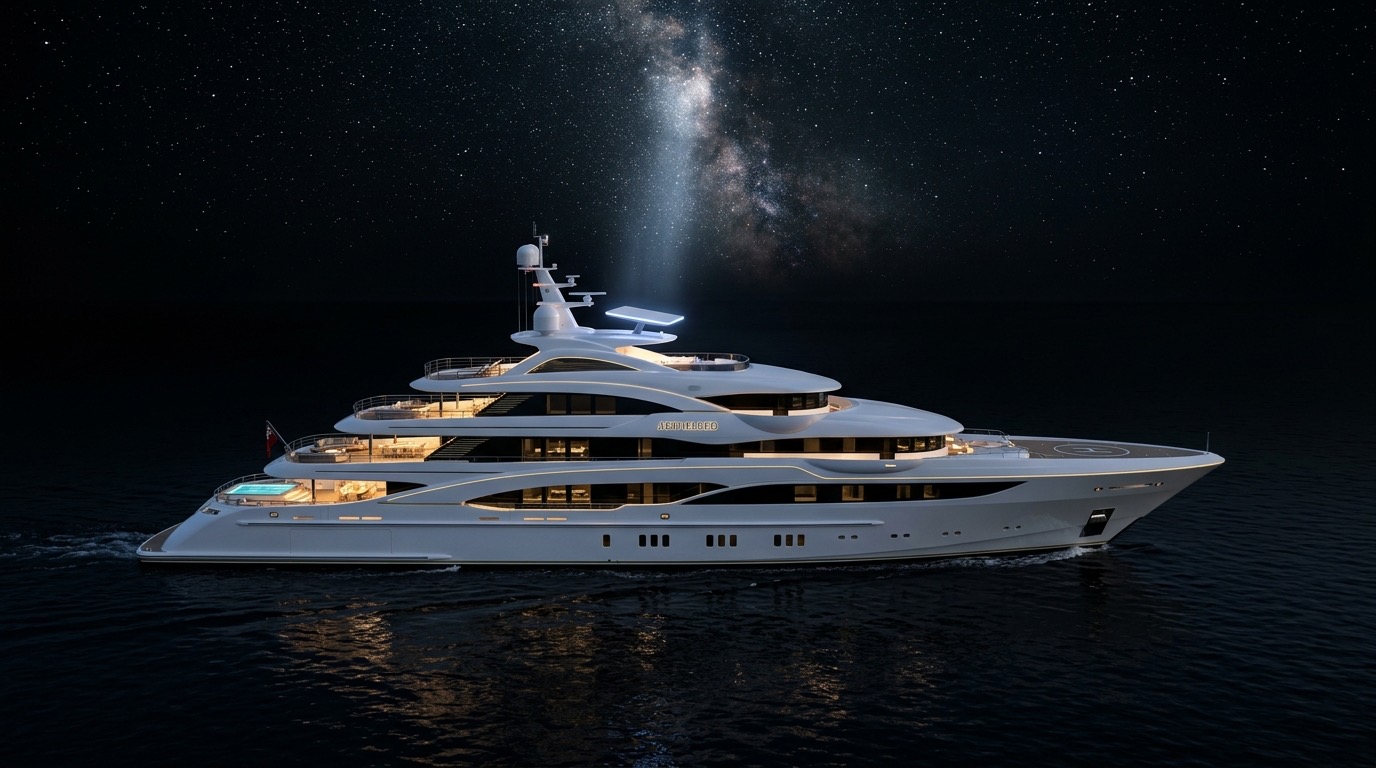
Explorer Yachts Explained: Why Expedition-Style Vessels Are Trending
The fastest-growing category in yachting isn't the fastest boat on the water. It's the one built to go furthest from it — and Damen's explorer-yacht work is a big part of why the category exists at all.
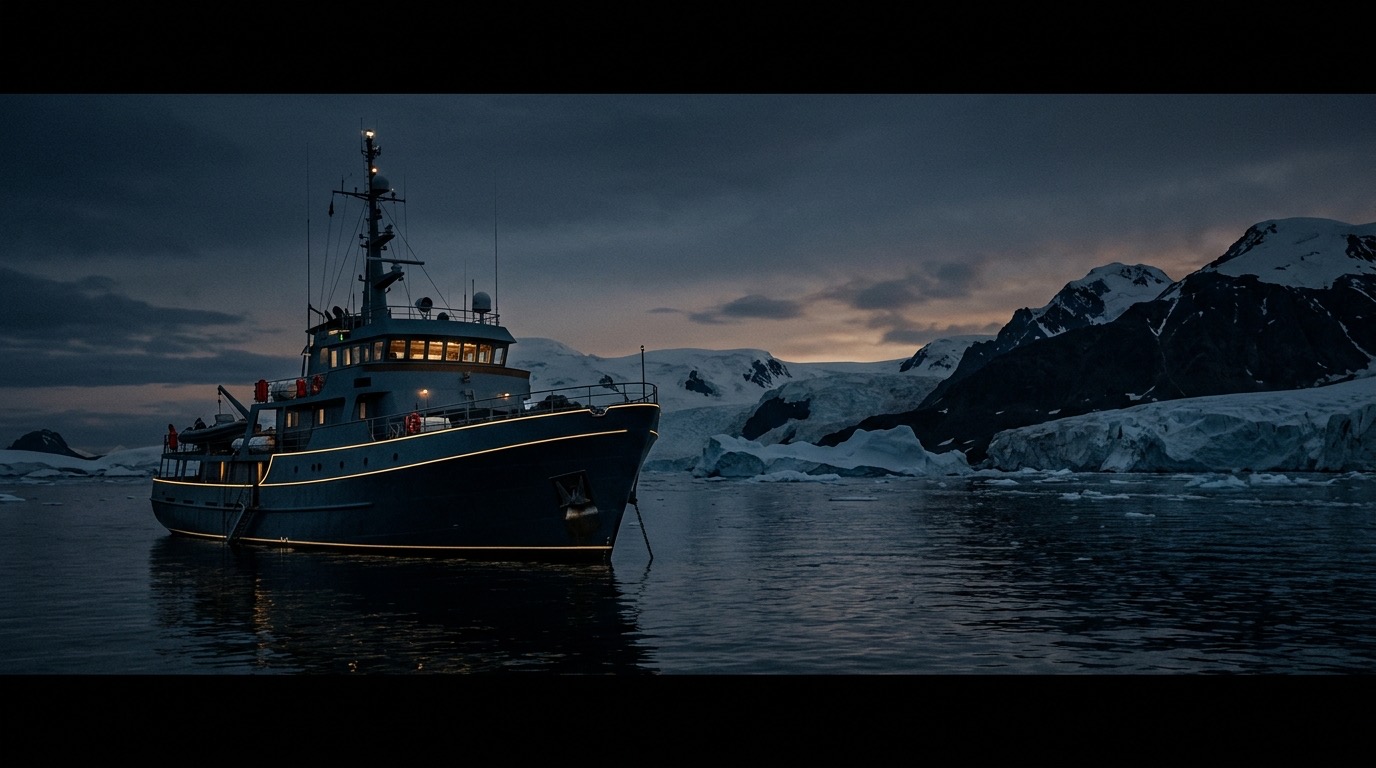
Ten years ago, an explorer yacht was a niche curiosity — a converted research vessel or ice-strengthened workboat that a handful of adventurous owners repurposed for serious cruising. Today it's one of the fastest-growing categories in the entire UHNW yacht market, and Damen, the Dutch shipbuilding group whose commercial and naval hulls have quietly underpinned the category, is a large part of why. The Damen Yacht Support division and its SeaXplorer range took proven expedition-grade engineering — steel hulls, genuine long-range tankage, ice-class options — and built it around owner-grade accommodation and systems instead of a research crew's bunks. The result is a vessel that can go to the Arctic, the Antarctic Peninsula, or the remote Pacific under its own power and stay there for weeks, not a conventional motor yacht dressed up with a heavier paint job.
What actually makes a yacht an explorer yacht
The term gets used loosely, so it's worth being precise. A genuine explorer yacht is defined by three things working together, not any one of them alone. First, hull construction — steel or a steel-aluminum hybrid rather than the fiberglass or all-aluminum construction typical of a conventional motor yacht, giving the vessel real resistance to ice, debris and the kind of hard use remote cruising involves. Second, range — fuel tankage and hull efficiency built for genuinely long passages between ports, often several thousand nautical miles, rather than the coastal hop-to-hop pattern most motor yachts are designed around. Third, self-sufficiency — larger explorer builds carry helicopter and dive-support capability, extended water and provisions storage, and mechanical redundancy that assumes the nearest qualified yard may be a continent away.
Damen's SeaXplorer line is the clearest expression of this approach at scale: expedition-grade steel hulls with ice-class options, engineered from the outset for owners who want to reach the Arctic or Antarctic under their own power rather than charter a specialist expedition ship to get there. It's a genuinely different design brief than a conventional yacht build, and it shows in almost every system on board, not just the hull plating.
Explorer yacht vs conventional motor yacht
| Attribute | Explorer yacht | Conventional motor yacht |
|---|---|---|
| Hull material | Steel or steel-aluminum hybrid, often ice-class rated | Fiberglass or aluminum, optimized for speed and weight |
| Typical range | 3,000–5,000+ nm on a single fill | 300–800 nm, built around marina-to-marina cruising |
| Typical use case | Arctic, Antarctic and remote-Pacific expeditions; extended independent anchoring | Mediterranean and Caribbean coastal cruising, marina-centric itineraries |
| Infrastructure reliance | Low — designed to operate for weeks away from marinas and shore support | High — refuels, provisions and services at marinas along the route |
The pattern in that table is the whole point of the category. An explorer yacht isn't a status symbol built to look rugged at anchor in Monaco — it's a vessel whose entire design brief assumes the next port might be weeks away, and whose owner genuinely wants to use that independence rather than admire it dockside.
Why the trend is real, not just marketing
Genuine long-range independence and access to remote regions — the Arctic, the Antarctic Peninsula, the far reaches of the Pacific — are the actual draw, not a styling choice. Owners who have spent a decade cruising the same Mediterranean and Caribbean circuits are increasingly asking what else is out there, and an explorer-class hull is the only practical way to reach it under private ownership rather than through a chartered expedition operator. Reduced reliance on marina infrastructure is the other half of the appeal: an explorer yacht can provision once and operate independently for weeks, which changes the entire cruising calculus for an owner who values genuine remoteness over convenience.
That said, this shift raises the bar considerably on what has to work reliably on board, because the entire premise of an explorer yacht is operating somewhere help isn't a short tender ride away.
An explorer yacht's whole value proposition is distance from help. That only works if everything on board is built to assume it won't arrive quickly.
What extended isolated operation demands from onboard systems
Communications redundancy stops being a nice-to-have and becomes the baseline. A conventional motor yacht cruising familiar Mediterranean routes can tolerate a single satellite system with an occasional dead spot. An explorer yacht operating near the ice edge or mid-Pacific needs layered redundancy — multiple satellite paths, proper failover, and a communications architecture similar to what we cover in yacht satellite internet cost — because a single point of failure in comms, in a region with no cellular backup and no nearby vessel traffic, is a genuine safety issue, not an inconvenience.
Medical and telemedicine capability matters in direct proportion to distance from the nearest hospital. Extended isolated operation means a crew and owner party that could be days from evacuation, which pushes real telemedicine systems, proper medical stores, and reliable comms to reach a shoreside physician from a preference into a requirement. Cybersecurity matters more, not less, in this setting: a vessel operating for weeks with a single satellite link and a crew that can't simply call a technician ashore needs systems hardened and monitored before departure, because there's no quick on-site fix once you're a thousand miles from the nearest port. This is exactly the kind of systems architecture we detail in superyacht technology systems — comms, medical, and cybersecurity aren't separate line items on an explorer build, they're one integrated resilience plan.
What owners considering an explorer yacht should actually plan for
- Redundant satellite communications with genuine failover, not a single primary system and a backup that's never been tested under load.
- Onboard telemedicine and medical stores scaled to realistic evacuation timelines for the regions you intend to actually visit.
- Cybersecurity hardened before departure, since a compromised system a thousand miles from port has no quick fix available.
- A systems plan reviewed as one architecture, not a checklist of individual vendors bolted onto a steel hull after the fact.
Obsidian Helm designs and provisions the communications, medical-support and cybersecurity architecture that genuine explorer-class operation requires, as part of our Yacht & Jet practice.
Build the Redundancy an Explorer Yacht Actually Requires
A $4,999 Private Strategy Session covers your intended regions, range and crew, and delivers a communications, medical and cybersecurity redundancy plan built for genuine isolated operation — credited toward membership.
Request Your InvitationFrequently asked
What makes a yacht an explorer yacht rather than just a rugged-looking motor yacht?
Three things together: steel or steel-aluminum hull construction, genuinely long range measured in thousands of nautical miles, and self-sufficiency features like extended provisioning and mechanical redundancy. A motor yacht styled to look expedition-ready without those underlying systems isn't the same category.
Is Damen a yacht builder?
Damen is primarily a Dutch shipbuilding group known for commercial and naval vessels. Its Damen Yacht Support division applies that expedition-grade engineering, including the SeaXplorer range, to private ownership, which is why its explorer builds carry genuine steel-hull, ice-class heritage rather than yacht-industry styling alone.
Can explorer yachts actually reach the Arctic or Antarctica under their own power?
Larger ice-class explorer builds are specifically engineered for this, with the range and hull strength to reach polar and other remote regions without a support vessel. Owners should confirm the specific ice-class rating and range figures with the builder for any particular hull rather than assuming all explorer-branded yachts are equally capable.
Why does an explorer yacht need more onboard systems redundancy than a conventional yacht?
Because its entire value proposition is operating far from marinas, technicians and medical facilities. A single point of failure in communications or a security compromise that would be a minor inconvenience in the Mediterranean becomes a genuine safety and operational risk a thousand miles from the nearest port.
Do explorer yachts cost significantly more to operate than conventional motor yachts of similar size?
Operating patterns differ more than headline costs. Explorer yachts spend less on marina fees and shore services during extended independent cruising, but require more investment upfront in redundant systems, medical capability and crew training for isolated operation — a different cost profile rather than simply a higher one.