
Caribbean Yacht Charter in Hurricane Season: Damage, Coverage and the Real Cost of the Discount
The summer discount on a crewed Caribbean charter is honest, not generous. Understanding named-storm clauses, hull warranties and your own cancellation cover is the difference between a sophisticated saving and an uninsured bet on the calendar.
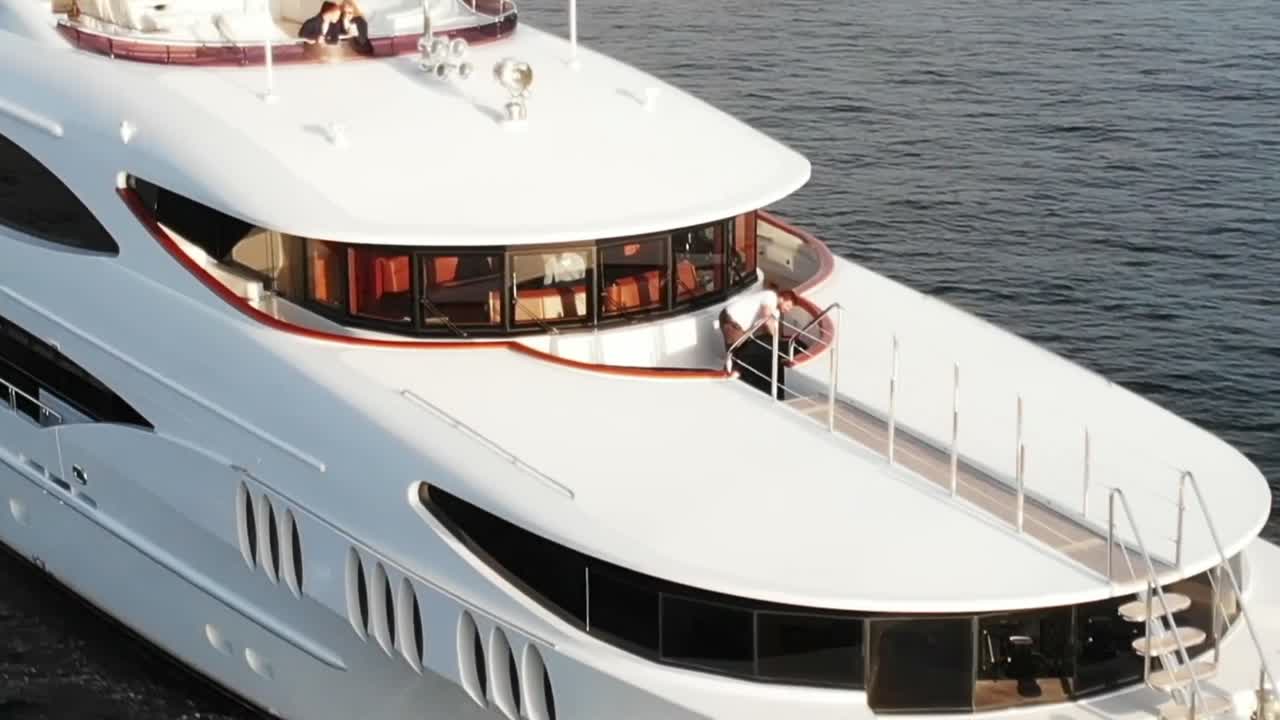
Few sentences in a charter conversation are as quietly consequential as the one a broker delivers in late spring: “The boat is available for those dates, and the rate is roughly forty per cent below winter.” For the principal weighing a Caribbean summer aboard a crewed yacht, the saving is real and the temptation is rational. What the headline figure rarely conveys is that the discount is not a gift. It is the market pricing the single variable that governs the region between June and November: the Atlantic hurricane season.
This is not a cautionary tale designed to discourage summer cruising. The southern Caribbean remains one of the most rewarding stretches of water in the world, and a well-structured low-season charter can deliver an experience that the crowded high-season fleet never touches. But the value is only genuine when the principal understands precisely what the lower price is compensating for, who carries which risk, and how the contract redistributes a storm’s consequences. The difference between a sophisticated summer charter and an expensive lesson is almost always a matter of paperwork read before signature rather than after a captain’s weather call.
This briefing sets out the architecture of hurricane-season chartering as it actually functions: the climatology that drives the calendar, the named-storm clauses that sit inside every serious charter agreement, the distinction between the yacht’s hull insurance and the principal’s own cover, and the regions that allow a summer on the water with materially reduced exposure. It is written for the owner or charterer who would rather price risk deliberately than discover it on day four.
The season that sets the price
The Atlantic hurricane season runs officially from 1 June to 30 November. Those six months are not uniform. The risk is heavily concentrated, and the concentration is the most useful single fact a charterer can hold. According to long-run Atlantic basin climatology, the window from August through October accounts for roughly 78 per cent of all tropical-storm days, 87 per cent of minor-hurricane days, and 96 per cent of major-hurricane days. The statistical peak of the season falls on or about 10 September. June and early July, by contrast, are climatologically quiet, and late November activity is uncommon and usually weak.
This distribution explains why charter pricing within the “low season” is itself tiered. June carries a modest discount because the weather is reliably excellent and the risk is low. September and October carry the deepest discounts precisely because they are the months a prudent broker would steer a first-time summer charterer away from. The price, in other words, is an honest signal. A 44 per cent reduction is not the market being generous; it is the market quantifying a 96 per cent concentration of major-storm days.
The 2026 forecast in context
The seasonal outlook matters, but it should be read as a probability distribution rather than a promise. For 2026, the United States National Oceanic and Atmospheric Administration has forecast a below-normal Atlantic season, predicting eight to fourteen named storms, of which three to six are expected to reach hurricane strength and one to three to become major hurricanes. NOAA assigns roughly 70 per cent confidence to those ranges and puts the chance of a below-normal season at about 55 per cent, with a 35 per cent chance of a near-normal season and only a 10 per cent chance of an above-normal one. The principal driver is the anticipated transition from weak La Niña conditions toward El Niño, which tends to suppress Atlantic activity by increasing the vertical wind shear that tears developing storms apart.
A below-normal forecast is welcome, but it changes nothing about how a charter should be structured. A quiet season is a statement about the number of storms across the entire basin over six months; it says nothing about whether a single system will track across the eastern Caribbean during a specific seven-day window in September. Andrew, in 1992, formed in what was then expected to be a quiet year. The forecast should inform the choice of month and region. It should never substitute for the contractual protections that follow.
The named-storm clause: the heart of the contract
Every credibly drafted crewed charter agreement contains a provision addressing named storms, and it is the clause the principal should read first. Its logic is consistent across the major industry templates, including the widely used MYBA agreement, even where the wording varies.
The mechanism is simple and, on first reading, can appear one-sided. If a named storm threatens or is forecast to threaten the expected location of the yacht, the captain — in his or her sole discretion — may terminate, suspend, curtail or reroute the charter at any point deemed necessary. This authority is not negotiable, and it should not be. The captain’s paramount duty is the safety of the vessel, crew and guests, and a charterer who tried to override a weather decision would be both legally and practically mistaken. The yacht may run for a designated hurricane hole, haul out, or relocate hundreds of miles to clear a forecast track, and the guests’ itinerary will yield to that necessity entirely.
What the principal must understand is the financial consequence that the standard clause attaches to such a decision. In its base form, a cancellation or curtailment driven by weather provides no refund. The charter fee has been earned; the storm is treated as a risk the charterer assumed. This is the precise point at which a summer charter either is, or is not, protected — and the protection does not come from the named-storm clause itself. It comes from two instruments layered on top of it: the force majeure provision and dedicated trip-cancellation insurance.
Force majeure and the question of refunds
The force majeure clause is where the refund position is actually decided, and it is where the templates diverge in ways that matter. Force majeure — literally “superior force” — covers events beyond the reasonable control of either party. The MYBA agreement defines it expansively to include acts of God beyond the reasonable control of owner, crew or charterer, and the enumerated examples explicitly include storms, fire, collision, grounding, fog and governmental acts or regulation.
Under a number of standard agreements, a cancellation that qualifies as force majeure before the charter begins entitles the charterer to a refund of sums paid. The critical questions a principal’s adviser should resolve before signature are therefore precise. Does the agreement’s force majeure clause apply only to pre-charter cancellation, or does it also govern a storm that interrupts a charter already underway? Is a refund full, pro-rata for unused days, or discretionary? And does the named-storm clause expressly override the force majeure refund, or sit alongside it? Two reputable agreements can answer these questions in opposite directions. The headline rate tells you nothing about which one you are signing.
Month-by-month: risk against price
The following table consolidates the climatological risk profile against the typical pricing posture of the crewed Caribbean fleet. Figures are indicative and intended to frame the trade-off rather than to quote any specific vessel; rates compress and expand with yacht, region and demand.
| Month | Storm risk (Atlantic basin) | Typical pricing vs winter peak | Editorial verdict |
|---|---|---|---|
| June | Low — season opens, activity rare and usually weak | Roughly 10–20% below peak | The connoisseur’s month: near-peak conditions, real saving, minimal risk |
| July | Low to moderate — activity begins to build late in the month | Roughly 20–30% below peak | Still favourable; watch the back half of the month |
| August | High — the steep climb begins; part of the 78% storm-day window | Roughly 35–44% below peak | Discount deepens for a reason; insist on contractual protection |
| September | Peak — statistical maximum near the 10th; 96% of major-storm days fall Aug–Oct | Lowest rates of the year | Lowest price, highest exposure; southern belt only, fully insured |
| October | High but easing late — still firmly in the active window | Near the lowest rates of the year | Improving toward month-end; the same disciplines apply |
| November | Low and declining — season closes on the 30th | Roughly 15–25% below peak early; firming late | The season’s quiet exit; conditions reliably recover |
Read across the table and a clear strategy emerges. The principal seeking the best balance of saving and serenity charters in June or, secondarily, in late November — paying meaningfully less than the winter premium while enjoying conditions that are, for practical purposes, indistinguishable from high season. The principal who is genuinely price-led and willing to charter in the August-to-October window should do so only in the southern Caribbean and only with the full insurance architecture in place. The combination that should never be chosen is a deep-discount September charter in the hurricane belt with no trip-cancellation cover. That is not a saving; it is an uninsured bet on the calendar.
Two different insurances, two different risks
A recurring and expensive confusion is the assumption that the yacht’s insurance protects the guest. It does not, and the distinction is fundamental. There are two separate risk transfers in play, and the principal is exposed under both unless each is addressed deliberately.
The yacht’s hull and named-storm cover
The vessel itself is insured by its owner, and that policy carries its own hurricane discipline. Hull policies covering the Caribbean and the United States seaboard routinely contain a “named-storm warranty” or “hurricane haul-out warranty.” These provisions obligate the owner to execute a filed hurricane plan — frequently to haul the yacht out of the water and secure it ashore, or to move it to a designated safe zone — once the National Hurricane Center designates a storm. Failure to comply can void hurricane coverage entirely.
Two features of this regime affect the charterer indirectly but materially. First, named-storm deductibles are large, commonly running from 2 to 5 per cent of hull value, and they activate within a defined window — typically from around 72 hours before a named storm reaches the yacht’s location to 72 hours after it passes. Second, the haul-out obligation usually carries a 48-to-72-hour execution window, which is exactly why a captain will end a charter early and without apology when a system forms upwind. The captain is not being cautious for its own sake; he or she is protecting the owner’s ability to claim at all. Understanding this removes any temptation to argue with a weather decision: the captain who keeps cruising into a forecast risks voiding the very policy that protects the asset the guests are enjoying.
The charterer’s own cover: where the principal’s money is protected
The owner’s hull policy protects the boat. It does nothing for the charterer’s lost fee, lost deposit or interrupted holiday. That protection must be purchased separately, and it is the single most important line item a summer charterer can add. Charter trip-cancellation and interruption insurance typically costs in the region of 3 to 5 per cent of the charter fee — a modest premium against a sum that, on a crewed yacht, runs comfortably into six figures for the week.
The instruction to the broker should be specific. The cover must respond to a named storm or hurricane as a covered peril for both cancellation before departure and interruption mid-charter; many off-the-shelf travel policies exclude tropical-cyclone losses or apply a “known event” cut-off once a storm has been named, so the policy must be bound well in advance of any forming system. The principal should also confirm whether the policy reimburses on a pro-rata basis for days lost to a curtailed charter, and whether it covers the cost of repositioning guests — flights, accommodation and ground transport — when a charter ends in a port other than the one planned.
The security deposit and damage waiver
A third financial instrument completes the picture and is frequently misunderstood in the storm context. The charterer lodges a refundable security deposit, or pays a non-refundable damage waiver in its place, to cover damage to the yacht during the charter. The general rule is that the charterer is liable for damage up to the value of the deposit — except where the loss arises from negligence or reckless conduct, in which case liability is not capped by the deposit at all, and neither the deposit nor a damage waiver will shield the charterer from the full extent of the loss.
This matters in a storm because the line between an act of God and an act of negligence is exactly where disputes arise. Damage sustained while the yacht is under the captain’s command and following a prudent storm plan falls on the owner’s side of the ledger. Damage arising because the charter party pressured the crew, refused a relocation, or insisted on cruising into deteriorating conditions can be characterised as charterer conduct — and the deposit ceases to be a ceiling. The practical lesson reinforces every other point in this briefing: in a storm, the captain’s authority is not merely a safety matter but a financial firewall protecting the charterer.
The smarter map: cruising below the belt
The most elegant solution to hurricane-season risk is not to insure against it more heavily but to sail where it is structurally lower. The hurricane belt has a southern edge, and several of the most attractive cruising grounds in the Caribbean sit at or below it.
The southern Caribbean and the ABC islands
Grenada has long been the strategic anchor of the summer fleet. Lying near the southern margin of the hurricane zone, it is struck far less frequently than the Windward and Leeward islands to its north, and it pairs that relative safety with deep, well-protected anchorages, a mature yachting infrastructure and a social cruising scene that comes alive precisely when the rest of the eastern Caribbean empties out. Storms do occasionally reach it — Ivan in 2004 is the exception that proves the rule — but the base rate is markedly lower.
Further south and west, Aruba, Bonaire and Curaçao — the ABC islands — sit below the belt entirely. They offer the rare combination of genuine year-round viability, exceptional diving and water clarity, and a Dutch-Caribbean character distinct from the rest of the region. For a principal determined to be on the water in September at a low-season rate, the ABCs and Grenada are the destinations that allow the saving without the central exposure. The southern belt does not eliminate weather risk — nowhere in hurricane season does — but it relocates the charter from the 96 per cent of major-storm days to a fraction of them.
Leaving the basin altogether
For the owner whose calendar is fixed on the deep-summer months but whose appetite for Atlantic risk is not, the most disciplined answer is to charter outside the basin. The Mediterranean is in its prime from June to September and experiences no hurricanes; Greece, Croatia, Italy, the Balearics and the French and Italian Rivieras field large, sophisticated crewed fleets through exactly the window the Caribbean cedes to weather. In the Pacific, the southern hemisphere’s cyclone season runs roughly January to March, which means French Polynesia and the wider South Pacific are at their best during the northern summer; and most eastern-Pacific systems track south of the southern Baja Peninsula, leaving the Sea of Cortez around La Paz a viable warm-water alternative.
The point is not that the Caribbean should be abandoned in summer. It is that the principal has a genuine choice between three coherent strategies — charter the Caribbean early or late and pay a modest premium for near-certainty; charter the southern belt in deep summer and pay less for materially reduced risk; or move the charter to a basin where the question does not arise. What no sophisticated charterer should do is take the deepest Caribbean discount in the central months and treat the saving as free.
A practitioner’s checklist
Before committing to a hurricane-season Caribbean charter, the principal’s office should be able to answer each of the following in writing:
- Read the named-storm clause first. Confirm the captain’s discretion to terminate or reroute, and identify exactly what financial consequence the clause attaches to a weather cancellation.
- Resolve the force majeure refund position. Establish whether a storm cancellation or interruption triggers a full, pro-rata or discretionary refund, and whether the named-storm clause overrides it.
- Bind dedicated trip-cancellation and interruption insurance early. Budget 3 to 5 per cent of the charter fee, confirm named storms are a covered peril for both cancellation and mid-charter interruption, and bind it before any system is named.
- Confirm repositioning cover. Ensure the policy meets the cost of moving guests home if the charter ends in an unplanned port.
- Understand the deposit and damage-waiver mechanics. Know that negligence removes the deposit cap — and that deferring to the captain in a storm is the cleanest protection against that exposure.
- Choose the month and the region deliberately. Favour June or late November for near-peak conditions; restrict deep-summer charters to the southern belt or move the charter out of the basin entirely.
- Treat the seasonal forecast as context, not cover. A below-normal 2026 outlook informs planning; it never replaces the contract and the policy.
The disciplined view
A Caribbean summer aboard a well-found yacht is one of the more rewarding propositions in private travel, and the discount that accompanies it is among the more honest signals the luxury market sends. The error is never in choosing to charter in hurricane season. It is in mistaking the lower price for a lower risk that has somehow already been managed on the principal’s behalf.
It has not. The named-storm clause hands the captain absolute and proper authority over the vessel. The owner’s hull policy protects the boat and, through its haul-out warranties and large deductibles, dictates the very weather decisions that will shorten a charter. Neither instrument returns a cent of the charterer’s fee. That protection — the part that belongs to the principal — exists only if it is bought, and only if it is bought before the season delivers the storm whose absence everyone is quietly pricing. The sophisticated charterer reads all of this before signing, chooses the month and the meridian with intent, and then sails into a quieter, emptier, and very often more beautiful Caribbean with nothing left to chance but the wind.
Charter the season on your terms
Obsidian Helm advises principals on structuring crewed charters through hurricane season — from reading the named-storm and force majeure clauses before signature to binding the right cancellation cover and selecting the month and meridian that match your appetite for risk. Request an introduction.
Request Your InvitationFrequently asked
Can a yacht charter be cancelled because of a hurricane, and do I get a refund?
Yes. Every credible crewed charter agreement lets the captain terminate, suspend or reroute the charter at sole discretion when a named storm threatens, and the base named-storm clause provides no refund for a weather cancellation. Whether you recover your money depends on the force majeure clause and, above all, on dedicated trip-cancellation insurance — not on the named-storm clause itself.
Does the yacht's insurance cover my losses if a storm interrupts the charter?
No. The owner's hull policy protects the vessel and obliges the owner to follow a hurricane haul-out plan, but it returns nothing to the charterer. Your lost fee, deposit and disrupted plans are only protected by your own charter trip-cancellation and interruption insurance, which typically costs 3 to 5 per cent of the charter fee and must be bound before any storm is named.
Which months carry the highest hurricane risk in the Caribbean?
The season runs 1 June to 30 November, but risk is concentrated: August through October account for roughly 78 per cent of tropical-storm days and 96 per cent of major-hurricane days, with the statistical peak near 10 September. June and late November are climatologically quiet and offer the best balance of saving and reliable conditions.
Where can I charter in summer with lower hurricane risk?
Within the Caribbean, Grenada and the ABC islands — Aruba, Bonaire and Curaçao — sit at or below the southern edge of the hurricane belt and are struck far less often. Outside the basin, the Mediterranean is at its peak from June to September with no hurricanes, and the South Pacific and Sea of Cortez are viable warm-water alternatives during the northern summer.
Am I liable for storm damage to the yacht during my charter?
Your security deposit, or a damage waiver in its place, caps your liability for ordinary damage — but only in the absence of negligence. Damage sustained while the captain follows a prudent storm plan falls to the owner. Damage arising because the charter party overrode a weather decision can be treated as charterer conduct, which removes the deposit cap entirely. Deferring to the captain is both the safest and the cheapest course.