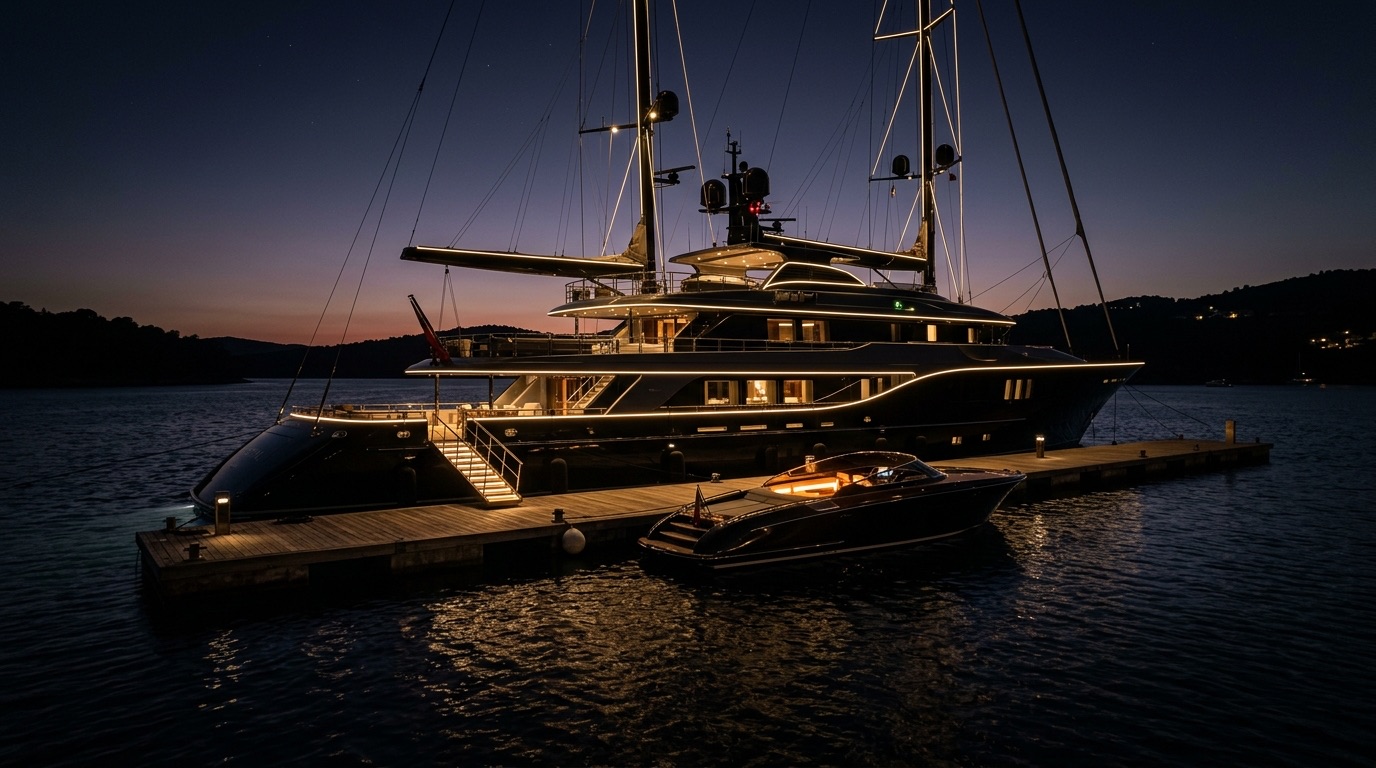
Best Luxury Center Console Boats for Serious Buyers, 2026
A decade ago the tender question was simple: a RIB, a crane, and not much else to decide. Today a growing number of serious owners are specifying a full-size luxury center console instead — and the five builders that matter are not interchangeable.
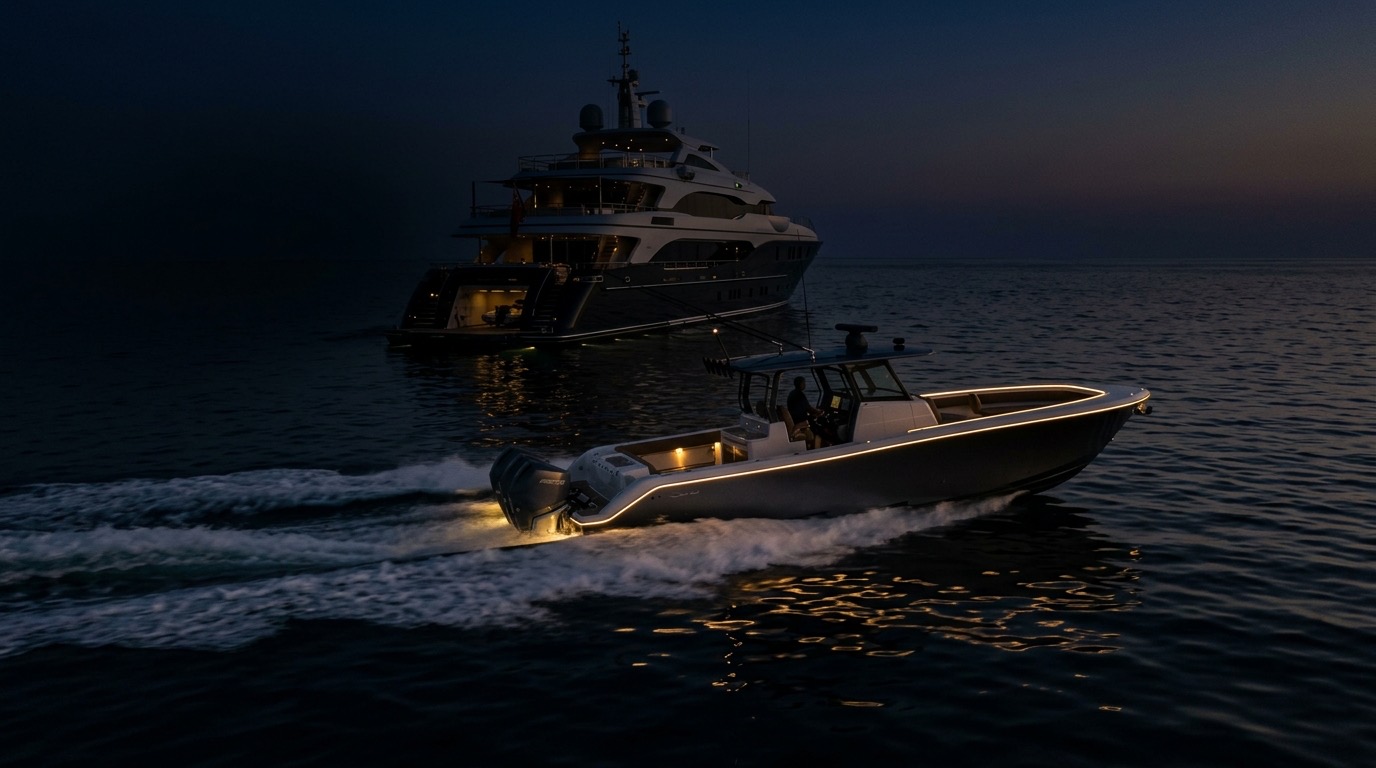
Ask a serious owner what changed their mind about tenders and the answer is rarely about looks. It's about range, sea-keeping and the fact that a well-built center console can now do double duty as a day boat, a fishing platform and a genuine offshore-capable tender — something a standard RIB was never really designed for. That shift has pulled five builders to the top of the conversation: Invincible, SeaVee, Front Runner, Regulator and Contender. None of them are new names, but demand for larger, better-equipped hulls from this exact segment has grown sharply as owners rethink what a mothership actually needs riding behind it.
Why the RIB stopped being the default
A rigid inflatable is light, fast to deploy and easy to store on a foredeck crane — which is exactly why it became the standard tender for decades. But a RIB's low freeboard, modest range and limited comfort mean it's really built for short transfers: guests to the beach club, crew to the marina, not much further. A premium center console changes the calculus. Deep-vee running hulls, real fuel range, enclosed heads on the larger models and seating for eight to twelve mean the tender can become the vessel guests actually want to spend the afternoon on — fishing, diving, or simply running to a restaurant twenty miles down the coast without anyone getting soaked. For an owner who already has millions invested in the mothership's systems, spending proportionally more on a tender that can genuinely be used, rather than merely deployed, is an easy trade to make once you've tried both.
The five builders, briefly
Each of these builders occupies a slightly different position, and buyers researching invincible boats, seavee boats, front runner boats or regulator boats quickly find that the differences matter more than the surface-level similarity of "big white center console."
| Builder | Known for | Typical buyer |
|---|---|---|
| Invincible | Composite-construction performance hulls, strong resale, broad size range | Owners who want a do-everything boat that also holds value |
| SeaVee | Deep-vee offshore pedigree, serious rough-water manners | Buyers prioritizing sea-keeping over anything else |
| Front Runner | Custom-forward builds, high level of owner personalization | Owners who want a boat built closely around their own use case |
| Regulator | Understated, quality-first construction with a long track record | Buyers who value long-term reliability over flash |
| Contender | Race-proven hulls, a large and liquid resale market | Serious anglers and buyers who want an active secondhand market |
All five now build models that comfortably scale into the 40-foot-plus range with twin or triple outboard packages — exactly the size and speed profile that makes them viable as a superyacht tender rather than just a coastal day boat. That overlap with the tender role is not a coincidence; it's the reason demand for the segment has climbed as fast as it has.
What "serious buyer" actually changes
The used market matters here more than in most boat categories. Because these builders hold value well and production runs are limited relative to demand, searches for contender boats for sale or a used Invincible frequently turn up long wait times on the exact configuration a buyer wants — which pushes serious buyers toward ordering new, or toward brokers who track allocation slots before a hull is even laid up. Buyers evaluating this category seriously tend to look past the brochure specs at three things: how the hull performs loaded and in a real chop rather than at a boat show, how the resale market for that specific builder and length has actually moved over the past few years, and what the tender needs to integrate with once it's alongside the mothership — tender garage dimensions, davit weight limits, and fuel bunkering all constrain the decision as much as taste does.
A tender used to be something you deployed. On the right hull, it's something guests choose over staying aboard.
Fit, storage and crew before anything else
None of the five builders matter if the boat doesn't actually fit the mothership. A 42-foot center console with outboards raised needs real garage clearance or a purpose-built tender deck, and davit weight ratings that were fine for a RIB half the displacement are frequently not fine for a fueled-up, fully-equipped Invincible or SeaVee. Owners shopping this segment for the first time are often surprised that the limiting factor isn't budget at all — it's whether the yacht's existing tender storage was ever specified for a boat this size, and refitting a garage or upgrading a davit system after the fact is its own meaningful project. Crew fit matters just as much. A boat in this class isn't a jet ski; running it well in a following sea or backing it into a tight Med berth benefits from the same license and experience the mothership's own tenders crew already carries, so the decision is rarely just "which hull" — it's also "who's driving it, and how often."
A quick way to narrow the choice
- If resale liquidity matters most, Invincible and Contender both carry active, well-documented secondhand markets that make exit easier down the line.
- If rough-water performance is the priority, SeaVee's offshore-first hull design is built around exactly that brief.
- If the boat needs to fit a specific use case closely, Front Runner's custom-forward approach gives the most room to specify around it.
- If long-term reliability and understated build quality matter more than headline speed, Regulator's track record is the longest of the five.
- If the tender also needs to double as a serious fishing platform, most of these builders compete directly here, and the right answer often comes down to which hull the owner has actually run in the conditions they'll use it in most.
None of this is a ranking so much as a map of trade-offs — the same reason five different builders continue to thrive at the top of one segment instead of one design winning outright. Our yacht buying guide covers the wider purchase process this decision usually sits inside, and superyacht technology systems covers what the mothership's own network and monitoring setup should look like once the tender question is settled.
Whichever builder an owner lands on, the tender's communications, navigation data and monitoring should talk to the mothership's network as one system, not two disconnected boats sharing a marina. Obsidian Helm designs and provisions that integration as part of our Yacht & Jet practice.
Have Your Tender Integrated Before It Ever Touches the Water
A $4,999 Private Strategy Session covers the mothership's network, the tender's comms and nav systems, and how the two should talk to each other — credited toward membership if you move forward.
Request Your InvitationFrequently asked
Are Invincible, SeaVee, Front Runner, Regulator and Contender actually different from each other, or just different brands of the same boat?
They're genuinely different. Invincible is known for composite construction and strong resale across a broad size range, SeaVee for offshore-first deep-vee sea-keeping, Front Runner for custom-forward builds with heavy personalization, Regulator for understated long-term build quality, and Contender for race-proven hulls with a large, liquid secondhand market. The overlap is real at the marketing level, but the engineering priorities differ enough that serious buyers usually pick based on how a hull actually performs in their conditions, not the brochure.
Why are owners choosing a center console over a traditional RIB as a superyacht tender?
Range, sea-keeping and comfort. A RIB is light and easy to deploy from a crane, but it's built for short transfers. A premium center console in the 40-foot-plus range has real fuel range, a deep-vee hull that handles chop far better, and enough seating and amenity that guests use it as a destination in its own right — fishing, diving, running to shore restaurants — rather than just a way to get from ship to shore.
How hard is it to find contender boats for sale in the size and configuration serious buyers want?
Harder than most buyers expect. Contender, like the other builders in this segment, holds value well and produces in limited volume relative to demand, so the exact hull, engine package and layout combination a buyer wants often isn't sitting on a used-boat listing site. Serious buyers typically work with brokers who track upcoming allocation slots, or accept a build slot on a new hull rather than waiting indefinitely for a specific used unit.
What size center console actually works as a real superyacht tender rather than just a day boat?
Roughly 40 feet and up is where these hulls start functioning as genuine tenders — enough range and beam for real offshore comfort, and enough speed to keep pace with guest schedules. Below that, most models are excellent day boats but start to feel undersized once you're using them the way a serious owner uses a tender: multi-hour trips, real sea states, and a full complement of guests aboard.
Does the tender need to be compatible with the mothership's connectivity and monitoring systems?
It should be, though very few owners plan for it upfront. A tender that can't share position data, comms or monitoring with the mothership's network ends up operating as a separate boat with its own blind spots. Specifying the tender's systems alongside the yacht's own architecture, rather than as an afterthought once the hull is chosen, is exactly the kind of integration work a Private Strategy Session is built to cover.