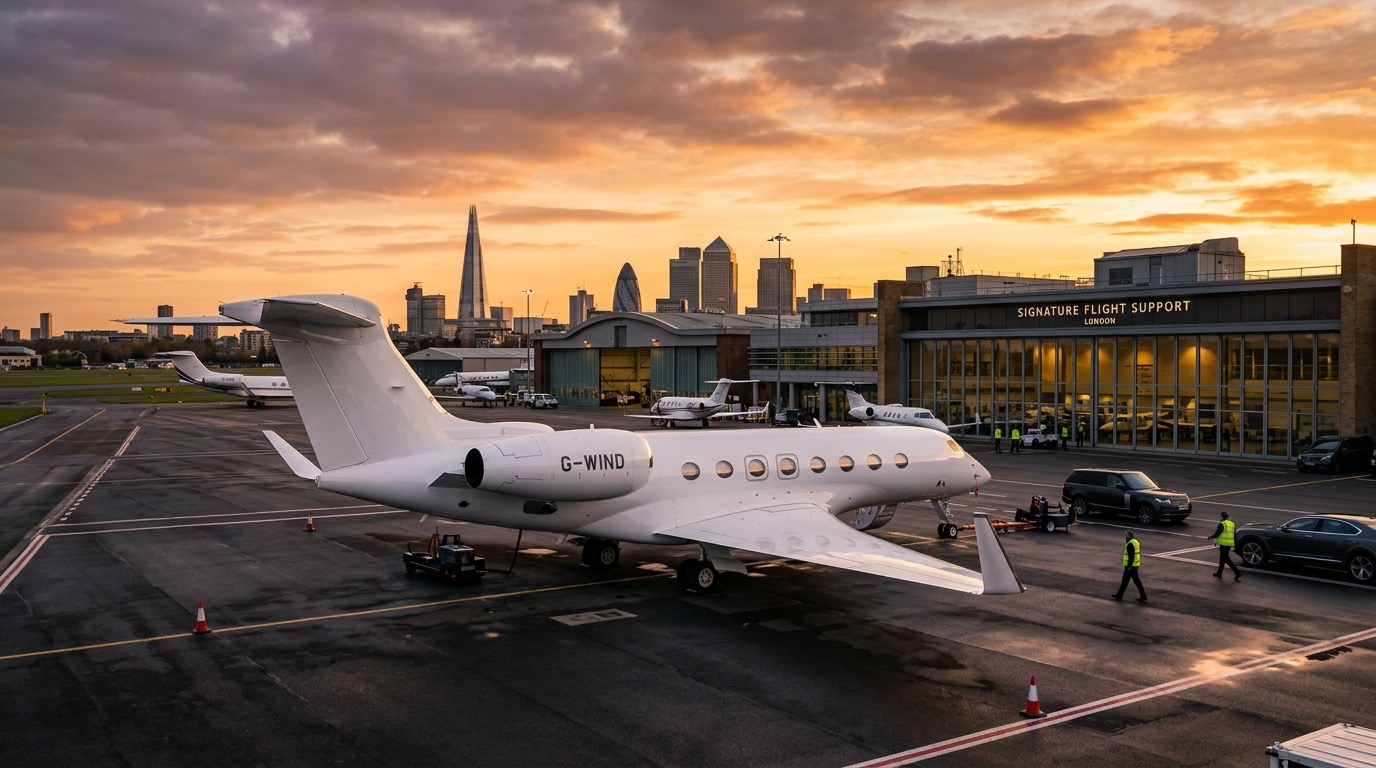
The brochure shows a price; the decision is about the years that follow it. Buy outright and you carry depreciation and every fixed cost; lease and you trade ownership for flexibility at a premium. The right answer depends almost entirely on annual hours.
The three routes to a private jet
There are three principal ways to put a jet at your disposal, and they sit on a spectrum from full commitment to full flexibility.
- Outright purchase: you own the aircraft, carry the depreciation, and bear every fixed and variable cost. Maximum control, maximum capital at risk.
- Operating lease: you pay a monthly lease rate to use an aircraft you do not own, typically for three to seven years, and hand it back at the end. No residual-value risk, but no asset either.
- Dry lease: you lease the bare aircraft and provide your own crew, maintenance oversight and insurance, taking operational control under your own arrangements. Cheaper than a wet lease but with genuine responsibility attached.
Fractional ownership and jet cards sit alongside these for lower-hour flyers, but the lease-versus-buy decision proper concerns whole-aircraft control. The deciding variable throughout is the same: how many hours will you actually fly each year.
Fixed costs: the bill before you fly
Owning or leasing a whole aircraft commits you to fixed costs that accrue whether the jet flies or sits. These are the costs that punish low utilisation, because they are spread across however few hours you fly.
- Crew salaries: two pilots minimum, often a cabin attendant on larger jets — commonly $300,000–$700,000 a year fully loaded.
- Hangarage: $50,000–$200,000 a year depending on aircraft size and location.
- Insurance: hull and liability, frequently $80,000–$300,000 a year.
- Management fees: a management company typically charges $10,000–$30,000 a month to run the aircraft.
- Training and subscriptions: recurrent pilot training, navigation databases and maintenance programmes.
On an operating lease, many of these still fall to you unless the lease is structured as a managed product. The lease rate replaces the capital cost of the aircraft, not the cost of running it.
Variable costs and depreciation
Variable costs accrue per hour flown: fuel, engine and airframe maintenance reserves, landing and handling fees, and consumables. A useful planning figure is $2,500–$6,000 an hour in variable cost depending on category, with heavy and ultra-long-range jets at the top of that band.
Depreciation is the cost that ownership advocates underplay and lessees avoid entirely. A new jet can lose 30–50% of its value over its first five to seven years, with the steepest fall early. For an owner, that depreciation is a real economic cost even though no cash leaves the account each month — and it is precisely the risk an operating lease removes, since you hand the aircraft back at a contractually agreed point regardless of what the resale market has done. Whether that protection is worth the lease premium depends, once again, on hours.
Lease versus buy: a side-by-side comparison
The table below compares a representative super-midsize jet across the two principal whole-aircraft routes. Figures are illustrative planning ranges, not a quotation.
| Factor | Outright purchase | Operating lease |
| Upfront capital | $15M–$25M acquisition | Deposit + first months only |
| Monthly cost | Fixed costs + financing | Lease rate + operating costs |
| Depreciation risk | Borne by you (30–50% over 5–7yr) | Borne by lessor |
| Residual / resale | You keep the asset and the risk | Aircraft returned, no asset |
| Flexibility to exit | Must sell, can take months | Defined term, clean handback |
| Tax treatment | Depreciation may be deductible | Lease payments often deductible |
| Best when | High annual hours, long horizon | Moderate hours, want flexibility |
The pattern is clear. Purchase rewards heavy, sustained use over many years; leasing rewards moderate use and a desire to avoid residual-value risk and the friction of an eventual sale.
Break-even: the hours that decide it
The honest pivot is annual flight hours. Below roughly 200–250 hours a year, whole-aircraft ownership is usually the wrong tool — fractional ownership, a jet card or on-demand charter will almost always cost less per hour because you are not carrying idle fixed costs. Between about 250 and 400 hours, an operating lease often wins: you secure dedicated access without committing capital to a depreciating asset.
Above 400 hours a year, and especially beyond 500, outright purchase begins to make sense. At that volume the fixed costs are spread thinly enough that the per-hour figure falls below charter and lease alternatives, the depreciation is offset by genuine utility, and the control over scheduling, configuration and crew has real value. The mistake is to buy at 150 hours for the prestige of ownership and then watch fixed costs and depreciation overwhelm the modest use. Count the hours honestly first; the financing structure follows from that number, not the other way round.
Structure, tax and the questions to ask
Beyond the headline choice, the structure determines much of the real cost. Ownership through the right entity can allow depreciation to be deducted against eligible business use; lease payments are frequently deductible too, but the rules are jurisdiction-specific and turn on documented business purpose. This is territory for a specialist aviation tax adviser, not a brochure.
- What is my honest annual hour count, averaged over three years, not the optimistic figure?
- Does the lease include management and crew, or are those costs additional?
- What is the handback condition on an operating lease — maintenance status, hours, cosmetic state?
- How is depreciation or the lease treated for tax in my jurisdiction and entity?
- What is the realistic resale market for this type if I buy and later exit?
Answer those plainly and the lease-versus-buy decision usually resolves itself. The aircraft is the easy part; the structure around it is where the money is won or lost.