
Superyacht IT for Vancouver-Based Owners
Vancouver's yacht owners keep their vessels moored in Coal Harbour and English Bay and actually use them, cruising Howe Sound, the Sunshine Coast, Desolation Sound and the Alaska Inside Passage for weeks at a stretch, well beyond cellular coverage.
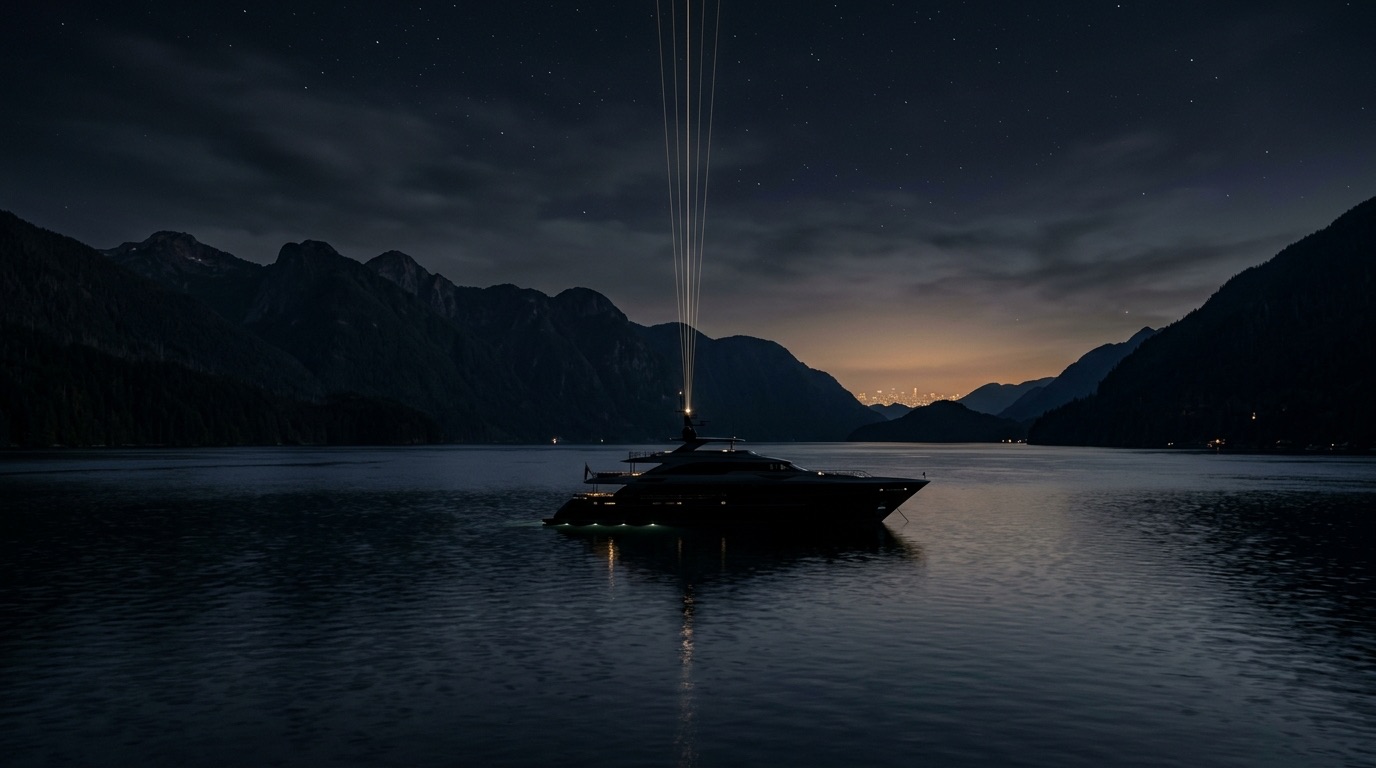
Vancouver's yacht culture differs from the Mediterranean or Caribbean model in one important respect: the boats actually go somewhere remote, and stay there. A vessel based in Coal Harbour or moored off West Vancouver near English Bay is typically used for real cruising through Howe Sound, up the Sunshine Coast, into Desolation Sound, and for the more serious owners, the full run of the Alaska Inside Passage. These are multi-week itineraries through some of the most beautiful and least connected coastline in North America, which means the connectivity problem for a Vancouver yacht owner is structurally different from a Mediterranean owner's problem. It is not about managing a vessel from a distance; it is about staying properly connected while physically aboard, far from any cell tower, for extended stretches.
That distinction matters because it changes what actually needs to be engineered. A Med-based superyacht owner worries about remote management of a vessel they rarely visit in person. A Vancouver-based owner is far more often aboard the boat itself, running a business, managing family office matters, or simply needing secure video calls from an anchorage in Desolation Sound that has never seen reliable connectivity of any kind until Starlink Maritime made it viable in the last several years.
What actually needs securing on a Vancouver-cruising vessel
- Satellite connectivity for genuine remote cruising. Starlink Maritime and VSAT systems now make the Alaska Inside Passage and Desolation Sound workable for business continuity, but unsegmented onboard networks mean a family member's streaming device and a principal's active trading or legal work sit on the same exposed connection, often the only connection available for days at a time.
- AIS tracking on an itinerary that is itself sensitive. Vessels of a certain size carry mandatory AIS, and a real-time public position feed of a Coal Harbour-registered yacht cruising north can expose the timing of extended absences from the primary residence, information equally useful to a burglar and to a competitor.
- Shore-to-vessel handoff at Coal Harbour and marina Wi-Fi. The transition between home network, marina Wi-Fi and satellite-only cruising is where credentials and unsegmented devices most often slip between environments with very different security postures.
Typical connectivity and security investment
| Vessel profile | Annual Connectivity/IT Range (CAD) | Primary Risk Addressed |
|---|---|---|
| Coal Harbour / English Bay vessel, local cruising only | 8,000 - 20,000 | Network segmentation, marina Wi-Fi handoff hygiene |
| Howe Sound / Sunshine Coast regular cruiser | 20,000 - 45,000 | Starlink Maritime primary link, redundant cellular fallback |
| Desolation Sound / Broughton extended cruiser | 45,000 - 90,000 | Dual satellite redundancy, onboard business-continuity setup |
| Alaska Inside Passage full-season vessel | 90,000 - 160,000 | Redundant VSAT/Starlink, financial-system segmentation aboard, crew device policy |
| 24/7 incident response retainer (any profile) | 15,000 - 35,000 / year | SLA-backed response regardless of anchorage or connectivity constraints |
What a season actually looks like
A typical season for a serious Vancouver-based owner might open with weekend trips around English Bay and Howe Sound through early summer, build to a two-week run through the Broughton Archipelago and Desolation Sound by midsummer, and for the most committed cruisers, extend into a five- to six-week run up the Inside Passage to Southeast Alaska before the boat returns to its Coal Harbour berth for the winter. Connectivity needs escalate at each stage, from occasional cellular coverage near populated shorelines to complete reliance on satellite once north of Cape Caution, and a network built only for the Howe Sound stage of that season will fail exactly when it matters most, three weeks into a trip with no cellular fallback available.
Why remote cruising changes the incident-response model
A vessel three days into Desolation Sound cannot simply call a local IT technician if a satellite modem fails or a device is compromised. Response has to be designed around remote diagnosis, pre-positioned spare hardware, and a support relationship that can talk a captain or an onboard IT-literate crew member through a fix over a degraded satellite link. This is the same discipline we apply across our yacht, jet and estate network practice, adapted here for genuinely remote Pacific Northwest cruising rather than Mediterranean marina-hopping. For the growing number of Vancouver owners who also keep a jet at YVR for the same trip's bookends, our private aviation IT practice closes the loop on the same family's connectivity and tracking exposure in the air as well as at sea.
Why marina IT support and yacht IT security are different jobs
Coal Harbour and the marinas along Howe Sound have competent local technicians who can get a chartplotter or an entertainment system working again within a day. That is a genuinely different skill set from designing a network that segments a principal's active business communications from a guest's streaming habits during a six-week Inside Passage run, or from auditing what happens to onboard credentials when a crew member's device is later compromised at home. Most Vancouver owners we work with already have a perfectly good relationship with a local marine electronics shop; the security review we provide sits alongside that relationship rather than replacing it, addressing the questions a hardware technician was never asked to consider.
Discretion on a coastline where everyone knows everyone
Vancouver's yacht-owning community is small and closely networked, which makes discretion about itineraries, vessel names and absence windows a genuinely practical concern rather than an abstract luxury. Our engagements are NDA-bound from the outset, and no vessel name, marina berth or itinerary detail is ever referenced outside the direct engagement with the owner or their family office, whether the conversation concerns a weekend in Howe Sound or a six-week run up the Inside Passage.
Stay connected and secure, from Coal Harbour to Alaska
A Private Strategy Session assesses your vessel's cruising profile, from local Howe Sound trips to full Inside Passage seasons, and prices out a properly engineered, NDA-bound connectivity and security program.
Request Your InvitationFrequently asked
What does satellite connectivity cost for a Vancouver yacht cruising to Alaska?
A vessel doing a full Alaska Inside Passage season typically budgets CAD 90,000-160,000 a year for redundant VSAT and Starlink Maritime connectivity plus onboard network security, compared to CAD 8,000-20,000 for a boat that stays within Coal Harbour and English Bay local cruising.
Is AIS tracking a real privacy concern for a Coal Harbour-based yacht?
Yes, for vessels large enough to require mandatory AIS carriage. A public position feed showing a yacht away from Vancouver for an extended period effectively broadcasts that the owner's residence and business presence are also likely reduced, which is useful information to more than one kind of bad actor.
How is this different from typical Mediterranean superyacht IT services?
Most Mediterranean yacht IT providers are built around remote management of a vessel the owner rarely boards. Vancouver cruising is the opposite: owners are aboard for weeks in genuinely remote water, so the priority is business-continuity connectivity and redundancy rather than remote-management tooling.
Can incident response actually work when a vessel is out of cell range in Desolation Sound?
Yes, through remote diagnosis over the satellite link, pre-positioned spare hardware aboard for common failure points, and a support relationship structured to walk a captain or crew member through fixes without requiring an in-person technician.
Is the itinerary and vessel information kept confidential?
Yes. Engagements are NDA-bound from the first conversation, and vessel names, berths and cruising itineraries are never referenced outside direct communication with the owner or their family office.