
Superyacht IT for Tokyo: An Emerging Category, Built Properly
Tokyo Bay and the marinas of nearby Yokohama have never produced a yacht culture on the scale of the Mediterranean or South Florida — but Tokyo's roughly 9,200 UHNW residents and 30 billionaires, concentrated in Minato and increasingly Shibuya's tech-forward wealth, are exactly the base that is beginning to change that.
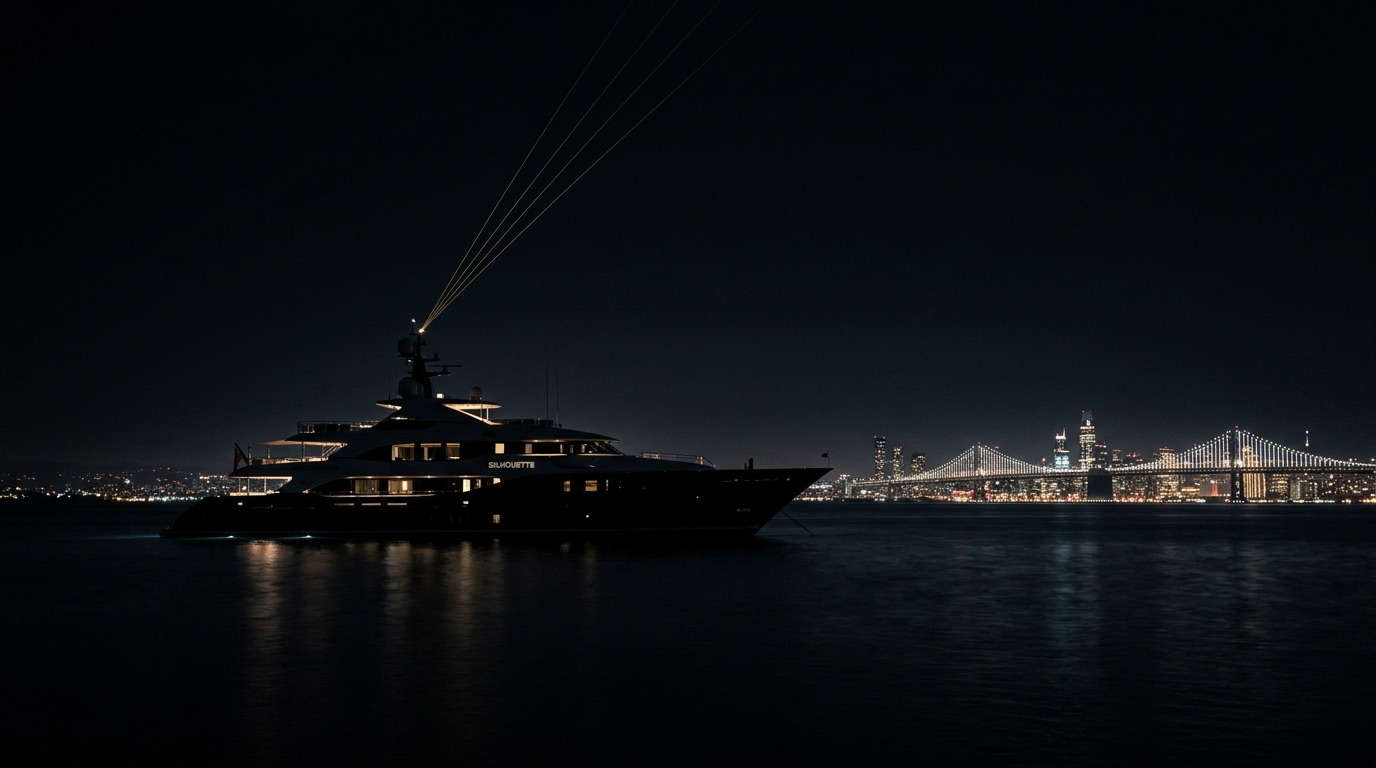
Japan's yacht culture has never resembled the Mediterranean's or South Florida's, and it is worth saying so plainly rather than overselling the category. Marina capacity around Tokyo Bay is limited relative to the wealth it serves, large-yacht berthing is genuinely scarce, and much of what exists sits further out in Yokohama, whose marinas offer more room but less immediate proximity to Minato and central Tokyo. That is the honest starting point.
What is unmistakably present is a UHNW base — roughly 9,200 residents and around 30 billionaires — concentrated in Azabu and Roppongi but increasingly extending into Shibuya's tech-founder wealth, that is younger, more internationally mobile and more comfortable with technology than almost any equivalent cohort globally. A meaningful share already charters in the Mediterranean, Southeast Asia or the South Pacific; a smaller but growing number are beginning to consider ownership, whether of a vessel based abroad or, as Yokohama's marina infrastructure slowly improves, one kept closer to home.
What ownership looks like at this stage
For most Tokyo-based owners today, the vessel sails elsewhere — Phuket or Hong Kong in winter, the Mediterranean in summer charter season — while the principal's operational base, family office and security posture remain firmly in Minato or Chiyoda. That split is the first IT problem worth solving: a residence in Azabu, an office near Tokyo Station, and a yacht anchored off a Mediterranean marina need to function as one continuous perimeter rather than three systems maintained by three unconnected vendors.
The underlying architecture does not change because the owner is based in Tokyo rather than Monaco. We describe it in full in our note on yacht, jet & estate — segmented networks for owner, guest, crew and bridge traffic; Starlink-led connectivity with cellular and VSAT failover; and continuous monitoring from ashore rather than reliance on crew who are not, and should not be expected to be, network engineers.
An exposure profile this owner base understands better than most
AIS transponders broadcast a vessel's identity and position to any of several free tracking applications, regardless of where the owner lives. For a Tokyo-based tech founder or executive whose profile is already partly public through corporate disclosures, a vessel becomes one more data point that, combined with property and shareholding records, narrows down where a principal's assets — and by inference the principal — can be found at a given time. Tokyo's UHNW base tends to grasp this risk faster than most, having often built or funded the very tracking and OSINT technologies involved.
The mitigations are the same ones we apply to aircraft, detailed in our piece on private jet IT — the logic of tracking-exposure review and disciplined operational planning transfers directly from tail number to hull: AIS-aware routing where discretion matters, and guest and crew network segmentation designed in from the first refit rather than bolted on afterward.
| Service tier | Typical annual cost (USD) | What it covers |
|---|---|---|
| New-owner connectivity setup | $65,000 – $190,000 | Starlink + cellular/VSAT install on an existing or newly acquired vessel |
| Managed monitoring, single vessel | $26,000 – $58,000 | 24/7 link and network monitoring, failover management |
| AIS & ownership-exposure review | $11,000 – $27,000 | Tracking exposure audit, guest/crew segmentation baseline |
| Combined family office + vessel posture | $90,000 – $210,000 | Minato/Azabu residence, office and vessel treated as one perimeter |
Why the honest framing matters here especially
A Tokyo-based owner does not need, and should be skeptical of anyone selling, an architecture built for a two-hundred-vessel Mediterranean fleet. What serves this owner is the same discipline applied at the right scale — one vessel, possibly sailing waters the owner visits only during charter season, connected continuously to a household and office in Tokyo that never stop operating. Given how technically literate this buyer typically is, vague reassurance tends to fail faster here than in almost any other market; specificity about architecture, failover and monitoring is what actually earns trust.
Where Tokyo Bay and Yokohama go next
Marina development around Yokohama continues incrementally, and a small but increasing number of Japan-based owners now keep vessels moored closer to home rather than exclusively chartering abroad. As that infrastructure matures, connectivity in Japanese coastal waters — still less consistent than Mediterranean or Caribbean coverage for satellite systems — will only become a more relevant question, not less.
- Owner treated as one perimeter across residence, office and vessel, wherever each is located
- Connectivity engineered for the owner's actual cruising grounds, not a generic global default
- AIS and ownership exposure reviewed proactively, before a vessel becomes a traceable public data point
- Monitoring that continues year-round, independent of when the owner is aboard
The category is still young around Tokyo Bay. The rigor behind it does not need to wait for the marinas to catch up.
What a first engagement usually looks like
Most new Tokyo-based owners approach ownership from one of two directions: an established Mediterranean or Southeast Asian charter guest ready to buy, or a founder whose liquidity event has just made a first vessel realistic. In either case, the useful starting point is rarely the boat itself. It is a review of what is already public — corporate disclosures, shareholding records, prior charter history, social media presence — cross-referenced against how a vessel, once acquired, would sit inside that same picture. Hardware and network design only make sense to specify after that review.
That sequencing matters more here than in an established market, because the habits formed in a first year of ownership tend to persist. A vessel connected and segmented properly from delivery avoids the far more disruptive retrofit that typically follows a first serious incident — the pattern seen repeatedly in markets that matured without this discipline built in from the outset, and one this owner base, more than most, has the technical instinct to avoid repeating.
Start with the review, not the vessel
A $4,999 Private Strategy Session assesses your current or planned vessel alongside your Tokyo residence and office as one security posture — conducted remotely, under NDA, with the fee credited in full toward membership.
Request Your InvitationFrequently asked
Is there an established superyacht market in Tokyo yet?
Not in the sense of the Mediterranean or South Florida — large-yacht berthing around Tokyo Bay is limited, with more marina capacity in nearby Yokohama than in central Tokyo itself. What exists is a growing base of roughly 9,200 UHNW residents and 30 billionaires who already charter abroad and are increasingly considering ownership, which is where most current activity sits.
What does it cost to set up secure connectivity for a yacht owned by a Tokyo-based principal?
A new-owner connectivity setup, combining Starlink with cellular or VSAT failover, typically runs $65,000 to $190,000 depending on vessel size, with managed monitoring afterward around $26,000 to $58,000 a year. A combined package covering the vessel alongside a Tokyo residence and family office generally falls between $90,000 and $210,000 annually.
How long does setup take for a first-time or newer owner based in Japan?
For a vessel that already has basic connectivity, a full security and monitoring overlay typically takes 3 to 6 weeks to complete. For a new acquisition requiring hardware installation, plan for 8 to 12 weeks from specification to a fully monitored, segmented network.
How is this different from asking the yacht management company or captain to handle IT?
A management company or captain focuses on vessel operations, not on treating the yacht as one node in a principal's wider exposure across residence, office and public data. Our approach connects those systems into a single reviewed perimeter, with continuous monitoring from ashore rather than relying on crew for network security.
Is this confidential, given how visible Tokyo's tech-wealth community can be?
Yes. Every engagement begins under a signed NDA, work is delivered remotely with no visible contractor presence, and no client, vessel or family name is ever referenced in any material, even anonymously. Discretion is a baseline requirement, not an add-on, and is treated with particular care given how identifiable this owner base already is.