
Superyacht IT & Cybersecurity, Managed from Paris
Paris has no marina and no yacht club - the boat winters in Antibes and summers between Monaco and the wider Mediterranean. For the 16e and Neuilly-sur-Seine families who own it, IT and cyber protection has to follow the vessel, not the apartment, and has to work entirely by remote.
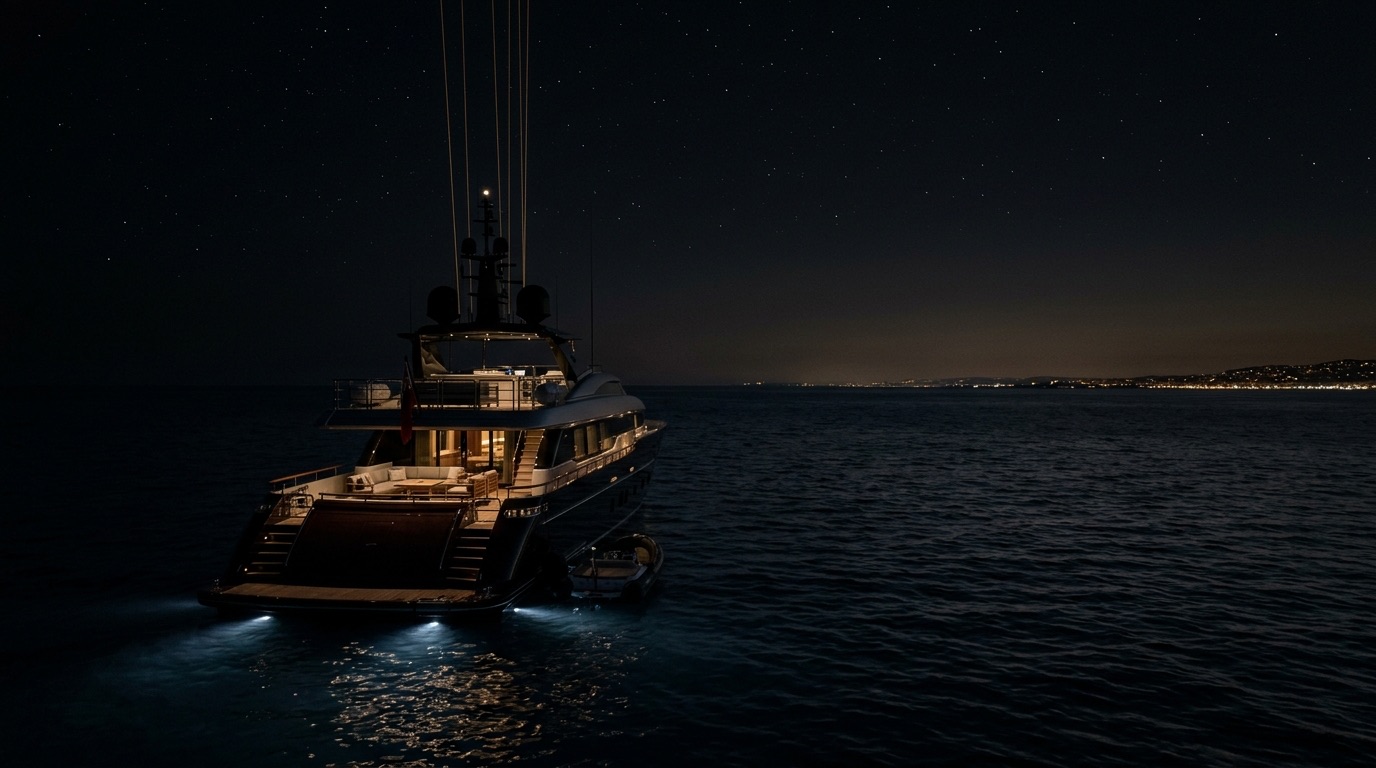
It is worth stating plainly, at the outset, what this briefing is and is not. Paris is not a coastal city. There is no marina at the foot of the 16e, no berth at Passy, no yacht club on the Seine comparable to what a family keeps at Antibes or Monaco. Any suggestion otherwise would be marketing fiction, and Obsidian Helm does not deal in that. What Paris does have is a very large population of yacht owners who happen to live inland - in Neuilly-sur-Seine, the 16e, and the Marais - whose vessel winters in Antibes, summers between Monaco and the wider Mediterranean, and is managed, financed and worried about almost entirely from an apartment or office several hundred kilometres from the water. This is a briefing for that owner.
The practical consequence of this geography is that a Paris-based yacht owner's IT and cybersecurity problem is fundamentally a remote-management problem, and it is more demanding, not less, than it would be for an owner who lives on the coast and can walk the gangway once a week. Distance changes what has to be automated, monitored and reported, and it changes how quickly a problem on the boat becomes a problem the owner only hears about after the fact - unless the systems are built specifically to prevent that.
The core issue: your IT and cyber protection has to follow the boat
A Paris residence's network, however sophisticated, has one fixed physical location and one set of local risks to manage. A yacht based in the Mediterranean moves between jurisdictions, marinas, and connectivity environments constantly - Antibes for the winter refit season, Monaco and the Cote d'Azur through the summer, occasionally further afield to the Balearics, Sardinia or beyond. Each of those moves changes the vessel's network exposure: a different marina Wi-Fi network in range, a different set of AIS and satellite conditions, a different crew rotation with its own device habits. A Paris-based owner cannot manage this the way they manage the apartment's network, by being physically present to notice when something is wrong. The system has to be built to report problems proactively, wherever the owner happens to be.
This is the honest framing: the technology decisions are not about Paris at all. They are about a vessel that lives permanently in a different environment from its owner, and a household in the 16e or Neuilly that needs the same visibility and control over that vessel's digital security as it has over its own front door - delivered entirely over a network connection, because that is the only connection that exists.
AIS and tracking exposure on a Mediterranean-based yacht
Automatic Identification System transponders, required for vessels above a certain tonnage, broadcast a yacht's position, course and speed continuously and are aggregated in real time by public tracking platforms - the maritime equivalent of the ADS-B exposure that affects private aircraft, and just as easy for an outside party to exploit. A superyacht wintering in Antibes or moored off Monaco during the summer season is, by default, publicly trackable to anyone who cares to look, and ownership is frequently inferable from vessel registration and brokerage records that are not especially hard to find. For a Paris-based owner whose travel pattern to and from the coast is itself fairly predictable - the same weeks each summer, the same refit window each winter - the combination of a trackable vessel and a predictable owner schedule is a meaningful privacy gap, independent of anything happening on the boat's onboard network.
AIS class B transponders and certain routing arrangements can reduce but not eliminate this exposure, and the more durable protection is procedural: controlling who has access to the vessel's real-time position data outside the crew and management company, and treating that data with the same discretion applied to the family's own calendar.
Onboard IT: what actually needs to be managed remotely
A modern superyacht in the 60 to 90 metre class carries a genuinely complex IT environment - satellite connectivity (VSAT and, increasingly, low-earth-orbit systems), navigation and bridge systems, crew and guest Wi-Fi, entertainment networks, and often a direct link back to the owner's family office or personal devices. Left unsegmented, a guest's streaming device and the bridge's navigation network can sit on variations of the same infrastructure - precisely the kind of lateral-movement risk that a serious cyber audit exists to close, and one our broader cybersecurity practice treats as a first-week priority on any new yacht engagement.
Typical costs for remotely managed yacht IT and cybersecurity
| Item | Typical range | Notes |
|---|---|---|
| VSAT / satellite connectivity plan (60-90m class) | 8,000 - 35,000 USD / month | Scales with bandwidth, guest usage and whether LEO is added as backup |
| Onboard network segmentation & hardening | 25,000 - 90,000 USD one-time | Separates bridge, crew, guest and entertainment networks |
| Remote monitoring & cyber retainer | 3,500 - 12,000 USD / month | 24/7 monitoring, incident response, seasonal handover support |
| AIS / tracking exposure review | from 6,000 USD | One-time audit plus ongoing advisory as the vessel changes berths |
| Response SLA | 20 - 60 minutes to acknowledge | Adjusted for time-zone gap between Paris and the vessel's location |
The winter-to-summer handover
The refit season in Antibes and the cruising season around Monaco and the wider Mediterranean each bring a distinct set of IT considerations. A winter lay-up typically means reduced crew, yard Wi-Fi that the vessel's network should never be allowed to depend on, and a maintenance window that is often the best opportunity to carry out network hardening work without disrupting a live cruising schedule. The summer season brings a fuller crew, guest traffic on the network, and the vessel's highest visibility - both socially and on tracking platforms. A properly run engagement treats this transition as a fixed point on the calendar each year, not an ad-hoc scramble, and coordinates it with the same rigour applied to a principal's private jet movements between Paris and the coast.
Integrating the yacht into the owner's wider security picture
For a Paris-based owner, the yacht is one node in a wider system that includes the residence, the family office, and often a private aircraft used to reach the vessel each season. Treating each of these as a separate IT problem, managed by separate vendors with no shared visibility, is how gaps appear - a crew member's personal device that bridges the yacht's network to an unsecured home connection, a management company's booking system that leaks the vessel's whereabouts, a family office inbox that becomes the weak link precisely because nobody thought of it as part of the yacht's security. Our approach to estate-wide technology across jet, yacht and residence exists specifically to close that gap, treating the vessel as an extension of the household rather than an isolated asset that happens to be owned by the same family.
What this means in practice
A Paris-based owner does not need a yacht IT provider who understands Passy. They need one who understands that the vessel lives in Antibes or Monaco, that the owner lives four hundred kilometres away, and that the entire relationship has to be built around remote visibility, proactive alerting, and a single point of accountability - rather than the owner discovering a problem only when they next step aboard.
Secure the vessel, wherever you happen to be
Obsidian Helm manages superyacht connectivity, cyber protection and tracking exposure for Paris-based owners whose vessel lives on the Mediterranean. Begin with a confidential, by-invitation Private Strategy Session.
Request Your InvitationFrequently asked
Does it matter that I live in Paris and my yacht is in Antibes or Monaco?
It changes the engineering, not the outcome. Because you cannot walk down to the boat to check on it, the systems have to be built for proactive remote monitoring and alerting rather than relying on someone noticing a problem in person. This typically means more automated monitoring, not less, compared to an owner who lives on the coast.
What does remote yacht cybersecurity cost?
A remote monitoring and cyber retainer typically runs 3,500 to 12,000 USD per month depending on vessel size and crew, on top of a VSAT connectivity plan that itself runs 8,000 to 35,000 USD per month for a 60 to 90 metre yacht. Network segmentation and hardening as a one-time project typically runs 25,000 to 90,000 USD.
How exposed is the yacht's location to public tracking?
AIS transponders required on vessels above a certain tonnage broadcast position continuously to public tracking platforms, and ownership is often inferable from registration and brokerage records. Combined with a Paris owner's fairly predictable seasonal travel to the coast, this creates a privacy gap that is addressed procedurally as much as technically.
How is the winter refit in Antibes handled differently from the summer season?
The winter lay-up, with reduced crew and yard Wi-Fi the vessel's network should never depend on, is typically the best window each year to carry out network hardening work without disrupting a cruising schedule. The summer season brings full crew and guest traffic and the vessel's highest public visibility, so the transition between the two is planned as a fixed annual milestone.
Is this coordinated with our existing yacht management company?
Yes. Obsidian Helm works alongside the vessel's existing management company and crew, adding the network security, remote monitoring and tracking-exposure work that yacht managers are rarely staffed to provide, under the same NDA that governs every engagement.