
Private Jet IT & Cybersecurity for San Francisco Bay Area Principals
With an estimated 82 billionaires among 18,500 UHNW residents across Atherton, Palo Alto, Los Altos Hills, Tiburon and Pacific Heights, the Bay Area has the highest concentration of tech wealth of any region in the country — and a private-aviation footprint built around San Carlos, Oakland's private terminals and San Jose that most flight departments still under-secure.
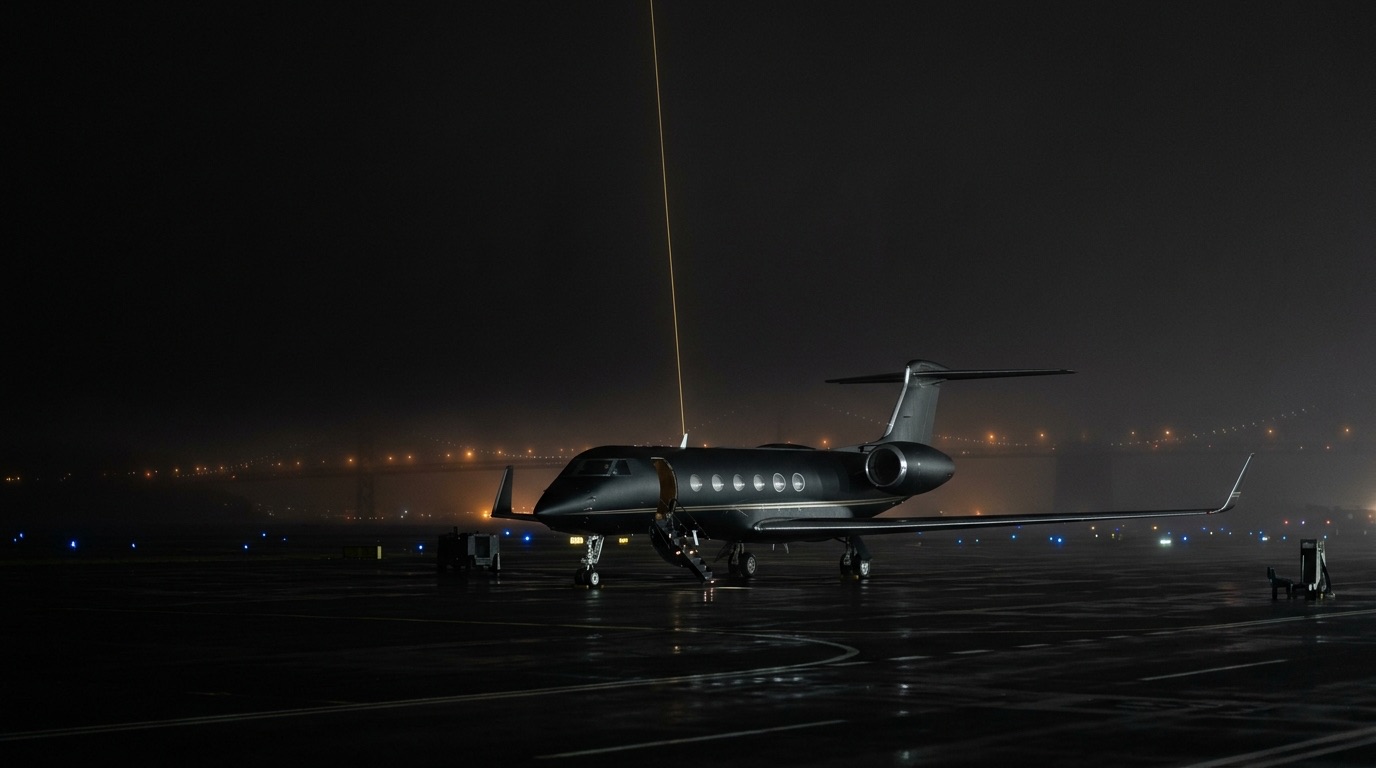
No region in the United States concentrates technology wealth the way the San Francisco Bay Area does. Across Atherton, Palo Alto, Los Altos Hills, Tiburon and Pacific Heights, an estimated 18,500 UHNW residents include roughly 82 billionaires — a density built almost entirely on founder equity, venture returns and post-IPO wealth rather than inherited capital. That wealth moves through a distinctive private-aviation footprint: San Carlos Airport (SQL), a general-aviation field a few minutes from Atherton and Palo Alto with no commercial traffic to share the ramp with; Oakland's private FBO terminals, handling a large share of Peninsula and East Bay corporate and charter traffic; and San Jose (SJC), which combines commercial service with a substantial business-aviation presence serving Silicon Valley directly. Few flight departments serving this cluster secure the cabin network with anything close to the rigor their principals apply to their own companies' infrastructure.
San Carlos, Oakland, San Jose — A Founder's Geography
SQL's appeal is precisely its lack of scheduled traffic: shorter taxi times, faster turnarounds, and a ramp shared mostly with other business aircraft rather than airline operations, all a few minutes from Atherton and Palo Alto. Oakland's private terminals serve a similar function for the East Bay and Tiburon-based principals, while San Jose gives South Bay founders direct access without the drive north. The mission profile skews toward frequent short domestic hops — board meetings, portfolio company visits, Tahoe and Aspen weekends — interspersed with long transpacific legs to Asia-Pacific operations and investment destinations, a mixed profile that, as with Los Angeles, has direct consequences for which connectivity tier actually makes sense; the tradeoffs are covered in full on Obsidian Helm's private jet ownership and cost pillar.
A Founder's Aircraft Is a Public-Figure Attack Surface
ADS-B Out has made aircraft tracking trivial since it became mandatory across U.S. controlled airspace in 2020, broadcasting tail number, position, altitude and ground speed in clear, unencrypted text roughly once per second. Several well-known Bay Area principals have had their aircraft movements republished within minutes of pushback by public flight-tracking accounts built entirely from this open feed — a pattern that has made tech-sector founders unusually motivated adopters of the FAA's LADD (Limiting Aircraft Data Displayed) privacy program and ICAO block-address filings. Neither program, however, protects the aircraft's ACARS datalink — still largely unencrypted across much of the fleet based at SQL and Oakland — or the cabin network itself, and Bay Area principals carry an additional layer of exposure most flight departments underweight: cap-table data, unreleased product information and portfolio-company board materials routinely travel on cabin Wi-Fi and personal devices mid-flight, making an unsegmented aircraft network a genuine avenue into material non-public information.
Connectivity for a Domestic-Heavy, Transpacific-Occasional Fleet
Bay Area flight departments typically need a system tuned for frequent short domestic legs with the capacity to handle occasional long transpacific runs — a different weighting than a fleet built primarily for transatlantic travel.
| System | Best fit | Typical install cost | Typical monthly cost | Realistic throughput |
|---|---|---|---|---|
| Air-to-ground (Gogo AVANCE-class) | Light/midsize jets, SQL–Tahoe–Aspen domestic circuit | $100K–$180K | $1,500–$3,500/mo | 15–25 Mbps, U.S. only |
| LEO satellite (Starlink Aviation-class) | Cabin-heavy video-conferencing and streaming, domestic and near-global | $150K–$300K | $2,500–$7,500/mo | 100–200 Mbps |
| Ka-band GEO satcom (Satcom Direct / JetWave / Viasat-class) | Heavy jets flying regular transpacific and international legs | $450K–$1.2M | $4,000–$15,000/mo | 30–100 Mbps shared |
Founders whose board work genuinely happens in the air — video calls, live document collaboration, encrypted deal-room access — often justify the LEO or Ka-band tier purely on productivity grounds; the security case for segmenting that same traffic away from crew and guest devices is just as strong.
What Founder-Grade Aircraft Security Looks Like
- Cabin network segmentation separating principal/family devices, guest and portfolio-company-guest devices, and cockpit/avionics systems on isolated VLANs
- Encrypted, monitored VPN for any cap-table, term-sheet or board-material traffic carried on cabin Wi-Fi
- Managed device enrollment for the principal, executive assistants and frequent guest-passengers, not just crew
- Active LADD and ICAO block-address filings maintained across every owned, chartered and fractional tail the principal actually uses
- Coordination with the portfolio company's own security team when board members or executives are frequent cabin passengers
The Portfolio-Company Blast Radius
A Bay Area founder's aircraft rarely carries only the founder. Board members, co-investors, portfolio-company executives and outside counsel are frequent cabin passengers on SQL, Oakland and SJC-based jets, and each of them brings their own devices, their own security posture, and often their own unreleased material information onto the same network. An aircraft with no segmentation between the principal's traffic and a guest passenger's laptop effectively extends the blast radius of any single compromised device to everyone who has ever boarded. This is a materially different risk profile from a family-only aircraft, and it is one most flight departments built around traditional UHNW clients were never designed to manage. Treating every frequent flyer as a potential entry point — and building the network to assume one of them eventually will be compromised — is the baseline Obsidian Helm designs to for Bay Area-based fleets, rather than an edge case bolted on afterward.
One Architecture Across Jet, Yacht and Estate
Bay Area principals increasingly hold the same three-part footprint seen in Los Angeles and Miami — an aircraft based at SQL, Oakland or SJC, residences across Atherton, Palo Alto or Tiburon, and increasingly a vessel berthed on the Bay or further afield. Obsidian Helm builds one continuity plan across all three, detailed on the yacht, jet and estate technology page, and integrates the aircraft's network directly into the principal's broader identity and device protections described on the personal cybersecurity page — particularly important for founders whose personal and company security postures are frequently, and dangerously, treated as separate problems.
Your aircraft, secured to the standard your company already expects
Obsidian Helm designs and audits private-aviation IT and cybersecurity for Bay Area founders and family offices flying from San Carlos, Oakland and San Jose, by invitation only. The $4,999 Private Strategy Session maps your aircraft, route profile and information-security exposure into one plan.
Request Your InvitationFrequently asked
How much does it cost to secure a founder's private jet based at San Carlos or Oakland?
A midsize jet on a domestic SQL/Oakland circuit with segmented networking and LEO connectivity typically runs $150,000–$300,000 installed and $2,000–$7,000 a month. Heavy jets flying regular transpacific legs with Ka-band satcom and full segmentation run $500,000–$1.2 million installed, with $5,000–$15,000 a month ongoing.
How is aircraft security different for a tech founder than for other UHNW owners?
The material difference is what travels on the cabin network: unreleased product information, cap-table data and board materials, not just personal information. Obsidian Helm treats the aircraft as an extension of the company's information-security perimeter, not only the principal's personal one, and coordinates directly with portfolio-company security teams where relevant.
Is this confidential, given how visible some Bay Area founders already are?
Every engagement is under NDA before any tail number, route or ownership detail is discussed. Given how frequently Bay Area principals are already tracked publicly through open ADS-B feeds, the engagement itself is designed to reduce further exposure, not add to it — no case studies, no client lists, no identifiable aircraft details, ever.
What does this include that a standard aviation IT vendor doesn't?
A standard vendor installs the satellite system. Obsidian Helm additionally audits the mission profile against the right connectivity tier, segments cabin, guest and cockpit networks, hardens devices for principals and frequent guest-passengers, maintains ADS-B/ICAO privacy filings, and integrates the aircraft into the same continuity architecture as the principal's residences, vessel and personal cybersecurity posture.
How long does implementation take for an aircraft based at SQL, Oakland or SJC?
A full assessment typically takes two to three weeks. A complete rebuild — new segmentation, connectivity system and device management — generally takes six to twelve weeks, scheduled around the aircraft's existing flight calendar to minimize downtime.