
Private Jet IT & Cybersecurity for Dallas-Fort Worth
Across Highland Park, University Park, Westlake and Preston Hollow, roughly 4,600 UHNW individuals and 26 billionaires move through Love Field, DFW International and Addison's general aviation ramps. The cabin is rarely the weak point in their operation — the internet link into it usually is.
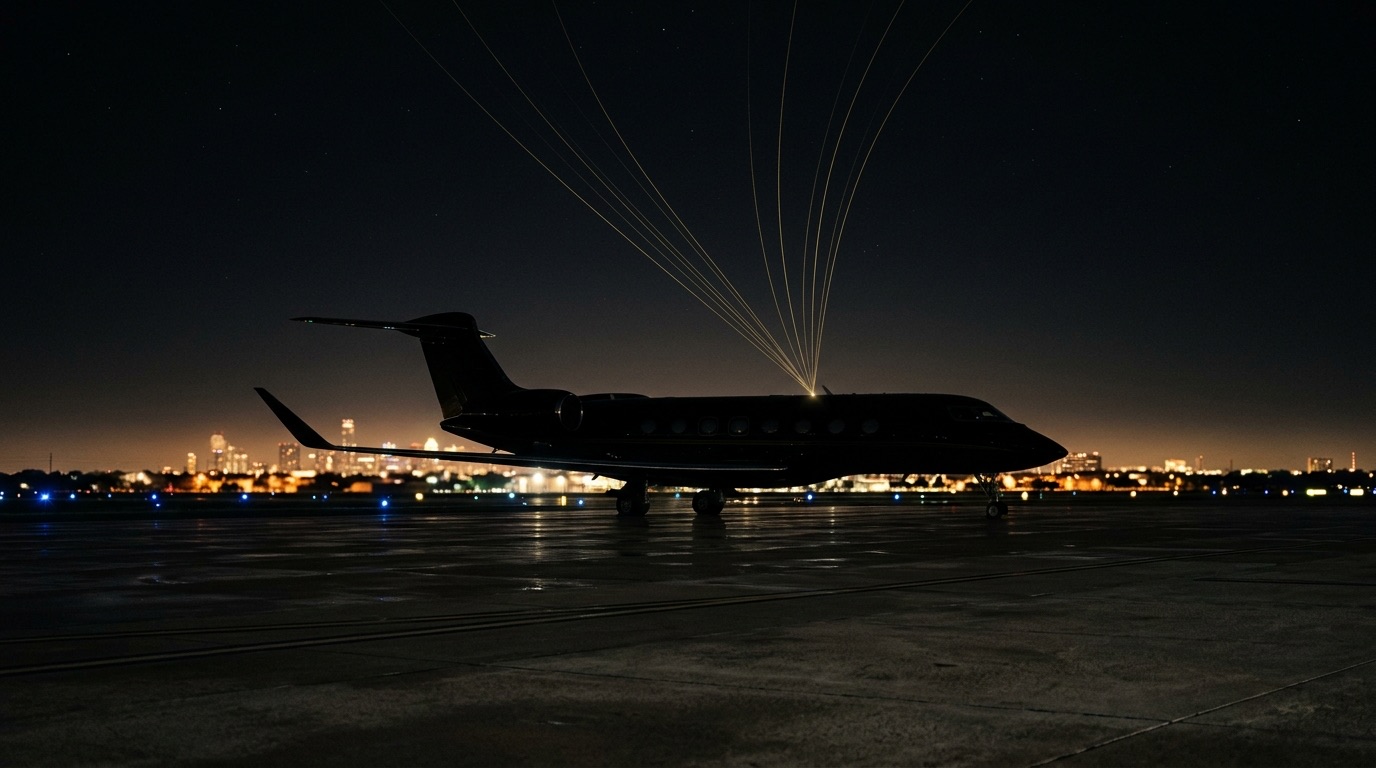
Dallas-Fort Worth carries a concentration of aircraft-owning wealth that surprises people who assume private aviation clusters only on the coasts. Highland Park and University Park alone are home to a meaningful share of the region's estimated 4,600 ultra-high-net-worth residents, and 26 of them sit at billionaire level — a wealth base built less on inherited coastal money than on operating companies headquartered a few miles from where their principals live. Westlake and Preston Hollow round out the map, and between them the three general aviation points of entry — Dallas Love Field (DAL), Dallas Fort Worth International (DFW) and Addison Airport (ADS) — see more owner-flown and fractional traffic on a given weekday than most European capitals see in a week.
That density creates a specific and under-discussed exposure. A corporate-HQ owner flying Love Field to a board meeting in New York, or a Preston Hollow family flying Addison to a ranch in the Hill Country, is transmitting the same tail number, the same flight plan, and often the same unencrypted cabin Wi-Fi signature on every trip. ADS-B Exchange and a dozen flight-tracking aggregators publish that data in near-real time, free, to anyone who wants to correlate a principal's movements with a corporate announcement, a legal filing, or simply their home address. Anonymous registration through a trust or LLC helps at the FAA level; it does nothing about the cabin's own network.
What actually needs securing on the aircraft
Most Dallas-based flight departments think of connectivity as a comfort item — a way to keep working or keep the kids entertained between DFW and Aspen. In practice, the cabin network is where a principal's laptop, phone and iPad all sit on the same subnet as the aircraft's own avionics-adjacent systems, often behind consumer-grade routing hardware installed by whichever completion center or charter operator handled the last connectivity refresh. That is the layer we assess first: satellite data path (Ka-band, Ku-band or L-band, depending on the tail), onboard router and firewall configuration, device segmentation, and whether the flight crew's own devices are isolated from the principal's.
- Airborne connectivity hardening — segmented VLANs so crew, guest and principal traffic never share a broadcast domain, plus a managed firewall replacing the stock unit most systems ship with.
- ADS-B and tail-number exposure review — trust structuring paired with a technical audit of what's actually leaking through public trackers, since registration privacy and network privacy are two separate problems.
- Executive device hygiene — mobile device management and travel-mode configurations for phones and laptops that board the aircraft, so a lost or compromised device in Highland Park doesn't become a lost or compromised device mid-flight.
- Incident response retainer — a named team reachable before wheels-up, not after a problem is already visible from the cabin.
Typical cost ranges for the region
Costs vary by tail size, existing avionics generation and how much of the network needs to be rebuilt versus hardened. The ranges below are typical for Dallas-Fort Worth-based light-through-large-cabin jets, framed as industry-representative rather than quoted:
| Service | Typical annual range (US$) | Notes |
|---|---|---|
| Satellite connectivity (Ka/Ku-band, data plan) | 36,000 – 180,000 | Scales with cabin size and data allowance; large-cabin tails at the top end |
| Onboard network hardening & firewall | 18,000 – 45,000 | One-time build plus annual management |
| ADS-B / registration privacy review | 6,000 – 15,000 | Legal trust review paired with technical tracker audit |
| Executive device & travel-mode program | 12,000 – 30,000 | Covers principal, family and key staff devices |
| 24/7 incident response retainer | 15,000 – 50,000 | Response SLA typically 15–30 minutes to first contact |
Response-time commitments matter more in Dallas-Fort Worth than in cities with a single dominant FBO cluster, because a principal splitting time between DAL, DFW and ADS effectively has three different ramp environments, three different ground-handling vendors, and three different points where a compromised device or network could be introduced. A serious advisory relationship sets a single SLA that follows the principal across all three, rather than three separate vendor relationships each guaranteeing its own airport.
Ground handling at all three airports is contracted out to FBOs that rotate line staff, cleaning crews and refueling contractors through the ramp on a given day, and each of those individuals has some point of physical proximity to an unlocked cabin door or an idle onboard network. Hangar and line-service vetting is not something a technology engagement can fix directly, but the two work together: a hardened cabin network is far less useful if a contractor can plug a device into an exposed port during a routine turnaround. We coordinate with existing flight department staff to close that gap rather than duplicating their physical security role.
Where this fits alongside the rest of the estate
For most Highland Park and Preston Hollow families, the aircraft is one node in a broader technology and security picture that also includes the primary residence, a ranch or second property, and the family office network. Our private jet hub covers the aviation side in depth — cost, charter structures, aircraft classes — but the security posture only really holds together when it is designed across the aircraft, any vessel, and the estate as one system, which is the approach we detail in yacht, jet and estate technology & security. The underlying discipline, in every case, is the same personal cybersecurity practice we apply to a principal's daily life, described on our cybersecurity page.
DFW's corporate concentration also means many of these principals are named directors or executives of publicly traded or high-profile private companies, which raises the stakes on cabin data exposure specifically: a laptop compromised mid-flight can be a securities disclosure problem, not just a privacy one. That is a different risk calculus than a purely personal-wealth family faces, and it shapes how we scope the engagement from the first conversation.
A private assessment before your next departure
Obsidian Helm advises a small number of Dallas-Fort Worth principals and family offices on aircraft, estate and personal cybersecurity, entirely under NDA. The engagement begins with a $4,999 Private Strategy Session.
Request Your InvitationFrequently asked
What does a private jet cybersecurity assessment cost in Dallas-Fort Worth?
A full assessment covering connectivity hardening, ADS-B exposure review and device hygiene typically runs $6,000 to $45,000 depending on aircraft size and how much of the existing network needs rebuilding versus hardening. Ongoing management and incident response retainers are priced separately, usually $15,000 to $50,000 a year. We scope this precisely during the initial Private Strategy Session rather than quoting blind.
How long does it take to secure an aircraft's network?
A technical audit and connectivity hardening plan can usually be completed in 10 to 15 business days once we have access to the tail. Full implementation, including firewall replacement and device segmentation, typically takes three to five weeks depending on hangar access and the completion center's schedule. We coordinate around your flight calendar rather than grounding the aircraft.
How is this different from what my FBO or charter operator already offers?
FBOs and charter operators sell connectivity as a bandwidth product — a data plan and a router. We assess the whole exposure surface: who can see the tail number, what's on the same network as the principal's devices, and how quickly a response team can act if something looks wrong mid-flight. It's a security engagement, not a Wi-Fi upgrade.
Is this discreet? I don't want my flight department or staff aware of the details.
Every engagement is NDA-bound from the first call, and we routinely work with only the principal or a single trusted family office contact, without briefing the wider flight or household staff on the specifics. Reporting can be structured to disclose only what each party needs to know.
Why does registering the aircraft through a trust or LLC not fully solve the tracking problem?
Trust or LLC registration obscures the FAA-level ownership record, but ADS-B Exchange and similar public trackers still broadcast the tail number, route and timing in near-real time regardless of who legally owns the aircraft. Closing that gap requires a separate technical review of transponder configuration and flight-planning practices, which is a distinct workstream from the legal structuring.